California Dreaming: Surf Havens

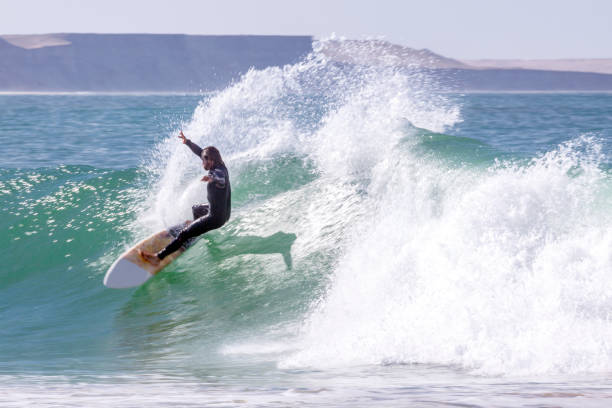
Forget the postcards. The real California Dream isn’t about a mansion in the hills; it’s about a beat-up board on a roof rack, a 4/3 wetsuit steaming in the morning sun, and the endless hunt for that next perfect wave. It’s a state of mind, a pilgrimage up and down the Pacific Coast Highway, chasing the stoke from dawn patrol to evening glass-off. This is the essence of surf travel in the Golden State—a living, breathing guide to surfing’s soul, played out on a thousand miles of coastline.

The dream starts with the rhythm. Your alarm isn’t a sound; it’s a feeling. You check the dawn patrol report: swell direction, tide, wind. You’re not just reading data; you’re visualizing lines of energy wrapping into a point break, or a south swell lighting up a secret cove. You grab your log for the mellow mornings, your shortboard for the punchy beach breaks, or your step-up for when the big NW swell hits. It’s a gearhead’s paradise, but the real magic isn’t in the quiver—it’s in knowing which stick to grab for the session ahead.

Hitting the road is where the lifestyle truly unfolds. This isn’t a vacation; it’s a mission. The van or wagon is your mobile basecamp, smelling of salt, wax, and neoprene. You’ve got your spots: the legendary, the crowded, and the secret spots you only find by getting skunked a few times and talking to the right old-timer in the parking lot. You learn to speak the language. You don’t just say a wave is good; it’s “pumping,” “firing,” or “overhead and clean.” A bad session is “victory at sea” or “onshore mush.” You respect the lineup hierarchy, snake someone at your peril, and always, always give respect to the locals. It’s a tribe with its own rules, and the vibe in the water is everything.

From the chilly, powerful reefs of Northern California’s Mavericks country—where it’s more about survival suits and sheer guts—to the sun-drenched, perfect point breaks of Southern California, each zone has its own flavor. You might start your day freezing at Ocean Beach, SF, where the paddle-out is a battle, then drive south to the mellow longboarding waves of San Onofre, where the vibe is all about nose rides and tailblock turns. Further south, the dream crystallizes in places like Lower Trestles, a high-performance arena where the world’s best tune up, and Malibu, the historic birthplace of California surf culture, where on a summer evening, it feels like 1965 never ended.

The ultimate California surf travel isn’t about scoring the most epic day of your life every time (though that helps). It’s about the search. It’s about that session where you finally connect your bottom turn to a top turn on a fast section. It’s about the post-surf burrito that tastes like a Michelin star meal. It’s about watching the sunset from the cliffs at Rincon, seeing lines stack up towards the horizon, and knowing that tomorrow, the dream starts all over again. It’s a continuous, sun-bleached, salt-crusted journey. So pack your boards, check the charts, and get after it. The dream is out there, waiting on the next tide.
Related Posts

Live Surf Cams

Surfline Live is a 24/7 glimpse into the world’s surf.

This stream moves through Surfline's global camera network, showing spots where it’s daylight and rated Fair or better.

What's The Deal With...?

Surf Lingo & Slang

How do I deal with wipeouts and hold-downs?

Wipeouts are part of the deal, brah. The key is to stay calm and go with the turbulence. When you get rag-dolled, cover your head with your arms and wait for the spin cycle to lose power. Don’t fight to the surface immediately; the ocean always wins. As the whitewater eases, swim up. Your board’s leash will bring it back to you. Practicing breath-holds in a pool builds confidence. Remember, every pro has eaten it more times than you’ve caught waves.

Why is understanding “swell direction” and “tide” so crucial?

Because they totally change a break. A spot that’s flat on a south swell might be firing on a west. The tide can make a wave hollow at low tide and mushy at high, or vice-versa. Knowing this combo lets you predict how your local spots will handle the incoming energy. It’s the key to scoring good waves instead of wasting a drive. It’s about being in the right place at the right time, dictated by Mother Ocean’s schedule.

Are there any tools to help me track the wind?

For sure! Modern surf forecasting is epic. Apps and websites like Surfline, Magic Seaweed, or Windy use detailed wind models to show you direction and strength hour-by-hour. Many include live cam feeds so you can see the conditions for yourself. Learning to read these forecasts is a game-changer for knowing when to paddle out and when to grab a coffee instead.

Surf History & Legends

What kind of board did Duke ride, and how does it compare to my shortboard?

Night and day, bro! Duke rode olo boards—monsters made from native koa wood, stretching 16 feet and weighing over 100 pounds. They were insanely heavy and had no fins, so steering was all about dragging your foot or hand. Compare that to your lightweight, thruster-finned shortboard designed for ripping turns. His board was about grace, straight-line speed, and simply being on the wave. It’s a humbling reminder of our roots. Try riding a log to connect with that old-school feeling.

What’s their approach to surfing big, heavy waves?

They’re charging with a mix of raw courage and smart preparation. They use jet ski assists to get more waves in a session, study footage of the break relentlessly, and train specifically for breath-holding and impact. There’s huge respect for the legends who paved the way, but they’re adding their own high-speed, critical approach. They’re not just surviving massive drops; they’re looking for turns and barrels in the belly of the beast. It’s a new era of calculated, powerful big-wave surfing.

How did Uluwatu put Bali on the surfing map?

Uluwatu was the gateway to the Bukit Peninsula’s wave riches. Early explorers in the 70s found a left-hand reef break with multiple sections, offering everything from grinding barrels to open-face carves. Its discovery unlocked Bali’s potential as a surf paradise, blending world-class waves with incredible culture. Paddling out through the cave at low tide is a rite of passage, and the sunset sessions here are pure magic.