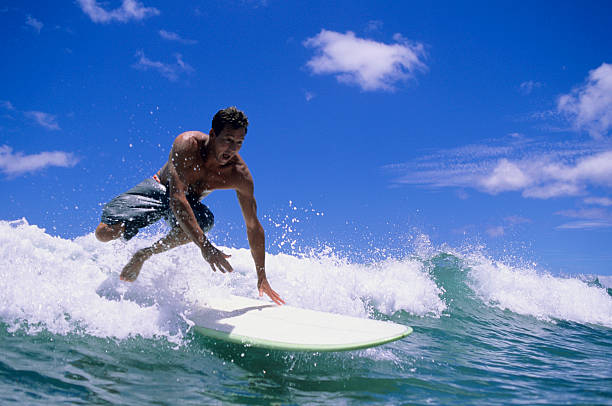
Every surfer knows the moment you paddle out on a freshly glassed board, deck smooth as a lagoon, and your front foot slides like it’s on a greased turtle shell. That’s the universe telling you to respect the wax. Wax ain’t some sticky block from the surf shop. It’s the silent partner in every bottom turn, the unsung hero of every cutback, the thin line between shredding and rag-dolling into the foam. For maximum grip, you gotta approach wax as a ritual, not a chore. It’s the difference between carving a rail like a pro and eating sand like a kook.
First off, let’s talk base coat. This is the foundation, the anchor. Skip it and you’re building a castle on sand. Base wax is harder. Press it on with firm, circular strokes, leaving a thin, even layer. The goal isn’t pretty; it’s a porous texture for your top coat to sink into. Without a solid base coat, your softer top coat peels off like sunburned skin. Once the base is down, let it cool and set. Then comes the top coat. Choose your weapon based on water temp. Cold water needs a grippier, stickier wax that doesn’t turn to concrete. Warm water needs a harder wax that won’t melt. Get that wrong, and you’re slipping all over or leaving a trail of clumps like a slug’s cousin.
Now, the application itself is an art. You don’t just smear it on like butter on toast. You want to rub it in small, overlapping circles, not too much pressure, letting the warmth of your hand soften the wax just enough. As you go, you’ll see little bumps forming. Those bumps are your friends. They’re what grab the bottom of your feet and keep you locked in during explosive turns. A glassy, smooth wax job looks clean, but it offers zero traction. You want that pebbly texture, like the skin of a dune made of fine gravel. Some surfers use a wax comb to rake up the bumps, creating more texture, but you can let your palm do the work. The key is to build up enough layers over time. One coat isn’t enough. After a couple sessions, your wax gets flattened and slippery. That’s when you reapply, but don’t strip off the old wax entirely. Just add another thin coat on top, and your board builds up a memory, a layer of trust between you and the surf.
The true connoisseur knows that wax isn’t permanent. It ages, it picks up sand, it oxidizes, and it slowly loses its tack. That’s why you see surfers scraping off old wax with a comb or a plastic card, giving the board a fresh start. It’s a meditation. You sit in the parking lot with the sun on your back, running the comb in long, rhythmic strokes, watching those little curls of wax fall onto your towel. You think about the waves you’ve caught, the one that got away, the closeout that pounded you. Then you lay down a fresh base and a new top coat, and suddenly your board feels alive again, like it’s whispering, ’Let’s go.’
Surf wax also teaches you about seasons. You read ocean temperature not from a thermometer but from your board. When the water drops, switch to colder-water wax. Feel that extra stickiness under your feet when the swell gets fat. In summer, switch back to tropical formula, or you’ll leave stains on your wetsuit and board bag. It’s a constant dance, tuning your gear to the planet’s rhythms. You start to feel the changes in your bones, that’s real surfer wisdom.
There’s a zen to it. Waxing your board before a session is like a surfer’s prayer. You’re not prepping foam and fiberglass; you’re asking for grace on the wave, balance on the rail, that split-second connection with the ocean’s energy. When it comes together—right base, perfect top coat, bumps just right, water temp matched—you’ll feel it. Drop into a hollow section, bottom turn hard, back foot sticks like glue. Carve a line that feels impossible, come out grinning. That’s wax doing its job. That’s maximum grip. And there’s nothing more sacred than that.