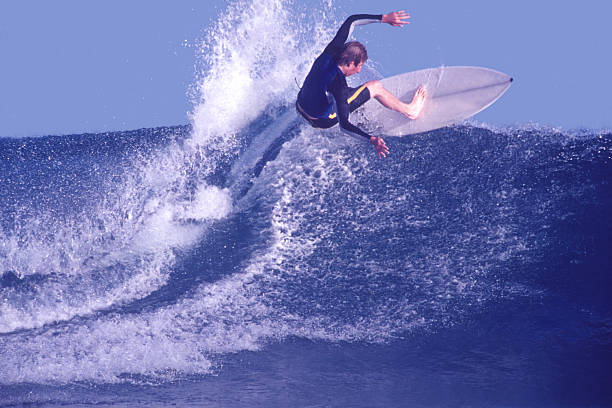
There is a moment every surfer knows, that split second when the bottom drops out and the whole ocean seems to hold its breath. You’re dropping in, rail engaged, eyes locked on the exit. The wind goes quiet. The roar of the foam fades into a distant whisper. And in that pocket of pure electric silence, you hear it. Not with your ears, but with your whole being. That’s the real surf music, man. It’s the sound your soul makes when it’s perfectly in trim with the wave.
We’ve all got our mental playlist for the drive to the beach. Maybe it’s Dick Dale’s “Misirlou” reverbing off the dashboard, those frantic staccato notes that crank your stoke from zero to ten before you even see the channel. That’s the classic stuff, the golden era sound of Malibu in the sixties when the whole world was learning to hang ten. Dick Dale didn’t just play music, he played the wave. He was a surfer first, and his guitar mimicked the growl of the ocean, the spray of the lip, the adrenaline of a closeout. That sound became the universal language of the lineup, a raw, reverb-drenched blast of pure energy that told everyone, “This is fun. This is alive.”
But surf music is way deeper than just the surf rock of yesteryear. It evolved, just like the boards we ride. As the shortboard revolution hit and surfing got more radical, the soundtrack got weirder and more introspective. The psychedelic swirl of the sixties bled into the lineup. Bands like The Beach Boys, sure, they sang about girls and woodies and the endless summer, but their harmonies were a different kind of wave, a rolling, melodic swell that carried the feeling of a glassy dawn patrol session. The real deep surf music, the stuff that gets under your skin, is never just about the action. It’s about the feeling between the waves.
Think about the lulls. You’re sitting on your board, sun on your back, the horizon line blurring with the heat. That’s where the modern surf music really lives. The mellow grooves of reggae, the deep bass lines of dub, the chill ambience of boards of Canada – that’s the music of the wait. It’s the soundtrack to the paddle out, to the camaraderie with the boys and girls in the water. It’s the rhythm of the tide. I remember a dawn patrol session up the coast, peak was firing, but there was this one lull that stretched forever. This old salt next to me, with a face like a dry riverbed, just hummed a little tune. I asked him what it was. “Just a song the ocean wrote,” he said. And that was it. The ocean writes the melody, we just try to play along.
The art of surf music isn’t always about notes, either. It’s in the scrape of wax on a deck, the hiss of a jetty wave after a big set, the sound of your own breathing as you hold your breath in a barrel. It’s a language that doesn’t need words. When you’re out there, way beyond the break, and the sun is setting, that’s the ultimate concert. The stoke you feel in those moments is the purest sound ever recorded. That’s why the surf community holds music so close. It’s the connector. It’s what we share when we’re stoked and what we lean on when the surf is flat.
And the art side of it, the visual culture, that’s the same story, just told with paint and line. Think of the classic surf art of Rick Griffin, those swirling, cosmic, postcard waves that looked like they were made of light and acid. That art captured the feeling of the wave, not just the shape of it. The colors were too bright, the tubes too perfect, because that’s how it feels when you’re inside it. Surf photography, that’s the real documentary. A single frame of a perfect tube tells a thousand stories about speed, risk, and grace. It captures that invisible song.
Today, a surfer walking down the beach with a speaker pumping some deep house or chill wave is just as much a part of the tradition as the guy with a vintage surf rock record. The sound has changed, but the source is the same: a deep, abiding love for the ocean and the ride. The best surf music, whether it’s a vinyl crackle on a porch or the ambient hum of the sea in a lull, always brings you back to that singular moment. The moment you’re in the green room, all alone, but somehow part of everything. That’s the endless melody. That’s the true surf art.
So next time you paddle out, listen. Don’t just hear the waves. Listen to the space between them. Listen to the hum of the salt air. That’s the oldest surf music there is, and it’s been playing forever, just waiting for you to drop in.