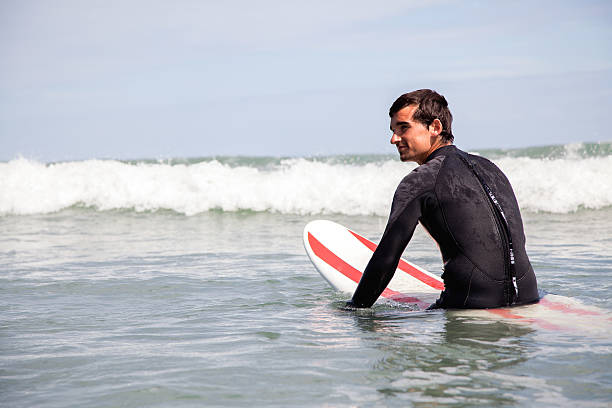
There’s a moment every grommet remembers, the one that hooks ’em for life. It ain’t the first wave they ever catch, not really. That first wave is usually a wobbly, whitewash-riding, foamie-paddle of pure chaos where they’re mostly just along for the ride, arms flailing like a startled octopus. Nah, the real moment is the first time they feel the trim. It happens maybe a dozen sessions in, after they’ve eaten more sand than a beach flea and have the barnacle-scraped knees to prove it. They’re out in the lineup on a day when the swell is fat and forgiving, a proper beginner’s playground. An old salt in the water, maybe a crusty local with a sun-bleached ponytail and a board that’s seen more waves than a marine biologist, gives ’em a nod. “Go, go, go!“ he hollers as a gentle green wall starts to build. The grommet paddles like their life depends on it, feels that familiar lurch as the wave catches the tail, pops up in a clumsy, stoked-out squat, and for a glorious, weightless three seconds, they’re not falling. They’re flying. The world goes quiet except for the hiss of the lip and the roar of their own heartbeat. That’s the stoke. That’s the seed.
For a grommet, the ocean is a giant, unpredictable classroom. Every session is a lesson in humility. They learn the hard way about the raging rip that will tow ’em halfway to Japan if they don’t paddle parallel. They learn the universal rule of the lineup: respect is earned, not given. Dropping in on a local’s wave is a cardinal sin, a quick way to earn a very loud, very colorful lecture that’ll be remembered long after the sting of shame fades. The language itself is a code to crack. A “closeout” isn’t a bad day at the office; it’s when the entire wave crumbles at once, a frothy wall of doom perfect for a pearl-dive. “Going over the falls” sounds like a fun water park ride, but it’s anything but. It’s the washing machine cycle of a wipeout where you get rag-dolled by the lip, holding your breath until your lungs scream and the world turns a deep, desperate blue. That’s the green room, but not the fun kind. The fun green room is when you make it, when you’re tucked inside the hollow barrel of a perfect wave, a fleeting cathedral of moving water. A grommet dreams of that green room, of hearing the “bwwwwooooomp” of the lip curling over as they get shacked.
Equipment is another big part of the grommet’s education. They start on a foamie, a soft-top log that’s basically a floating mattress. It’s forgiving, stable, and impossible to sink, perfect for learning the mechanics of a pop-up. A buddy might call it a “barge,“ but no grommet cares. As they progress, they start eyeing the shortboards and fish on the racks at the local surf shop, the ones with the sick airbrushed flames. They beg their folks for a pro model, maybe a Pyzel or a Lost replica, something their hero rides at Pipeline. But the seasoned surfers in the parking lot, the ones waxing their sticks with the ritual of a monk, they’ll almost always say the same thing: “Get a bigger board, little dude. Paddle power is everything.“ The grommet pouts, but they know it’s true. A big board catches more waves. Simple physics. They also learn the sacred ritual of caring for their quiver. A ding isn’t just a ding; it’s a tragedy. “Honey, I dinged my board” is a phrase that holds the weight of a solemn confession. Duct tape and Solar-Resin become repair-shop staples.
But beyond the technique and the terminology, the grommet’s world is powered by pure, unadulterated obsession. It’s the vibe you get before dawn, checking the Surfline cam with a bowl of cereal, watching the swell lines pulse across the forecast. It’s the sting of cold water on a dawn patrol session before school, the feeling of cracked, chapped lips and salt-crusted hair that gets you through a boring math class. It’s the tribe. The grommet’s crew is everything. They share wax, they trade tips on where to avoid the sharky conditions, they push each other into bigger waves. There’s a hierarchy, sure, based on skill and seniority, but the bond is real. A bail on a close-out set draws laughs, but also a hoot of encouragement. A perfect cutback gets a “Yeeew!“ that echoes off the cliffs. They learn the shaka, the hang-loose hand sign that says more than words ever could. It means “right on,“ “good vibes,“ “that wave was killer,“ or simply “I see you, brother.“
This journey for the grommet isn’t about becoming the next world champion. Sure, the fantasy is there, the daydream of pulling into a perfect barreling right at Teahupo’o. But the real, lasting stoke is simpler. It’s the feeling of being completely present, of having your mind wiped clean of all the school drama, the homework, the weird parental arguments. When you’re paddling out through a set, timing the lulls, feeling the raw power of the ocean breathing beneath you, there is no past and no future. There’s only the next wave. It’s a form of meditation, a saltwater therapy. The grommet learns patience, resilience, and a profound respect for something way bigger than themselves. The ocean doesn’t care if you’re having a bad day. It gives and it takes. It’s a harsh but fair teacher. And when a grommet finally, truly gets it, when they can read the swell, pick the right line, and ride a wave with flow rather than just panic, they’re not a grommet anymore. They’re a surfer. And they’re in it for life, chasing that endless summer, one glassy set at a time. So next time you see a kid out on a foamie, looking like a spastic sea turtle, don’t scoff. Just give ’em a shaka. They’re living the dream. They’re getting the stoke.