There’s a certain magic that happens when you paddle out on a single fin. The moment you drop into a wave, the board just seems to lock in with the water in a way that feels ancient, raw, and deeply connected to the roots of surfing. It’s like the ocean remembers the days before thruster setups and quad fin science, back when a piece of wood with a single blade was all you needed to find your line. For the true wave chaser, the single fin isn’t just a relic of the past—it’s a living, breathing testament to what surfing is all about: flow, style, and riding with soul.
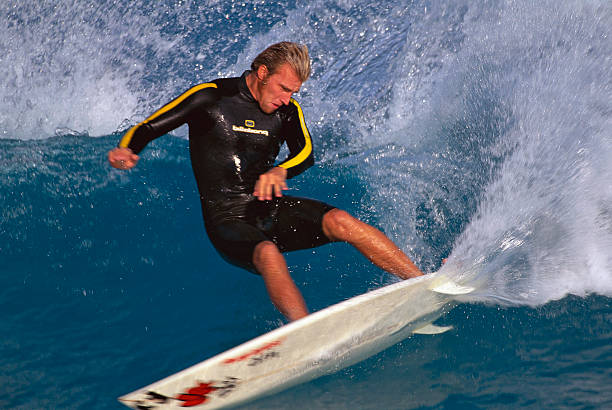
Let’s talk about the ride itself. A single fin board, whether it’s a classic longboard, a mid-length egg, or a vintage-style shortboard, gives you that unmistakable sensation of yaw. Unlike a thruster, which locks in tight and holds a rail for aggressive turns, the single fin lets the tail slide a little. You can feel the fin release and re-engage as you carve, and that subtle slip allows for some of the most stylish cutbacks and roundhouse snaps you’ll ever pull. It’s not about landing aerials or throwing spray like a machine—it’s about arcing through the wave face with grace, letting the board flow beneath you as if it’s part of the swell. That’s the soul of the single fin.
And then there’s the trim. Drop into any decent line on a single fin, and you’ll feel what surfers call “the glide.” That’s the long, effortless speed you carry down the line, with the fin acting like a rudder that just barely steers you along the pocket. You can cross-step up to the nose, hang five, or just stand tall and watch the world go by while the wave offers up its power. Single fins, especially on longer boards, force you to finesse your weight shifts rather than relying on your back foot to torque a turn. It teaches you to feel the wave, not fight it. And for anyone who’s ever chased the sun from beach to beach, that mellow connection is the whole point.
Let’s not forget the history. The single fin dominated surfing from the early days of redwood planks through the Malibu era and even into the late 1970s. Guys like Phil Edwards and David Nuuhiwa perfected the art of the noseride on a single fin, and the style they pioneered—the hang five, the hang ten, the cheater five—is still the gold standard for longboarders today. Even the shortboard revolution, when George Greenough and others shortened the board, kept the single fin for a while. It wasn’t until the early 80s that Simon Anderson’s thruster took over, and while that setup changed the game for high-performance surfing, many wave riders never fully abandoned the one-fin magic. There’s a reason why shapers like Maurice Cole, Greg Liddle, and Tom Wegener still build beautiful single fin designs. They know that a single fin board isn’t just a tool—it’s a statement.
Now, if you’re thinking about adding a single fin to your quiver, don’t worry about being old-school or outdated. The modern single fin is anything but. Fiberglass boards with a single box let you experiment with different fin shapes: a classic pivot fin for tight turns, a flex fin for a looser feel, or a proper 10-inch d fin for maximum hold on a longboard. You can go with a 2+1 setup if you want a backup, but purists will tell you to run true single. The key is matching the fin to the board’s rocker and rail shape. A low-rocker board with a wide tail and a big single fin will give you that smooth, noseriding trim. A tighter rocker with a narrower tail and a smaller fin is perfect for carving up a peaky point break.
The culture around single fins is just as inviting. You’ll see them at classic point breaks like Malibu, Rincon, and San Onofre, where the vibe is laid back and the drop-ins are rare. There’s a camaraderie among single fin riders—you give a nod to someone on a 9-foot log with a big wooden fin, and you just know they get it. They understand that surfing isn’t always about scoring the gnarliest barrel or sticking a fade on the lip. Sometimes it’s about catching a long, peeling right on a glassy afternoon, walking up to the nose, and feeling the board hum under your feet as the wave carries you toward the sunset. That’s the endless summer feeling, and the single fin is the ride that takes you there.
So whether you’re a seasoned surfer looking to rediscover the joy of a simple setup or a grom just starting to explore the language of the wave, give the single fin a chance. Paddle out on one and let the ocean teach you what all those old-timers already knew: sometimes, less is more.