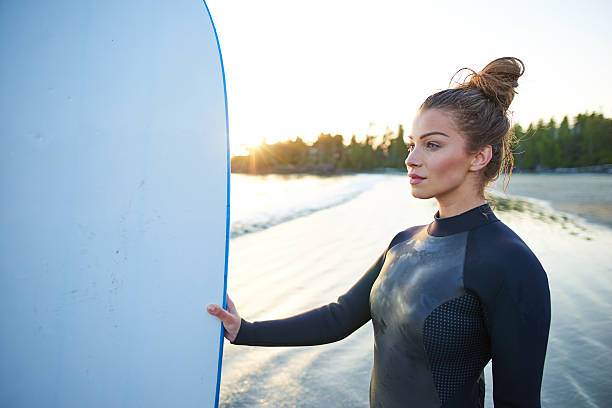
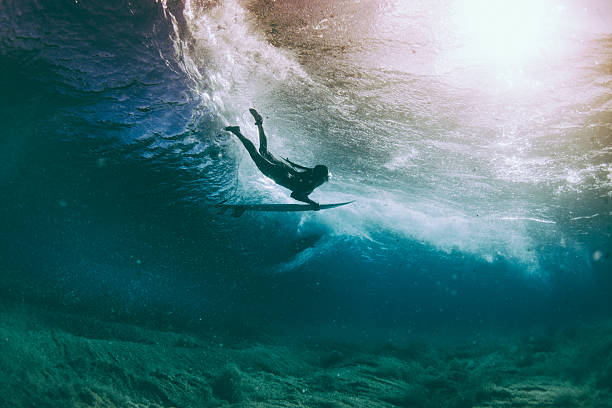
There’s a funny thing about being a surfer. You spend so much time staring out at the horizon, scanning for sets, that you almost forget to look down. But lately, more and more of us are paddling out over reefs that look like bone yards. The color is gone. The fish are scarce. And the wave itself? It’s changing. Right now, one of the most gnarly environmental issues facing our lineup isn’t a storm or a pollution spill. It’s the quiet, creeping devastation of coral bleaching, and it’s rewriting the way we surf.
Coral reefs are the architects of some of the world’s most perfect waves. They don’t just create a pretty backdrop for a barrel shot. They shape the bathymetry, the underwater contour, that takes a raw ocean swell and turns it into a peeling, hollow gem. A healthy reef is a living, breathing structure. It grows slowly, building complex ledges and shallow sections that make a wave stand up tall and pitch out. When we say a break like Pipeline or Teahupo’o is a “surfing pillar,“ we’re really talking about thousands of years of coral growth carving out a specific curve in the ocean floor. That curve is everything. It’s the difference between a closeout and a tube that spits you out like a cannon.
But we all know the ocean is running a fever. When water temps spike, even by a couple of degrees, the coral gets stressed. It kicks out the colorful algae, called zooxanthellae, that lives inside its tissue. That’s the bleaching event. It doesn’t mean the coral is dead yet, but it’s starving, vulnerable, and on the brink. If the warm water hangs around too long, the coral dies. And when the coral dies, it doesn’t just turn white and ugly. It starts to erode. That perfect shelf that used to stand up a six-foot south swell? It crumbles. The wave loses its shape. The ledge gets deeper. The barrel becomes mushy, or it closes out because the reef is no longer there to focus the energy.
This isn’t some far-off future scenario. It’s happening right now in places that are sacred to surf culture. Take the Maldives. The low-lying atolls are some of the most consistent wave factories on the planet. Recent marine heatwaves have put immense pressure on the house reefs that groom those long, playful lefts. When a reef degrades, it doesn’t just wipe out one wave. It changes the entire sand movement and current patterns of a break, affecting swell direction and wave height consistency. You paddle out to a spot you’ve surfed for a decade and suddenly it feels foreign, like the ocean shifted the mat underneath you.
There’s a heavy spiritual side to this too. We talk about “the endless summer” and chasing the sun, but a dead reef is the opposite of stoke. It’s a silent lineup. You don’t hear the crackling of shrimp or feel the pulse of life under your feet. Surfing a bleached reef feels hollow, like you’re riding over a graveyard. For many of us, the ocean is a church. We go out there to connect with something wild and untouched. When that wildness is stripped away by our own carbon footprint, the session loses its mana.
So what can we do about it beyond just feeling bummed? The fix isn’t a quick paddle back to shore. It requires some deeper awareness. First, stop supporting things that kill the reef. Sunscreen is a major culprit. Those chemical sunscreens with oxybenzone and octinoxate are straight poison to coral, even in tiny amounts. Switch to reef-safe, mineral-based zinc. It’s not a trend, it’s a lifeline. When you travel to a tropical spot, be mindful of where your poop and grey water goes. Runoff and nutrient pollution, usually from agriculture and poor sanitation, fuel algae blooms that smother the coral after a bleaching event. A healthy reef can sometimes recover from a warm spike if the water cleaned up quickly. But if it’s already choked by fertilizer runoff, it’s game over.
We can also get involved in local reef restoration projects. Many surf towns, from Australia to Central America, have community groups that are actively transplanting fragments of resilient coral back onto damaged reefs. It’s not a silver bullet but it’s a way to paddle against the current instead of just drifting with it. Mostly though, we have to be vocal. The surf community is a global tribe. When we see a break we love getting dialed down, we need to talk about why. We need to hold local governments accountable for water quality and greenhouse gas reduction. A good wave isn’t a given. It’s a gift that relies on a living ocean.
Next time you paddle out, don’t just count the waves you catch. Look at the reef beneath you. If it’s pale and brittle, that’s your house falling down. The future of surfing, the real magic of the endless summer, depends on keeping that architecture alive. Because without the reef, there is no shape, no barrel, no church. There’s just a flat, warm ocean, and a whole lot of empty horizon.