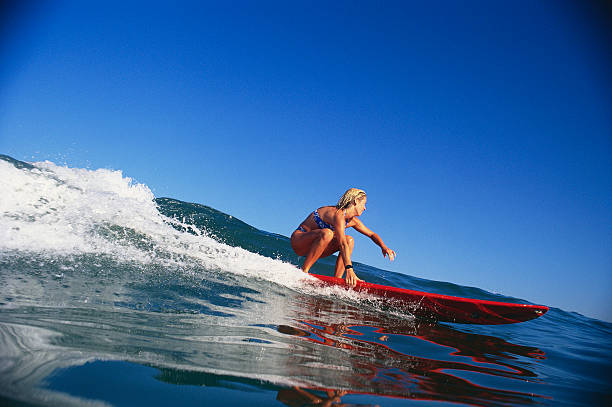
There’s a moment in every surfer’s journey when the rack at the shop just doesn’t cut it anymore. You paddle out on a thruster that feels like a two-by-four, or you catch a wave on a longboard that bucks you off the nose at the worst possible moment. You start dreaming about the perfect board, the one that matches your stance, your local break, and the way the ocean breathes under your feet. That’s when you know it’s time to make the pilgrimage to the shaping room.
Walking into a shaper’s workshop is like stepping into a sacred space. The air smells of polyurethane dust and resin, and there are blanks stacked against the wall like sleeping logs. The shaper usually has sandpaper in his hand and a cigarette behind his ear, even if he doesn’t smoke. It’s a vibe. You sit down on a crate, maybe crack a beer, and you start talking story. This is where the magic happens, because a custom surfboard isn’t bought—it’s born from a conversation.
You gotta tell him who you are. Not your name or your job. Tell him how you surf. Are you a feral drop-knee charger who goes straight to the bottom and hacks off the lip? Or are you a smooth, glidey cat who loves a long, drawn-out cutback in a shoulder-high point wave? Do you surf heavy reef like Pipeline or soft beachies like Malibu? The shaper needs to feel your wave in his bones. He’ll ask about your weight, your height, your fitness level. He’ll eyeball you and nod. He already knows your rocker before you finish the sentence.
Then you talk dimensions. Inches and liters become the poetry of your future sessions. Length, width, thickness—these aren’t numbers, they’re the blueprint for how the board will release from the wave face. The shaper will recommend a little extra foam in the chest area if you’re a power surfer, or a thinner rail if you like to sink the edge and drive through a turn. He’ll talk about the foil, which is how the thickness tapers from the stringer out to the rails. A good foil means the board breathes under your feet. A bad one means it catches and pitches you.
The stringer itself is a whole other story. Wood stringers give flex and memory. Carbon fiber stringers give response and ping. Some guys put in a spine of balsa or even a hidden chamber for float. You can choose the color of the resin tint or the type of glassing—six ounce or four ounce, one layer or two, with a patch on the deck where your feet land. Every single detail changes the way the board talks to the water. The shaper will look at you and ask, “You want it to go fast or go hard?” That’s the question that sums it all up.
And then comes the fin setup. A single fin for classic flow? A twin for slide and speed? A quad for projection and hold? Or the classic thruster for all-around performance? You can even mix it up with a five-fin box so you can experiment later. The placement of those fins is critical. A half-inch change in the leading fin’s toe-in angle can be the difference between a board that snaps into a turn and one that just spins out. The shaper knows where to put them based on your stance and the rail curve he’s already planned.
The whole process takes a few weeks, maybe more if the shaper is a legend with a six-month wait. But when you finally pounce on that phone call and drive over to pick it up, you unwrap the fresh glass and see your wave captured in foam and resin. The glass job is clean, the rails are crisp, the nose lifts just how you asked. It’s yours. Nobody else in the water has one like it.
Paddling out on that first session is a whole new kind of stoke. You feel the board under your chest and it answers your movements before you even think them. The first wave you catch, you drop in and the rail bites perfectly. You bottom turn and the board releases with a smooth, familiar hum. It’s not just a craft. It’s a collaboration between you, the ocean, and a craftsman who listened to the way you talk about the sea. That board is your dream stick, and it will carry you through a thousand sunsets until its deck gets soft and the glass starts to yellow. And even then, you won’t let it go.