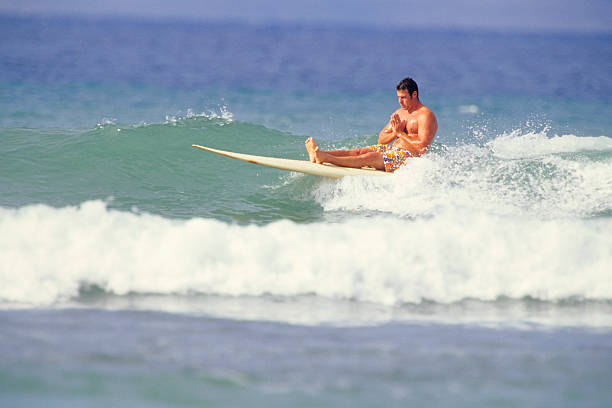
Out there in the lineup, past the shorebreak and the chaotic whitewater, there’s a rhythm that old salts feel in their bones. It ain’t written on any surf report, and no app can tell you when the next pulse of energy is gonna roll through. That rhythm is the language of set waves, and learning to read it is the difference between scratching like a spooked chihuahua and gliding into the takeoff zone with calm, confident strokes. You ever notice how the ocean breathes? Not the little gasp of a wind chop, but the deep, chesty inhale and exhale of the swell itself. That’s what set awareness is all about—feeling the pulse under your board, understanding that the sea doesn’t just toss waves at random, but rather sends them in families, in groups, in packs that travel thousands of miles before unloading their story on your local break.
Most beginners stare at the horizon like it’s a TV screen, watching every lump and bump with equal desperation. They duck-dive every ripple, paddle for every foam ball, and burn out before the real juice arrives. But the seasoned local knows that waves come in sets—usually two to six waves, with a sneaky lull between each cluster. That lull is your best friend. It’s the ocean’s way of giving you a moment to breathe, reposition, and recalibrate. When you see a set start peeling on the outer reef, you don’t just paddle blindly at the first wave. You watch the whole sequence. The first wave often spits and grinds, but it’s the second or third that holds that extra bit of fat, the one with a shoulder that invites a top turn or a barrel that looks like a dark green hallway. The uninitiated chase the first wave every time, and then get caught inside by the cleanup set, tumbling in the washing machine of a hundred whitewater walls. Set awareness tells you to let that first one go, to slide deeper, to position yourself at the peak of the wave that actually matters.
Paddling out is where set awareness transforms from a head concept to a full-body intuition. You don’t just aim for the lineup—you time your exit through the impact zone between sets. That’s the golden window. When the last wave of a set folds and the ocean momentarily flattens, you’ve got maybe thirty or forty seconds of relatively calm water to sprint across the reef. That’s when you make your move. Some surfers call it the “ladder strategy,“ where you paddle a bit, stop, assess, paddle again, always syncing your effort with the ocean’s breathing. The worst thing you can do is get stuck in the impact zone when the next set rears up. Then you’re not surfing—you’re just doing underwater gymnastics, trying to survive. But with set awareness, you read the bomb set from the moment those first bumps darken the horizon. You see the water pull back, the reef shallowing, the telltale lines start to stack. That’s your signal to either sprint out the back or dive super deep, depending on whether you want to catch one or just watch the show.
The real magic happens when you use set awareness to pick your waves like a surfer who’s been at the same break for forty years. Every swell has a personality. Maybe the set waves are coming in a steady rhythm of five, with the third wave always being the sneaky, bigger one. Or maybe the sets are all over the clock, trailing off into a long lull that messes with your mind. You’ve got to develop that sixth sense for the ocean’s micro-climates—the way the wind shadows a certain section, how the tide changes the power of the set wave’s peak, where the sandbar has shifted after a winter storm. That awareness lets you position yourself not just where the wave breaks, but where the set wave is going to break best. A good reader of sets will paddle for the right wave in the set, not just any wave. They’ll let the first one go by to set up on the second, knowing that the second has a more defined barrel or a longer wall. That patience, that quiet calculation, is what separates casual surfers from true students of the ocean.
Then there’s the pure joy of learning to feel the set coming, even when your eyes can’t see it yet. Seasoned wave riders talk about a subtle pressure change, a slight lift of the water under your board, a weird calm that settles over the sea just before the horizon muscles up. It’s a primal connection, a leftover human instinct for reading weather and water that most of us have forgotten. But once you open that channel, the ocean becomes a living conversation. You’re not just a stick floating on the surface; you’re a participant in the endless dialogue between swell and shore. That’s the spirit of The Endless Summer, right? Chasing the perfect set wave all around the globe, not because you want to own it, but because you want to be a part of its story. So next time you paddle out, don’t just look for waves—listen to the rhythm, count the lulls, and let the set tell you when it’s time. Your paddle will get lighter, your drops will get smoother, and you’ll start catching waves that were always there, just waiting for someone who knew how to read them.