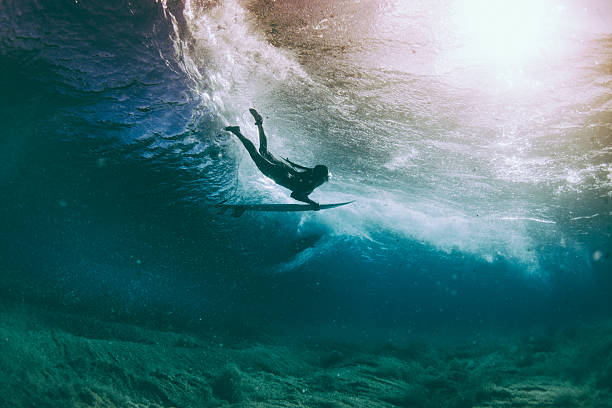
Back in the day, long before neon boardshorts and jet skis, the Hawaiian people had already perfected the art of riding sliding water. They called it he’e nalu, which literally means to slide or surf on waves, and it was so much more than just a way to kill time between fishing trips. For the ancient Hawaiians, surfing was a sacred practice woven into the very fabric of their culture, a dance between mortal and ocean, a gift from the gods themselves. And if you think today’s lineup has rules, try paddling out under the kapu system, where the penalty for dropping in on the wrong wave could be straight-up death.
The roots of he’e nalu stretch back over a thousand years, when Polynesian voyagers first set foot on the Hawaiian Islands. These people understood the ocean on a cellular level, reading swells like we read text messages, and they brought that knowledge with them across the Pacific. But it wasn’t just about wave riding as sport. In ancient Hawaii, surfing was a deeply spiritual act. The ocean, or ke kai, was considered a living entity, and the waves themselves were seen as manifestations of the divine. Surfers would offer prayers, or pule, to the ocean gods before paddling out, asking for permission and protection. Kahuna, the high priests and specialists of various crafts, would perform rituals to bless the boards and the surfer, ensuring a safe and prosperous session.
Now, here’s where things get wild. Surfing in ancient Hawaii was not a democratic free-for-all. It was tied directly to the social hierarchy, especially in the courts of the ali’i, the chiefly class. The kings and queens of Hawaii were often accomplished surfers themselves, and they treated the beach as an extension of their royal domain. Every island had its own famous breaks, and certain waves were strictly reserved for royalty. If you were a commoner and caught riding a wave that belonged to the ali’i, you could lose your life without a second thought. There was no calling the police, no talking your way out of it. The kapu system kept everything in order, and surfing was part of that divine order. The biggest, thickest boards, called olo, were crafted from the wood of the wiliwili or koa tree and could stretch up to twenty feet long. These boards were heavy, often over a hundred pounds, and they were reserved for the elite. Commoners rode shorter, more maneuverable boards called alaia, which were still a far cry from the foam sleds we zip around on today.
But beyond the social rules, there was a profound sense of joy and playfulness in ancient wave riding. Early European explorers, like Captain James Cook’s crew, were absolutely blown away when they first witnessed Hawaiians surfing in the late 1700s. They saw men, women, and children of all ages catching waves with pure stoke, often riding tandem or standing on their heads. The Hawaiians weren’t just competing; they were celebrating the ocean’s energy. Surfing was also a way to settle disputes, win romantic attention, and build community. He’i nalu had its own language and etiquette, with terms for different wave types and maneuvering that would still feel familiar to a modern surfer. The joy of trimming along a glassy face, feeling the board hum beneath your feet, that timeless rush, existed back then exactly as it does now.
Of course, the arrival of Western missionaries in the 1820s nearly snuffed out this sacred practice. They viewed surfing as frivolous, even sinful, and encouraged Hawaiians to abandon their “pagan” ways. Combined with disease and cultural upheaval, the art of he’e nalu went into a steep decline. For nearly a century, the waves of Hawaii remained largely empty, ghosted by the very people who had first mastered them. It wasn’t until the early 1900s, with the Hawaiian Renaissance and figures like Duke Kahanamoku and other Waikiki beach boys, that surfing was reborn and began its journey out into the world.
Yet even with all the evolution, the high performance shortboards, the aerial reverse maneuvers, the drone footage and contest jerseys, the soul of surfing still traces straight back to those ancient Hawaiian shores. Every time you paddle out, you’re participating in a lineage that reveres the ocean as both playground and temple. The stoke you feel when you lock into a clean green wave, that pulse of pure aloha, is the same one that moved the kings and queens of old. So next time you’re sitting in the lineup, give a little nod to the ancestors. Respect the water, respect your fellow surfers, and remember that surfing was never just a sport, but a way of honoring the endless rhythm of the sea. He’e nalu is not something you do; it’s something you become.