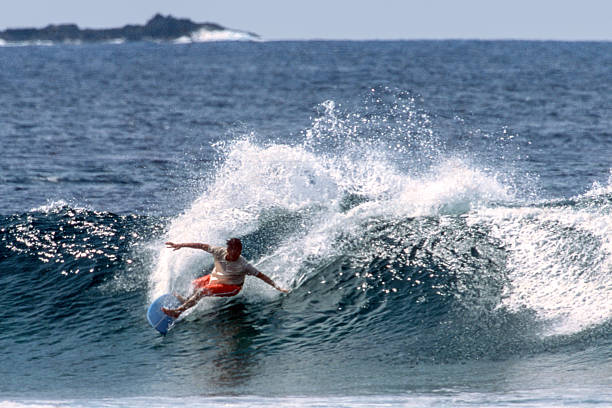
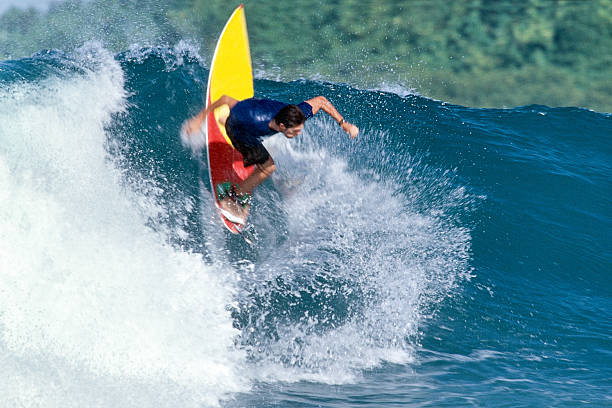
When you paddle out at Waimea Bay on a proper winter swell, you’re not just entering the ocean. You’re stepping into a living time capsule where every drop of spray carries the history of a sport that refused to stay small. This bay on Oahu’s North Shore isn’t just a spot. It’s the proving ground, the sacred temple, where big wave surfing grew teeth and learned to roar. To understand why Waimea holds that status, you got to rewind to a time when riding thirty-foot faces was pure madness.
Back in the 1950s, surfers were riding waves that barely tickled the ten-foot mark. The North Shore was known, but mostly as a danger zone. Hawaiian locals had been paddling out at Makaha and even attempting outer reefs, but Waimea was still a mythic beast. It had a reputation for being impossibly heavy, with a takeoff that pulled so hard it felt like the ocean was ripping your arms from their sockets. The break sits at the mouth of the Waimea River, and the river’s freshwater mixes with salt, creating a weird, jumbled current that makes the wave even more unpredictable. For years, everyone just watched from the cliff, shaking heads.
Then came the winter of 1957. A crew of surfers, the legendary Banzai Pipeline pioneers, were staring at the bay during a monster swell. They’d been pushing things at other spots, but Waimea was unridden. Greg Noll, a big, brash Californian, decided enough was enough. He paddled, hollered, and charged down that face. The ride wasn’t pretty. It was a wild, out-of-control drop that ended with him getting annihilated in the whitewater. But he’d done it. He’d punched through the barrier. That single wave cracked the whole sport wide open.
From that day, Waimea became the measuring stick. Surfers like Jose Angel, Butch Van Artsdalen, and later Eddie Aikau treated the bay with a mix of terror and reverence. It wasn’t just about riding the wave. It was about surviving it. The takeoff is so steep that you’re basically in freefall for the first couple seconds, and the wave jacks up so fast that your only option is to plunge straight down and hold on. There’s no wide cutback, no gentle glide. It’s a kamikaze mission that rewards pure balls and down-the-line speed.
The culture around Waimea grew deeper than just surfing. It became a test of character. The Eddie Aikau Invitational, the famous big wave contest at Waimea, only runs when waves are twenty feet or bigger. That wait can take years. And when those swells arrive, the surf world holds its collective breath. The contest isn’t about prizes. It’s about honoring a man who gave his life saving others, and proving that respect for the ocean is the only way to survive.
Over the decades, Waimea has watched the sport evolve. Tow-in surfing arrived in the 1990s, letting surfers paddle onto waves that would have crushed old legends. Faces got bigger, drop-ins more radical. Yet despite all the tech, Waimea remains the touchstone. A surfer can ride Mavericks or Jaws and still come back to Waimea for that peculiar mix of raw power and strange calm. The bay humbles everyone, from world champs to groms. It doesn’t care about scores or sponsors.
For the everyday surfer, Waimea is a dream and a nightmare rolled into one. You study it on YouTube, listen to old salts, and imagine being in that lineup. But the biggest part of the Waimea legend isn’t just the wave. It’s the community. The lifeguards, photographers, tow teams, the ohana. They all share a connection to this stretch of blue that defined big wave surfing.
As years roll on, Waimea stays eternal. Each winter brings new swells, new challengers, and new moments of unscripted stoke. When you see a surfer paddle over the ledge, dropping into that giant green canvas, you’re watching a ritual passed down since that first fearless charge. It’s not just a wave. It’s a testament to the human spirit, the endless pursuit of the biggest, most beautiful ride the ocean can throw. That’s why Waimea will always be the big one.