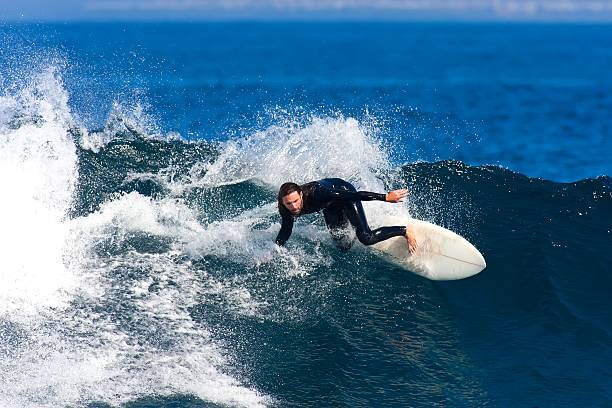
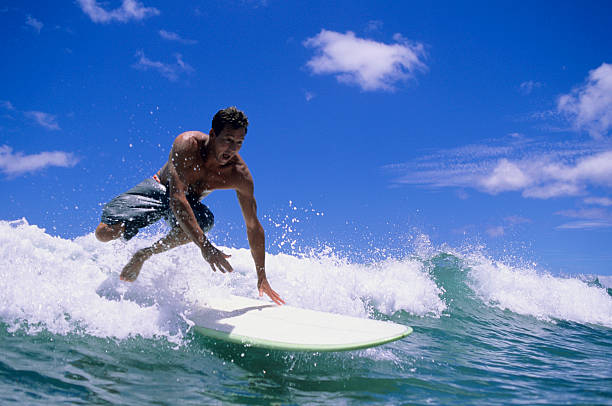
You paddle out through a channel of whitewater, the salt spray kissing your face, and you feel it before you see it—that subtle shift in the ocean’s pulse. The sets are starting to march in from the deep, stacked and hungry. A dozen surfers sit bobbing on their boards, all eyes fixed on the horizon, measuring each other’s intentions by the way they angle their noses toward the swell. Nobody has spoken a word, and yet everyone knows exactly what’s happening. That’s because the ocean has its own language, and the real surfers aren’t the ones who ride the biggest waves—they’re the ones who listen closest.
Surf etiquette gets a bad rap sometimes. People think it’s a bunch of arbitrary rules cooked up by territorial locals with something to prove. But strip away all the territorial posturing and the occasional ugly showdown in the parking lot, and what you’re left with is something much deeper: a profound respect for the ocean itself. The unwritten rules of the lineup aren’t about who gets the most waves or who’s the toughest guy out there. They’re about honouring the fact that the ocean gives us waves, and it can take them away just as quick. When you drop in on someone, you’re not just being rude—you’re failing to read the ocean’s rhythm. You’re treating the wave like it’s yours to own, when in truth none of us own a single drop of sea water.
Think about the cardinal sin of the lineup: snaking. You paddle around a surfer who clearly had priority, steal their peak, and take off on the wave that was rightfully theirs. Sure, it’s a jerk move, but look deeper. What that move says is, “I don’t care about the energy that built this wave. I don’t care about the moment of patience you spent waiting for this set. I only care about my own stoke.“ And the ocean, being the ancient, wise, and sometimes unforgiving thing that it is, notices that kind of energy. It’s not that the sea punishes you with a hold-down or a reef cut—though that can happen—but that the sea rewards those who align with its flow. When you paddle with respect, the waves seem to open up for you. When you paddle with ego, you fight the current every stroke of the way.
Respecting the ocean also means understanding that the lineup isn’t a democracy; it’s more like a living organism. Each surfer is a cell in this organism, and the wave is the blood that moves through it. When one cell acts out, the whole body feels it. That’s why locals often have priority at heavy breaks—not because they’re better people, but because they’ve spent years reading that particular piece of coastline. They know where the rip runs, where the reef is shallowest, how the swell bends around the point. To a stranger paddling out without first sitting back and watching, that knowledge is invisible. But the ocean knows who has paid their dues.
And here’s the thing about paying dues: it doesn’t have to mean years of grumbling and earning your place through some rite of passage. Paying dues can simply mean spending ten minutes sitting on your board in the channel, watching the sets roll through, noticing which surfer catches the most waves and how they position themselves. It means feeling the tide change under your armpits and adjusting your line accordingly. It means taking a wipeout with grace—laughing it off instead of cursing the foam—because you understand that the ocean wasn’t trying to punish you. It was just doing what the ocean does.
Sometimes the deepest form of ocean respect is simply not paddling out at all. When the swell is overhead and jumbled, when the current is ripping you sideways and the shore break is closing out, you have to ask yourself: am I here to prove something, or am I here to be part of something bigger? A surfer who truly respects the ocean knows when to say no. They know that the wave doesn’t care about your schedule, your ego, or your need for a story to tell back on the beach. The wave exists for its own reasons. If you’re not ready for it, the wave will break you, and not just physically. It’ll break your spirit a little, make you doubt yourself, and send you back to shore with your tail between your legs.
But when you do paddle out with the right mind—humble, patient, tuned in—the ocean responds. You catch a wave that seems to open a door just for you. You glide along a clean face that feels like it was painted specifically for your fins. You kick out at the end and share a nod with the surfer next to you, and no words are needed. That’s the silent code. That’s what happens when you stop treating the ocean like a playground and start treating it like a partner. Because the ocean doesn’t care who you are, where you’re from, or how much your board costs. It only cares about the energy you bring. And if you bring respect, it gives back the kind of stoke that lasts long after the tide drops. So next time you find yourself in the lineup, take a breath. Look out at the horizon. Feel the ocean’s pulse under your belly. And remember: you’re not just riding a wave. You’re earning it.