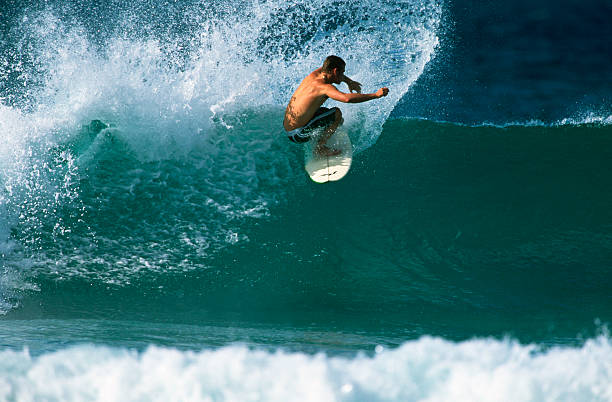
Let’s be honest, the ocean doesn’t charge a cover fee. Mother Nature throws waves at the shore every single day, free for anyone who shows up with a board and a pulse. The whole industry built around surfing – the glossy magazines, the overpriced wetsuits, the resort-lined point breaks – tries to convince you otherwise. But deep down, every salty dog knows that the real currency of this sport is stoke, not dollars. So if your bank account is looking more like a tide pool in the middle of a drought, that doesn’t mean you hang up the leash. It just means you gotta get clever. Budget surf travel isn’t about suffering or skipping waves; it’s about hacking the system to paddle out more, pay less, and feel richer than any CEO with a quiver of custom boards.
The first rule of hunting cheap waves is to point your nose away from the hype. You don’t need Indo’s famous reefs right now – though, let’s be real, they’ll always be there. Instead, look for the places where your currency stretches like a warm-up on a longboard. Central America, parts of Mexico, Portugal’s less-glamorous coast, and even spots in Sri Lanka or the Philippines offer world-class surf at a fraction of the cost you’d blow at a California point break. The trick is to ditch the standard travel season. Sure, summer in Bali is pumping, but that’s when every backpacker with a foamie is charging the same lineup. Go in shoulder season, when the swells are still solid but the crowds are thin and the guesthouse owners are desperate for a few nights of business. You can often negotiate a room with a fan and a mattress for less than the price of a single surf lesson back home. And honestly, that’s way better than spending three times more for air conditioning you won’t even use because you’re gonna be asleep the second your head hits the pillow after a dawn patrol session.
Now, about the gear. Shipping a board across the planet is a quick way to bankrupt your whole mission. Airlines love to slap extra fees on those bulky bags until you’re crying into your passport. Instead, either pack a compact travel board or, better yet, buy a beaten-up log or a fish when you land. Local surfers are always looking to offload a board that’s seen better days, and you can often score something rideable for the price of a nice dinner. When you leave, sell it right back to the next broke wave-chaser who stumbles into town. That way, your equipment is essentially free, and you’ve made a buddy to boot. Same goes for wetsuits if you’re heading to colder waters – check the local pawn shops and secondhand markets. A suit with a few patches on it still keeps you warm, and it tells a story that a brand-new rubber suit never could.
Getting to the breaks once you’re there? Public buses are your best friend. They’re cheap, they’re sketchy, and they’re the fastest way to meet locals who know exactly where the hidden sandbar is breaking. You can also team up with other budget surfers and split gas on a beat-up scooter. The real secret, though, is to stay close to the waves. Five steps from the sand to the water means you save money on transport and you get first dibs at dawn, when the ocean is glassy like a mirror and the only other person out is a sea turtle. Sure, that shack with the salty fan might not have wifi, but it’s got something better – instant access to the lineup at first light. Trade your espresso money for a bag of ground coffee and a plastic pour-over, and you’re living like royalty.
Food is where a lot of surf budgets sink. Restaurants and cafes are a trap, especially near the beach. Hit the local market, grab fresh fruit, tortillas, rice, beans, and a small cooking setup. You can eat like a king for pennies, and you’ll have enough energy to paddle for hours. Cook a big pot of pasta in the morning, wrap it in a banana leaf, and eat it between sessions while you watch the tide change. The best meals are always the ones eaten with sandy hands, staring at a horizon that promises another empty peak later in the day.
Finally, consider a work-trade. Plenty of surf hostels and tiny jungle lodges will swap a few hours of sweeping or bartending for a bed and sometimes even a board. You get to live in a place for weeks, become part of the local surf community, and learn the moods of a break that the passing tourists never get to know. That’s the real treasure. Budget surf travel changes your whole relationship with the sport. You stop chasing perfection and start chasing moments. A sloppy left on a shoredump with no one around can light you up more than a perfect barrel in a crowded lineup. You learn to read the wind, the swell, and the tide with your own eyes instead of relying on a surf report app. You find joy in the simple act of floating, duck-diving, and gliding across a green face that’s all yours.
So don’t let a thin wallet keep you dry. The stoke is free, the ocean is endless, and the adventure is just a bus ride away. Pack light, trust the locals, cook your own beans, and paddle out like you own the place – because in a way, you do. Budget travel isn’t a compromise. It’s the most pure, raw, and beautiful way to taste everything surfing has to offer.