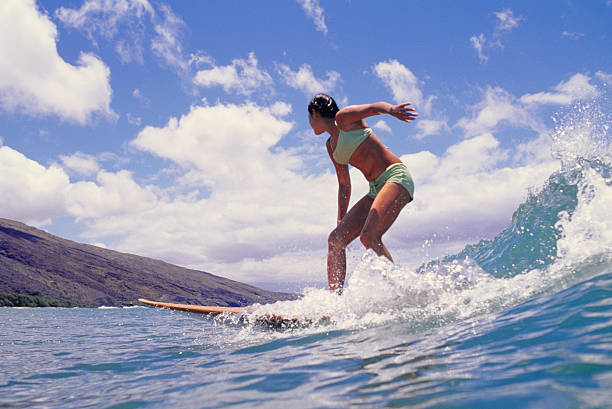
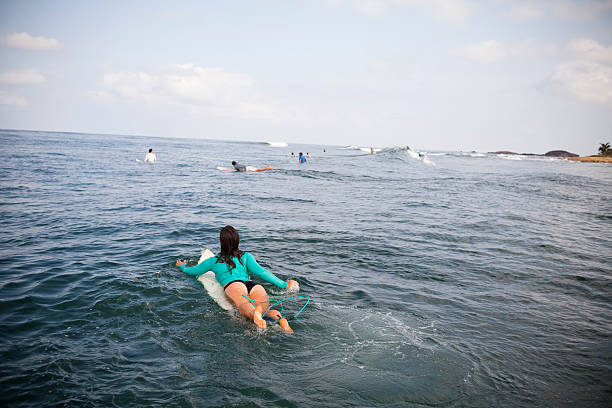
Catching a wave at Malibu isn’t just riding a swell down a sand bottom point. It’s stepping into a living time capsule where the old school meets the ocean’s pulse, and the soul of longboarding has never felt more alive. You paddle out past the lineup of foamies and glossy resin, and you instantly know you’re not at just any break. The point at Malibu peels right with a perfection that’s almost ridiculous, a clean righthander that wraps along the cobblestones off the state beach and keeps going with that signature shoulder angle, giving you all the time in the world to slide, hang ten, or just soak in the view of the hills and mansions strewn above the sand. For those who live in the lore of surfing, this is the ground zero of the style that turned a sport into a way of life.
What makes this wave so special for the longboard crowd is the way it breathes. Not too hollow, never overly steep, the peak rolls and shifts with every set, letting you trim high and then drop back down to the curl with a sense of grace that shortboarders often miss in their frantic search for barrels. The bottom at Malibu is a blend of sand and cobble, shifting seasonally but always offering that smooth, forgiving canvas. You can dance across the face, cross-step from the nose to the tail, and throw in a head dip or a cheater five just for kicks. The wave doesn’t punish you for style; it rewards you for flow. That’s why the legendary surfers of the 1950s and 60s—guys like Miki Dora, Dewey Weber, and the whole crew from the Malibu Surfing Association—chose this place to refine the art of walking the board. No other break on the West Coast provided such a long, gentle ramp for their experiments. They turned Malibu into a testing ground, and every nose ride since traces its lineage back to those golden days.
You can’t talk about Malibu without mentioning the equipment that evolved here. The boards that conquered this point were heavy, log-like guns made from balsa and later polyurethane foam, with skegs that were practically fin-sized afterthoughts. But to ride Malibu properly, you needed that length and stability. It was on these waves that shapers like Dale Velzy and Greg Noll learned what a wide tail and a rockered nose could mean for turning yet still holding a trim. The longboard wasn’t just a way to catch waves easier; it became the only board that could truly unlock Malibu’s classic rhythm. Even as the shortboard revolution hit in the late 60s, Malibu remained the last stronghold for those who preferred a tip-to-toe glide over a frantic snap. Modern longboarders still bring their boards to this point to test a fresh fin setup or a new resin tint, knowing that if it works at Malibu, it’ll work anywhere in the world.
But the real magic isn’t just the wave—it’s the lineup etiquette and the unspoken reverence that hangs in the salt air. Paddling out among the eager crowd of locals and wanderers, you feel the weight of history. Every cutback echoes the moves of past generations. Every lull in the swell brings tales of catastrophic wipeouts at the infamous first point rocks, where surfers have left a bit of themselves for decades. You gotta respect that lineup. The elders claim their spot with a quiet confidence, not out of aggression but out of a legacy of timing and dedication. If you’re new, you watch, you wait, and you pick your moment. Malibu teaches you humility in the same way the ocean does everywhere, but here, it’s amplified by the sheer density of surfing culture packed into a mile of coastline.
The beauty of this break is that it never rushes you. Morning glass often turns into a soft, mellow afternoon, with long rollers that seem to thank you for your patience. You’ll see young groms on foamies mixing with silver-haired masters who’ve been riding those same lines for fifty years. There’s an unspoken bond—a shared understanding that this place is more than just a surf spot. It’s a museum without walls, a church where the congregation worships with wax and leashes. When the winter swells wrap properly, Malibu turns on with more power, but the longboard still holds its own. The point creates a 300-yard playground where you can totally lose track of time, chasing the sun down the coast just like that endless summer feeling of a classic surf film.
So whether you’re paddling out under the lifeguard tower on a crowded summer Saturday or grabbing a solo session during a gray winter dawn, remember that you’re riding rails that were laid down decades ago. The point break at Malibu isn’t just a destination—it’s a state of mind, a slow dance with the sea that keeps the true spirit of surfing alive. The wave doesn’t care if you’re on a $2,000 custom longboard or a beat-up rental. It just gives you the smooth ride, the long peel, and the chance to let your soul stretch out across the face. That’s the Malibu way. Keep it slow, stoked, and always moving with the curve.