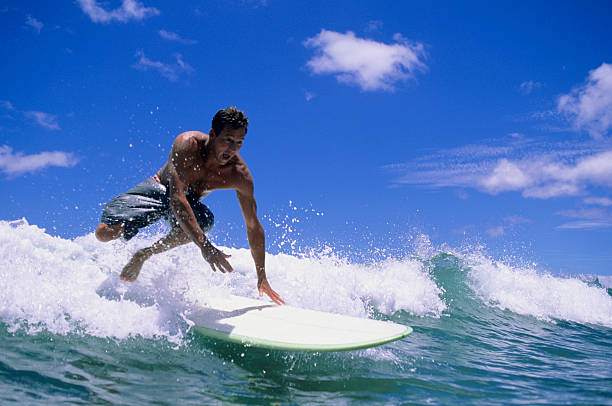
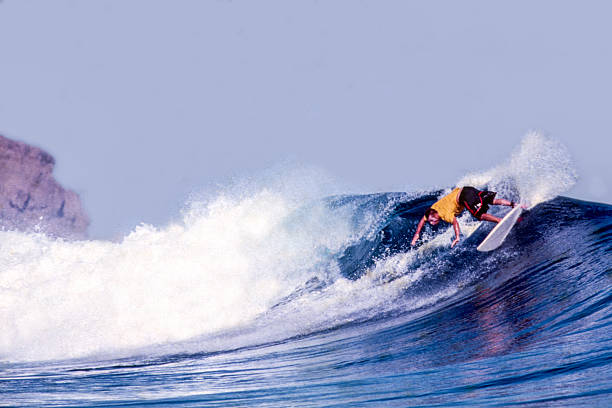
There was a time, back in the misty dawn of the sport, when every board was a log. Big, heavy, finless slabs of balsa and redwood, maybe ten feet or more of pure wave-catching real estate. The old Hawaiian beach boys and the early California crew rode them with a style that was less about shredding and more about grace, walking the plank, trimming along the face with a kind of unhurried elegance that you just don’t see anymore at your local peak. That was the soul era, the era of Duke Kahanamoku and Tom Blake, when surfing was a ceremony, a return to the ocean’s rhythm, not a battlefield for aerial points. And then, as all things do, it changed.
The late sixties hit like a hurricane. The shortboard revolution smashed the party, and suddenly everyone wanted to pivot, spin, and sink their rails into vertical drop-ins. The log got left in the sand, dusty and unloved, a relic of a bygone age. For two full decades, riding anything over seven feet was practically a crime against surf progression. You’d get laughed out of the water by guys on potato chips who thought a hang ten was something you did at a bar. But the heart of surfing, that deep, slow burn of pure stoke, never really left. It was just waiting, like a tide pool holding its breath for the next swell.
That next swell came in the late eighties and early nineties, when a handful of free-thinkers dusted off the old templates and started shaping what they called “fun boards” or “logs” again. Guys like Joel Tudor, Alex Knost, and the whole Channel Islands crew looked back to the nose-riding masters like Phil Edwards and David Nuuhiwa and said, “What if we just, you know, glided?” And so the longboard renaissance rolled in, not as a rejection of speed and performance, but as a deeper reconnection with the why behind all of it. The shortboard gives you that adrenaline hit, that clicky, twitchy instability that pushes you to the edge. But a longboard? A longboard gives you conversation with the wave. It lets you feel the swell from the very bottom, lets you cross-step with the casual swagger of a beachcomber, and lets you tuck into the pocket without ever raising your heart rate above a lazy rhythm.
What those revivalists knew, and what every paddle-out crew has learned since, is that the act of surfing stretches way beyond the physical ride. It’s about the walk to the water, the salt-crusted wax on your hands, the sun going down orange over the point while you sit in the lineup catching your breath. It’s about sharing waves with strangers who become brothers in a single session, swapping a wave with a nod, respecting the hierarchy of the pecking order. The longboard, that big beautiful slab of foam and fiberglass, forces you to slow down enough to actually notice all that. You can’t be in a hurry when your board is nine-foot-plus and your paddle stroke is measured and deliberate. You have to breathe, to watch, to feel the ocean’s pulse rather than trying to punch it in the face.
That’s why the log never really went away, why every surfer’s garage has that one beaten-up gun or the old pintail that belonged to their dad’s friend’s cousin. It’s a connector, a time machine. Riding one is like having a conversation with the ghosts of Waikiki, with the old boys who paddled out on solid koa because they had no other choice and fell in love with the glide anyway. The longboard renaissance wasn’t about being retro just to be cool. It was about reclaiming the meditative side of a sport that had become, for some, a clinic in frantic aggression. It was a reminder that the ocean doesn’t care how gnarly you are. It cares that you show up with respect, with patience, and with a little bit of aloha in your stroke.
These days, when you paddle out at a mellow point break, you’ll see a mix. There’s the crew on high-performance boards doing explosive cutbacks, and then there’s the weekend log riders trimming along the shoulder, hanging their toes over the nose, drawing lines like calligraphy on the water. And you know what? They’re all getting the same stoke, just different flavors. The longboard keeps the door open for everyone—the groms on foamies, the grandmothers who’ve been surfing since the fifties, the tired finance guy who needs two hours of pure ocean therapy. It doesn’t gatekeep. It invites.
So when the surf report shows six-foot bombs and everyone’s frothing to get pitted, remember that somewhere out there is a lonely twelve-footer gliding through a knee-high ripple, and the person riding it is grinning wider than anyone. That’s the soul of it. That’s the endless summer that never stops chasing you, if you’re willing to slow down enough to let it catch you. Hang loose, ride the glide, and keep the log’s spirit alive—because the ocean’s oldest secret is that the best wave is always the one that takes you back to yourself.