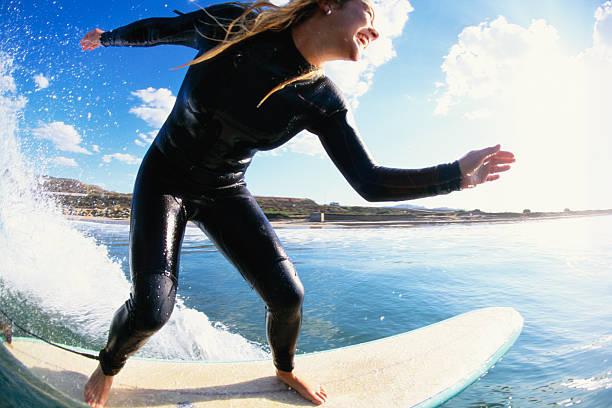
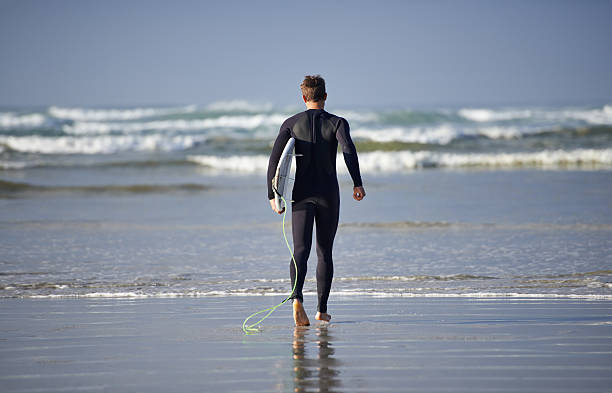
Every surfer who’s ever paddled out past the shorebreak knows that sinking feeling when the ocean suddenly grabs hold and starts pulling you sideways, away from your buddies, away from the peak, away from everything that feels solid and safe. It’s the rip current, that sneaky river of water running straight out to sea, and it’s not your enemy. It’s the ocean’s built-in conveyor belt, a natural feature that can either ruin your session or become your best friend, depending on how you read it. The key to avoiding the wipeout out there isn’t just about popping up cleanly on a steep face or keeping your toes on the stringer. It’s about knowing where the water’s going before your board even hits the foam.
Most surfers learn about rips the hard way, usually after a few panic-filled minutes of paddling furiously against the current, making absolutely no progress, and watching the beach shrink in the distance. That’s the classic rookie mistake, the one that turns a mellow session into a frightening workout. The rip looks like a calm, flat lane between breaking waves, which is exactly why beginners paddle toward it, thinking it’s an easy path to the lineup. In reality, that smooth patch of water is the ocean draining itself, funneling all the energy from broken waves back out through a deep channel. It’s the most powerful river you’ll never see, moving at speeds that can easily outpace an Olympic swimmer. The first rule of rip survival is the simplest and hardest to remember when your heart’s pounding: don’t fight it. Let it take you. It will eventually weaken and disappear outside the break zone, and you can paddle parallel to the beach until you find the white water pushing back in.
But the real stoke comes when you stop fearing the rip and start using it. Local surfers who own their home break know the rips like the back of their hand, because those channels are the express lanes to the peak. Instead of battling through wall after wall of closeout sets, they paddle straight into the rip, let it carry them past the turbulence, and then drift sideways into the takeoff zone with zero wasted energy. It’s a beautiful thing to watch, and it makes you realize that surfing isn’t just about riding waves. It’s about riding the water itself, reading its flows and currents like a map. The rip is the path of least resistance, and in surfing, resistance is the enemy of fun.
Spotting a rip before you paddle out takes a little practice, but once you see it, you’ll never unsee it. Look for a gap in the breaking waves, a stretch of water that’s darker green or even brown from stirred-up sand. Choppy, irregular surface texture is another giveaway, because the water in the rip is moving against the wind, creating a weird, lumpy bump that looks different from the glassy walls around it. Foam lines are your friend here. When a wave breaks, the white water gets pushed toward the beach, but it has to go somewhere, and it finds the deepest path back out to sea. That path is the rip. Also watch for debris floating steadily seaward, or pelicans sitting calmly on the surface, drifting away from shore without flapping a wing. If the birds are using it as a free ride, you should too.
The most dangerous part of any rip isn’t the current itself. It’s the panic. When a surfer feels that tug away from safety, the instinct is to turn straight toward the beach and paddle with everything they’ve got. That’s the fastest way to burn out your shoulders and flood your lungs with salt water. Even the fittest athlete can’t out-paddle a strong rip. The smarter move, the surfer’s move, is to stay calm, float on your board, and let the ocean do its thing. Once the current dissipates, you paddle parallel to the beach until you feel the push of waves breaking toward shore, and then you catch the white water in like a taxi home. It’s not glamorous, but it works every single time.
Out in the water, the rip is just another feature of the lineup, no more scary than a hollow barrel or a late drop. Respect it, read it, and it becomes a tool instead of a trap. The ocean gives you everything you need to have a good session, but only if you’re willing to learn its language. That quiet channel between the waves isn’t trying to kill you. It’s just trying to get back to deep water, and if you ride along with it, you might just save yourself a long, miserable paddle. After all, surfing is about going with the flow, not against it. That’s the whole point of being out there.