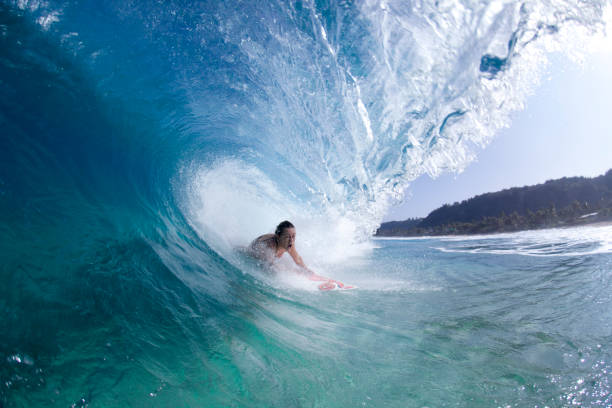
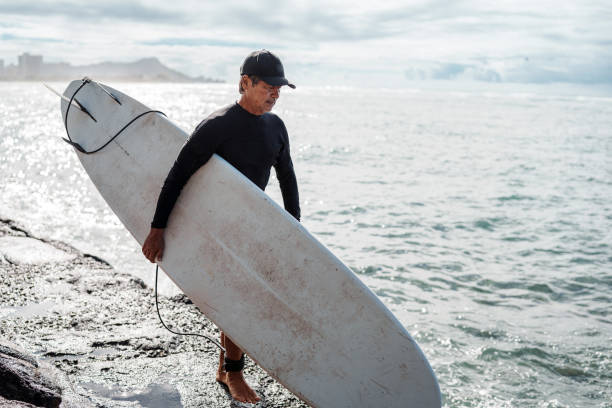
You paddle out on a glassy morning, and the lineup looks different than it did a decade ago. The kids—the groms—aren’t just ripping; they’re rewriting the whole script of what surfing means. These next-gen shredders aren’t waiting for some mythical swell to prove themselves. They’re out there every day, tweaking their fins, chasing the sun like their lives depend on it, and dropping into waves with a confidence that makes the old guard do a double take. This is the grom revolution, and it’s the most exciting shift in surf history since the shortboard revolution of the late 60s.
Back in the day, surf legends were forged in the same crucible: wild, raw ocean conditions, hand-shaped logs, and a localism that kept the lineup tight and territorial. You had to earn your spot. But the new crop of surfers—kids like Joaquin del Castillo, Erin Brooks, and the whole Brazilian storm of next-gen rippers—are coming from a totally different place. They’ve grown up on a diet of high-def contest footage, endless Instagram clips, and wave pools that mimic perfection every single day. They’ve never known a world without a WSL Finals stream or a drone shot of a supertube. And that changes everything.
What makes these emerging talents so radical isn’t just their style—though, man, the airs are getting absurd—it’s their relationship with the ocean. They treat it like a canvas, not a battleground. The old school was about survival, about reading a wild sea and making do. The new school is about precision, about projecting a vision onto the water. You see it in their backhand snaps, the way they pump for speed, the way they contort their bodies into positions that look more like breakdancing than traditional surfing. They’re not just riding the wave; they’re painting on it.
And the wave pool—that’s the game-changer. Kelly Slater’s Surf Ranch, the Waco Wavegarden, the new Abu Dhabi system—these are the training grounds for the next generation. A grom who comes up on a perfect, repeatable wave can practice a ten-move sequence a hundred times in a day, dialing in the timing until it’s reflex. That’s something the legends of the 70s and 80s never had. Tom Curren didn’t have a left of a perfect righthander waiting for him on demand. He had to go find it, read the tide, the wind, the reef. These kids have the luxury of repetition, and they’re using it to push the limits of what a human can do on a surfboard.
But it’s not all about artificial waves. The next-gen shredders are also redefining the traveling surfer archetype. They are more connected than any prior generation—they share spots via social media, they follow swells with data from buoys and satellites, they show up with a quiver of boards that would make a pro shipper cringe. They’re not chasing a single perfect wave like the Endless Summer crew; they’re chasing the whole experience, the whole lifestyle. They want to surf a slab in Ireland one week and a long, peeling point break in Indonesia the next. The world has shrunk, and these kids are taking full advantage of it.
Another twist: the stoke is more inclusive now. The grom generation includes women and non-binary surfers who are absolutely charging. Erin Brooks, a Canadian grom who moved to Hawaii, is a perfect example—she’s tackling Pipeline and Teahupo’o with a fearlessness that rivals the guys. And the whole lineup is starting to feel less like a boys’ club. That’s a shift that legends like Bethany Hamilton and Layne Beachley helped start, but these new talents are carrying it forward with a different energy—less “I’ll prove myself to you” and more “I’m here to have fun, and if you can’t hang, that’s your problem.”
Equipment is also getting a makeover. Next-gen shredders are experimenting with shorter, wider, more foiled boards, and some are ditching the thruster altogether for twin fins and quads that let them slide and pivot like skateboarders. They’re borrowing from other board sports—surfskate, wakesurf, snowboard—and bringing those flows back into the ocean. The surfboard is no longer a sacred object; it’s a tool, a toy to be tweaked.
The big question, of course, is whether this new wave of surfers can match the raw, organic soul of the legends who came before. Can a grom who learned in a wave pool ever truly understand the mystic connection to the ocean that a classic surfer like Gerry Lopez or Miki Dora had? Probably not in the exact same way. But maybe that’s okay. Surfing has always evolved. The Hawaiian alii shared it with the world, then the Malibu crew took it in a new direction, then the Aussies, then the pros. Now it’s the digital natives’ turn.
These emerging talents are not just users of the ocean; they’re its storytellers. Every clip they post, every wave they weave, is a new chapter in a long, beautiful narrative. The next generation of shredders are here, and they’re not asking for permission. They’re just paddling out, dropping in, and letting their surfing do the talking. And if you’re wise, you’ll grab your board and go join them. Because the future of surf history is happening right now, and it’s looking a whole lot like endless summer—only faster, higher, and with a whole lot more air.