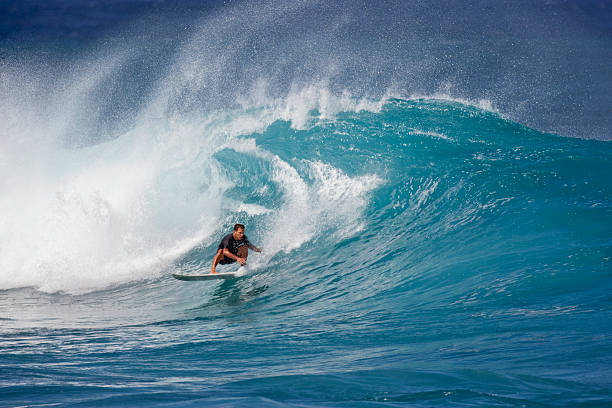
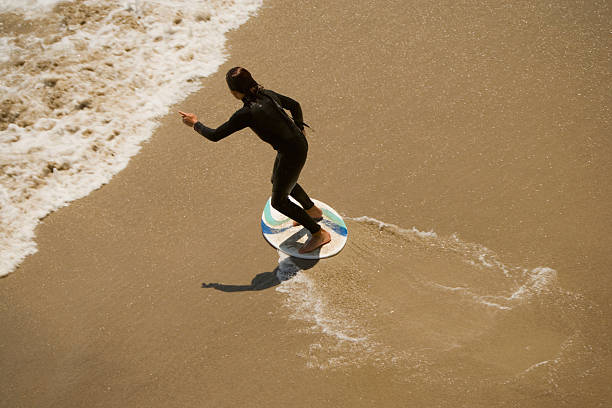
There’s a moment, right before the ocean absolutely owns you, when time stretches like warm taffy. The lip snaps overhead, your fins lose their bite, and your board goes one way while your body goes another. That split second is pure honesty. Every surfer knows it. Every surfer pretends it doesn’t happen, but it does, again and again, with the same certainty as sunrise. The wipeout isn’t a failure of skill. It’s the tax you pay for the privilege of dancing on a moving mountain. And once you wrap your head around that, you stop fighting the fall and start learning to love the chaos.
Let’s talk about the lingo, because the wipeout has more names than a surfer has surfboards. There’s the classic “going over the falls,“ when you’re caught inside the pitching lip and catapulted headfirst into the flats. That one gets your heart rate up, but it also gives you a front-row seat to the power that makes this sport so addictive. Then there’s the “washing machine” treatment, where you get held under and tumbled in a frothing whitewash that spins you around until you can’t tell up from down, left from right, or which way your leash is pulling. You pop up gasping, board bobbing nearby, and you feel that weird mix of fear and stoke that keeps you paddling back out.
Speaking of leash, there’s the “leash snap” wipeout, when your board shoots off like a runaway missile and you’re left swimming with your head on a swivel, praying it doesn’t come back to crack your skull. That’s a special kind of wipeout, one that teaches you about attachment real quick. And don’t forget the “sucked over” special, where the wave just decides it’s done with you and pulls its drainplug, yanking you straight down into the deep blue abyss. You get the “pit drop,“ the “rag-doll,“ the “floater gone wrong,“ and the ever-humbling “cowabunga off the back.“ Each one has its own flavor, but they all share one thing: they remind you that you’re not in charge.
But the wipeout is more than just a physical event. It’s a spiritual reset button. When you’re getting held down, staring into the deep, there’s a strange stillness that settles in. The roar of the whitewater becomes a white noise, your lungs start to burn, and for a second you think, this is it, I’m a goner. Then the push of water eases, you kick for the surface, and you break through into the sun, gasping and grinning like a fool. That moment of rebirth is why we keep going out. The wipeout wipes away every bit of your ego, every thought about work or bills or that argument you had yesterday. It forces you to be completely present, completely in your body, completely humble. That’s a rare gift in a world that wants you distracted at all times.
Of course, there’s a right way to eat it. You’ve got to learn to fall like a wet noodle, not a board. Let go of your board the second you feel the lip pitch, because holding on is how you blow out a knee or wrench a shoulder. Curl up into a ball, tuck your chin down low, protect your noggin with your arms. And when you’re underwater, don’t panic. That’s the biggest rule. Panic burns oxygen faster than a paddle sprint. Relax, let the wash cycle do its thing, and trust that you’ll come up eventually. The ocean isn’t trying to kill you. It’s just teaching you a lesson you didn’t know you needed.
The beauty of the wipeout is that it never gets old. Even the pros get smacked down on the regular, and they’ve been doing this since they could walk. The difference is they’ve made friends with the fall. They know that every wipeout is a data point, a little piece of intel that tells you how the wave is breaking, where your weight was off, what you’d do different next time. So instead of cursing the ocean, you thank it. You paddle out past the foam, shake the water from your hair, and line up for another one. Because the wipeout is not the end of the ride. It’s just the comma, not the period. The stoke lies in the getting back up, the paddling out again, the eternal dance of being humbled and then standing tall once more.
So next time you feel that sneaky pull, that sudden loss of gravity, that familiar spin into the abyss, smile. You’re not wiping out. You’re getting an education. And the tuition is paid in pure, unadulterated joy.