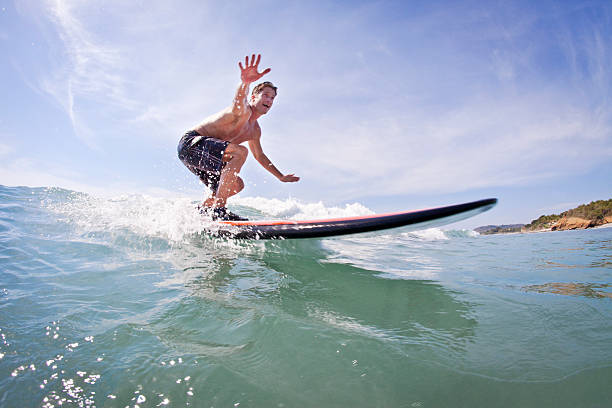
There comes a time in every stick’s life when she just doesn’t feel right. You paddle out, pop up, and something’s off. The glide is dull, the trim feels bogged, like the water’s got a grudge against your rails. Nine times out of ten, it ain’t the fins. It ain’t the wax. It’s the bottom. That once-pristine glass job has been slowly beaten down by sand, rock, gravel, and the endless wash of the ocean. Micro-scratches, oxidation, little ghost trails from dragging your board across parking lots like it owes you money. And the fix ain’t a new board. The fix is a session with the wet sandpaper, a bucket of clean water, and a whole lotta patience.
I’m talking about the ancient surf art of wet sanding. Most of the crew I know treat their boards like disposable fins—beat it, ding it, then shell out for a fresh one the moment the speed fades. But that’s a rookie move, my friend. The real stoke comes from resurrecting the performance lurking under all that buildup. Wet sanding isn’t just about looks. It’s about unclogging the board’s pores, smoothing out the boundary layer that water has to slide over, and bringing back that slippery, factory-fresh glide that made you fall in love in the first place.
Here’s the deal. Your board’s bottom is already shaped for speed. The rocks, the sand, the rough edges of a shoddy repair—they all add friction. Every little scratch creates turbulence, and turbulence is drag. Drag is slow. Slower means you miss the section, you blow the turn, you stare at the horizon with jealousy as some kid on a beat-up egg slips past you. Wet sanding works because it removes the microscopically rough top layer and exposes fresh, sealed glass. It’s like giving your board a pore clean, but she doesn’t need cucumber water—she needs grit and elbow grease.
The process is simple, but you gotta respect the ritual. Grab a roll of wet/dry sandpaper in 800 grit, then 1200, then maybe 2000 if you’re a true perfectionist. Get a spray bottle full of water. Now, flip your board upside down on a soft towel, and start with the 800 grit. Keep the surface soaked. You never sand dry—that heats up the resin, gums up the paper, and leaves deeper scars than the ones you’re trying to erase. Work in long, even strokes that follow the board’s contours. Don’t just scrub in circles like you’re polishing a car hood. Go from nose to tail, rail to stringer, letting the water carry away the slurry of resin dust and dead speed. Let the sandpaper do the work. Light pressure, patient hands.
Now, a word of caution from someone who’s turned a prized gun into a floppy noodle: don’t go crazy on the rails. The glass on the rails is thin, especially after years of flex. If you sand too aggressively there, you can eat through the hotcoat and expose the cloth underneath, which then soaks water and leads to delamination. So when you get near the edges, back off the pressure. Treat ’em like a fragile friendship. Sand the bottom flat areas, feather lightly over the rail’s crown, and keep your strokes parallel to the stringer to avoid gouging.
After the 800 pass, rinse your board off, feel the surface. It should feel like fine sandpaper. Now hit it with the 1200 grit, same technique. This step refines the surface, knocking down the small peaks left by the coarser paper. Then, if you’ve got the patience, the 2000 grit polishes it to a satin sheen. Some guys stop there, but the true dark-arts practitioners break out the automotive rubbing compound and a soft rag. Work it in small circles, then wipe it clean. The result? A bottom that feels like glass, because it is glass—just renewed.
Beyond the speed boost, wet sanding is your best early-warning system for dings and fractures. As you sand away the oxidation, tiny spiderweb cracks and stress fractures that were invisible under the dirty layer suddenly show up like scars in the sun. You catch them before they turn into waterlogged foam and a full-blown delam. That’s maintenance, but it’s also wisdom. You learn where your board takes the hits, where your style is aggressive, and where you need to smooth out your own edges.
In the end, wet sanding isn’t a chore—it’s a conversation. You’re down on your knees, sweat dripping onto the glass, water running over your hands, and you’re telling that board, “Hey, I see you. I appreciate the rides. Let me give some love back.“ It’s an old-school skill, passed down from shaper to surfer, from the dawn of foam and resin to your driveway on a sunny Tuesday. So next time your ride feels like she’s dragging her feet, don’t reach for the phone to order a new stick. Get the sandpaper out. Spend thirty minutes with your board. She’ll thank you with a glide so fast, you’ll think you’re in a dream—the endless summer dream, where every wave is yours for the taking.