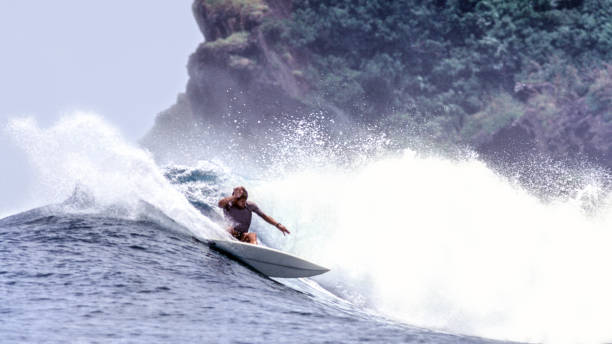
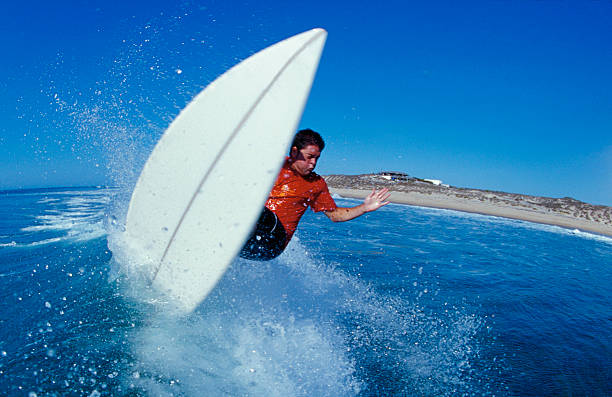
You paddle out on a knee-high morning, the kind of day that makes the performance shortboard crowd stay in bed, and suddenly you catch every crumbly little wave that rolls through. That’s the fish magic. This isn’t some new trend cooked up by shapers looking to sell you another stick. The fish has been sneaking around the lineup since the late 1960s, when Steve Lis started messing around with a kneeboard design down at Windansea in La Jolla. What he came up with was a weird little swallowtail with keel fins that had way more volume up front and a wide, flat rocker. It was ugly to some eyes, but it paddled like a dream, caught waves early, and turned with a loose, sliding sensation that felt more like a skateboard than a surfboard. And that’s basically the origin story of the fun shape, the alternative surfboard that refuses to die because it simply works for everyone from groms to gray-hairs to rippers looking to add another dimension to their quiver.
The real beauty of the fish is how it messes with the old rules of performance. A standard shortboard wants steep faces and raw power. It needs the kind of wave that grinds over a reef and throws a thick lip. But most of us don’t surf microwaves by Pipeline. We surf mushy beach breaks, tide-sucked rollers, and that wind-swell that barely holds up a three-foot face. The fish, with its stubbier outline, generous thickness, and those twin fins set way back, turns junk into gold. You paddle in earlier, you get to your feet smoother, and you feel that distinctive planing sensation—the board skimming across the water’s surface like a flat rock skipping, allowing you to generate speed even when the wave has no real push. That’s why it’s the ultimate fun shape. It gives you the stoke of surfing without demanding perfect conditions or superman fitness.
Over the decades, the fish has been through more comebacks than a beach rock band. It faded in the late seventies as thrusters took over, all those narrow, foil-happy boards that ruled the pro circuit. But the fish never actually left. It hung out in the back of local shapers’ racks, ridden by those weird older dudes who knew the secret. Then in the nineties, retro surf freaks dug it up again, and suddenly the twin keel fish was everywhere, riding a wave of nostalgia and an honest desire to have more fun. Modern shapers tweaked it with quads, added a little more rocker, sharpened the rails, and then came the evolution of the groveler—a kind of turbo fish with a wider squash tail and more fin options. But the spirit remains the same: less length, more foam, more glide, fewer excuses.
What makes a fish genuinely special is how it changes your approach to the ocean. You stop hunting for the perfect reef and start seeing potential in every soft shoulder. You learn to pump differently, using that wide tail to generate momentum away from the pocket, then carving back down with a sudden pivot that feels almost too easy. The twin fin setup lets the tail release when you really lean on it, giving you that slidey, sideways drift that’s addictive. It makes you feel like a pro, even when your bottom turn is more of a suggestion than a statement. And for surfers who grew up on longboards, the fish is the perfect bridge, a board that fits in smaller waves but still wants to turn, duck dive a little easier, and gives you that end-of-session satisfaction without the sore back.
Every surfer chasing the endless summer should own a fish. Not because it’s cool or retro, but because it’s the most honest surfboard in your rack. It doesn’t lie to you about the swell forecast. It doesn’t demand max commitment. It just floats, catches, and lets you be a kid again. The alternative surfboard era taught us that shapes matter less than the smile on your face after a long session. And the fish, that classic fun shape, delivers that every single time. So next time the surf report looks pathetic, grab that swallowtail, paddle out with a grin, and let it remind you why you fell in love with this sport in the first place.