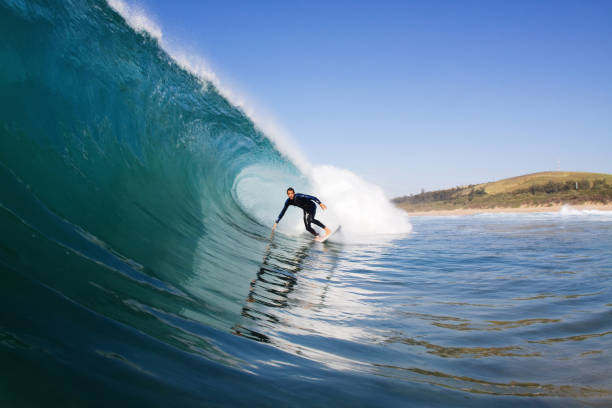
Somewhere between the Osa Peninsula’s emerald sprawl and the Golfo Dulce’s glassy silence, there’s a break that rewires your whole idea of what a wave can be. Pavones. Say it slow, like a prayer you’re still learning. This isn’t the Costa Rica of postcard beaches or all-inclusive smoothie bars. This is the wild south, where the jungle breathes right down onto the sand and the ocean holds a secret so long and so perfectly peeling that surfers have been known to cancel their flights home for a month, then another month, then a lifetime. It’s the kind of place where the lineup feels like a church and the congregation speaks in grunts and hoots when a set finally arrives from deep out in the Pacific.
You paddle out at dawn, when the water is the color of weak tea and the air smells like salt and rotting mango. The point break unfolds to your right, a ridged tongue of reef that extends a quarter mile or more, catching the southern hemisphere’s swells that have traveled thousands of miles without a word to anyone. When a proper groundswell hits, Pavones delivers something absurd: a left-hander that can run for over a kilometer, maybe a thousand meters of pure, unbroken face. For a surfer raised on beach breaks that give you fifteen seconds of juice, this is a revelation. You take off, and then you just keep going. You trim along the open face, watching the wave breathe and flex ahead of you, sections opening and closing like doors to another dimension. There’s time to read the wave, time to carve a cutback and still have all that canvas in front of you. And on those rare days when the swell direction whispers exactly right, the wave wraps all the way into the rivermouth, and you can ride for what feels like an eternity, your legs humming, your mind gone completely quiet.
But Pavones is more than a wave. It’s a lifestyle built on the humblest architecture and the richest kind of stoke. The village is a single dirt road with a soda that serves gallo pinto and eggs, a couple of cabinas with surfboard racks made of PVC pipe, and a head-high crop of travelers who’ve traded their return tickets for the chance to chase dawn patrol every single day. No streetlights. No crowded lineups. Just the rhythm of the tide and the jungle’s endless soundtrack of howler monkeys and parrots. You wake before the sun, chug some instant coffee, walk your board the hundred meters to the rock, and ease into the warm green water. The locals—ticos who’ve grown up in the whitewash—share the waves with a quiet generosity, reminding you that the ocean doesn’t care about your passport or your board’s brand. It cares only about patience and respect.
What makes Pavones truly endless, in the spirit of that old film from the sixties, is its ability to erase time. You lose track of what day it is. The only calendar that matters is the swell chart. You eat when you’re hungry, sleep when you’re tired, surf when the sets roll through. Afternoon thunderstorms roll over the mountains, but the water stays bath-warm. You might spend the whole day just sitting on a longboard, watching the clouds stack and unstack, waiting for another pulse of energy from the deep. And when it comes, you paddle over with a grin so wide your jaw aches. There’s no rush. Nobody’s clocking you. The wave is the only boss, and she’s a benevolent one, offering a hundred different paths down each long green slope.
Your legs will burn. The reef will nick you. The sun will toast your shoulders to a leathery brown. But somewhere along that endless left, you’ll find a version of yourself that doesn’t need to check a phone or chase a deadline. That’s the real treasure of Costa Rica’s tropical tubes. It’s not just the perfect peeling walls or the warm water or the jungle backdrop. It’s the way the place strips you down to the bare essentials: a board, a wave, a breath. And when you finally paddle in, exhausted and salt-crusted, you’ll sit on the dark sand and watch the last light filter through the palms, knowing with absolute certainty that tomorrow morning, you’ll be back out there, riding that same endless dream again.