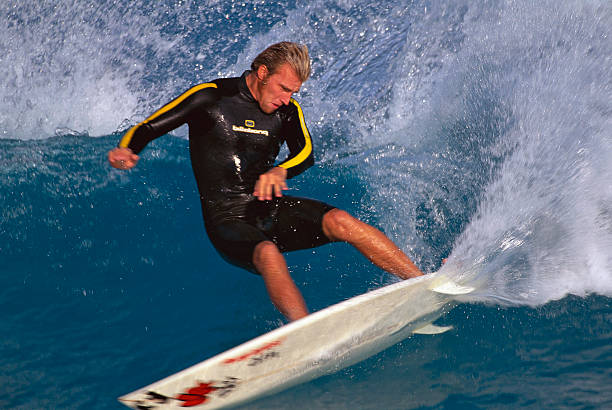
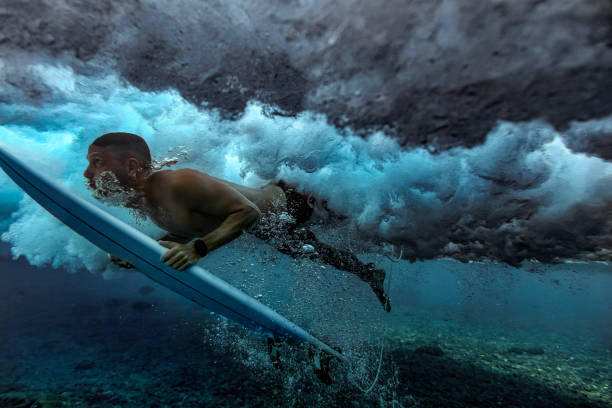
You paddle out to a crowded peak on a decent swell and hear the term thrown around like salt spray. Someone calls out, “Did you see that ripper on the green wave?” But what does it actually mean to be a ripper? And more importantly, how does that differ from being a charger, a shredder, or just a solid surfer? In the endless conversation of surf lingo, the word ripper carries a specific kind of stoke that is about more than just making the drop. It’s about flow, control, and a certain lightness of being on the face of a wave.
A ripper is a skilled surfer, no doubt about it. But the term implies something deeper than raw talent or fearless paddle-outs. A ripper is someone who makes the wave look easy, who connects sections with a fluid grace that seems almost effortless. Think of guys like Rob Machado in his prime or a young Kelly Slater before he started winning everything—surfers who had that loose, fast, and aggressive style that made the water work for them rather than against them. A ripper tears the wave apart with critical turns, but there’s a playfulness there too. They didn’t just survive the barrel; they danced through it.
Now here is where the lingo gets interesting. A charger, by contrast, is a surfer who goes for the biggest, gnarliest waves regardless of consequence. Chargers are the tow-in crew at Nazaré, the big-wave men at Jaws, the absolute animals who take the heaviest wipeouts without flinching. Rippers work in the pocket of a more manageable wave, performing vertical snaps, floaters, and cutbacks that demonstrate precision. A charger might not have the prettiest style, but they have the biggest heart. A ripper has style that brings the crowd to its feet at a WSL event.
The word ripper also carries a cultural history that ties directly into the surfing lifestyle. It roots back to the 1960s and 1970s in Australia and California, where the term was used to describe someone who could really tear it up in the surf. It became part of the everyday vocabulary of surfers who cared about expression and flow. A ripper doesn’t necessarily compete professionally, but they are respected in the lineup. When a local ripper paddles out, the crowd gives them room because they know something special is about to happen.
To be a true ripper, you need more than just a good pop-up and a deep bottom turn. You need wave knowledge, equipment feel, and an understanding of when to push and when to glide. A ripper reads the ocean like a musician reads sheet music. They know that a rail grab here or a tail slide there can change the entire rhythm of a ride. Surfing slang has many words for skilled surfers—hotdogger, shredder, slasher, madman—but ripper suggests a clean, crisp execution that borders on artistic.
The equipment matters too. A ripper often rides a board that matches their energy—typically a shorter thruster or a modern fish with enough rocker to handle vertical moves. They don’t ride logs unless they’re doing a specific noseriding act. The board becomes an extension of their body, and when they are in the zone, the polyester and foam disappear, and all you see is a human being moving in harmony with a pulse of energy from the deep ocean.
In the surfing news and travel culture of chasing endless summers, rippers are the unsung heroes of any lineup. They might not have the sponsorship or the Instagram followers of a World Tour pro, but they have the respect of their peers. When you meet a ripper at a remote break in Indonesia or on a quiet point in Costa Rica, you learn more about surfing in one session than you could from a hundred instructional videos. They show you how to find the line, how to compress your body, and how to transition from rail to rail without wasting a single ounce of momentum.
So next time you hear someone called a ripper in the water, pay attention. Watch how they approach the wave, how they set their line, and how they finish. You might just learn something new about the art of surfing itself. The term is more than just a nickname; it’s a compliment that carries generations of surfing soul. Whether you are a grom just starting out or an old salt who has been doing this for decades, aspiring to be a ripper is a worthy goal. It means you don’t just surf. You create.