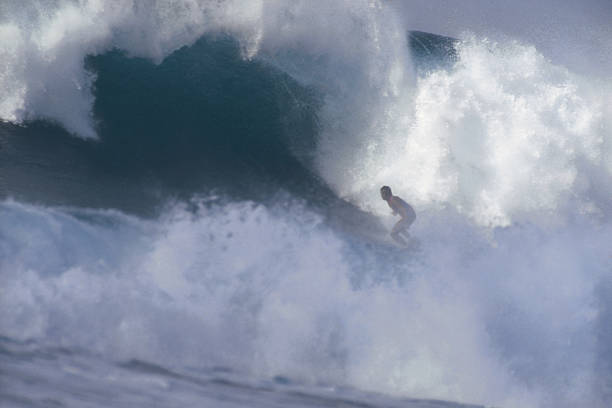
When you’re out there, sliding down the face of a clean overhead peak, there’s that split second where everything aligns. The drop is smooth. The bottom turn feels like you’re loading a spring under your back foot. Then you look up the line and realize you’ve already outrun the steepest section, and if you keep going straight toward the shoulder, you’re gonna lose the wave entirely. That’s when the cutback enters the conversation. It’s the oldest trick in the book, yet it separates the rippers from the beginners faster than almost any other move.
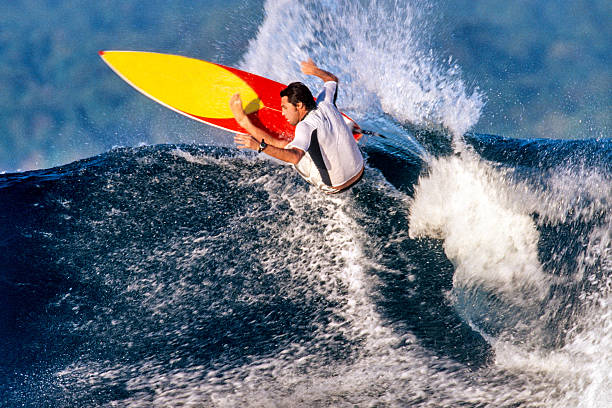
The cutback is all about coming back to the source of the power. You carve a full circle off the top of the wave, redirecting your momentum back toward the foam ball, the peak, the pocket—wherever the wave is actually breaking. It’s not just a turn. It’s a conversation with the ocean. When you do it right, you feel the rail dig in, the spray gets thrown off the top of the board like a whip cracking, and suddenly you’ve bought yourself another couple seconds of juice to set up for the next section. It’s the ultimate reset button.
To really understand the cutback, you gotta feel the timing in your feet. As you come flying down the line, the wave starts to flatten out under your fins. That’s your cue. You don’t want to initiate the turn too early, because you’ll be fighting against the forward momentum and stall out. But if you wait too long, you’re already in the flats and your board is just a planing hull with no bite. The sweet spot is when the face is still a little steep, but you’ve got enough speed to wrap it around. You sink your weight onto your back foot, drive the heelside rail through the water, and your shoulders rotate to look back toward the curl. The board follows your gaze. It’s almost telepathic.
There’s a subtle difference between a proper cutback and a weak, half-hearted fade. A lot of groms try to throw their arms around too much, like they’re windmilling for balance. That just makes you lose your line. The real juice comes from compression. You go low, almost like you’re sitting into a chair, then you extend through the turn as you come out. Your head stays over your toes. Your eyes are fixed on where you want to go—which is back into the foam, not out toward the shoulder. If you look down at your board, you’ll spin out. If you look where you’re going, the board will find its way.
Once you’ve completed the arc, you’re now pointed back toward the breaking part of the wave. But you’re not done. The cutback isn’t a finish line; it’s a re-entry. As you come out of the turn, you need to re-engage your fins and project yourself back toward the pocket. That’s where the best surfers make it look seamless. They come off the top with so much snap that the board almost skips across the surface, then they drop right back into the critical section with full power. It’s a single fluid motion, not two separate moves.
The cutback also has a ton of style variations. Some of the older, Hawaiian-style crew do a big, drawn-out roundhouse cutback that takes you all the way around the foam ball and spits you out the other side. That’s a full commitment move, a 270-degree carve that requires insane speed and rail control. Then you’ve got the quick, vertical cutback that Kelly Slater used to do on those backhand waves at Cloudbreak. That one is more about pivoting off the tail, almost like a pivot turn, keeping the nose high and the fins engaged in a thin layer of water. Both are valid. Both are beautiful. It just depends on what the wave is giving you.
If you’re learning, start on a longboard. The extra foam lets you feel the rail work way more forgivingly, and you can practice the shoulder rotation without worrying about bogging. Once you feel that carve, that sensation of turning the board with your whole body instead of just your arms, you can take it to a shorter board. But don’t rush it. A good cutback on a fish or a thruster is one of the most satisfying feelings in surfing. It takes you back to the source of the wave, keeping you in the action longer, letting you milk every last drop of energy from the swell.
At the end of the day, the cutback is about flow. It’s about being patient enough to let the wave teach you its shape, and then decisive enough to redirect your own energy where it matters. When you pull off a clean one, the lineup will notice. Not because you got loud or flashy, but because it looks right. It looks like you belong.