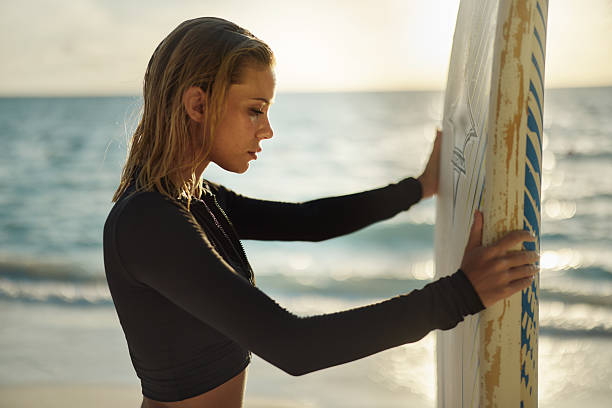
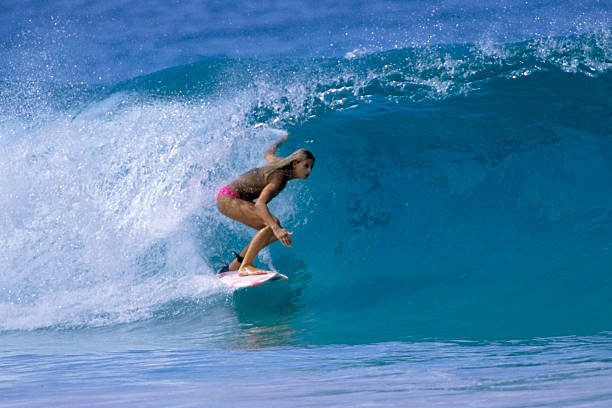
There is a moment in every surfer’s life when the ocean feels less like a playground and more like a partner. You catch that first bump of swell, feel the board catch the slope, and everything goes quiet except for the hiss of foam peeling down the line. But there is another moment, one reserved for those who ride logs, that sits in a different league entirely. It happens when you shuffle your feet past the stringer, past the center point of the board, and walk all the way to the nose. Your toes curl over the lip, the water rushes just inches below your face, and for a few seconds, you are standing on the very tip of a wave that is holding you up by sheer grace. That is the hang ten. That is the soul of the longboard era.
To understand the hang ten, you have to go back to a time before shortboards, before thruster fins and aerial rotations, when surfing was about style and flow rather than speed and aggression. The longboard era, which really hit its stride in the 1950s and early 1960s, was a period defined by boards that were heavy, thick, and forgiving. These logs were anywhere from nine to twelve feet long, made of balsa or later polyurethane foam, and they weighed a ton compared to what we ride today. But that weight was a feature, not a flaw. It gave the board momentum and stability, which allowed surfers to do something wild: walk around on the thing.
Nose riding became the ultimate expression of control and cool. Guys like Phil Edwards, Mickey Dora, and the legendary tandem team of Ron Drummond and Denise Buzzard turned the nose of a longboard into a stage. They would paddle into a wave, get that clean trim running down the face, then start a slow, deliberate shuffle forward. It wasn’t a sprint. It was a dance. One step, then another, with the rail biting into the water and the fins holding the board in place. When they got both feet over the front edge, with all ten toes hanging off the nose, they had achieved something that looked like defiance of physics. The wave was pushing from behind, the board was tilted just right, and the surfer was hanging out over the abyss with a grin.
The shapers of that era deserve a ton of credit for making it possible. Guys like Bob Simmons, Dale Velzy, and Bing Copeland spent hours refining the rocker, the rail shape, and the fin placement to create boards that could hold a trim on the nose without sliding out or pearling. They discovered that a board with a wide, rounded nose and a slight V-bottom could lift the rider just enough to keep the nose from digging in. A single large fin, usually a D-fin or a pivot fin, gave the board grip and allowed the surfer to pivot back if they got too far forward. It was pure mechanical genius wrapped in fiberglass and resin.
But the hang ten is more than just a trick or a technical achievement. It is a mindset. It is the closest thing surfing has to meditation. When you are up on the nose, your balance is everything. You cannot think about the rent, the job, or the argument you had yesterday. You have to lock in on the wave, feel the subtle changes in the water’s energy, and adjust your weight by inches. One wrong move and you either slip off the back or drive the nose underwater in a spectacular wipeout. That focus, that absolute presence in the moment, is what the longboard era was really about. It was not about shredding the wave into submission. It was about riding it with grace, about becoming part of the wave’s rhythm rather than fighting it.
Modern longboarding has kept the hang ten alive, thank the surf gods. Boards have gotten lighter and more refined, with better foam and resin systems, but the principle remains the same. A good noserider today still has that wide nose, a forgiving rocker, and enough foam under the chest to let you walk around without sinking. Surfers like Joel Tudor, Taylor Jensen, and Kassia Meador have brought the old-school style back into the mainstream, blending traditional techniques with modern approach. They remind us that surfing is not just about progression in the sense of harder and faster. It is about depth of experience.
So next time you see someone perched on the nose of a log, toes hanging off, arm extended for balance like they are tasting the salt spray, take a moment. That is not just a move. That is a piece of history, a living link to the days when surfing was young and the beach was full of wooden boards and endless summer afternoons. The hang ten is the longboard era distilled into a single, stoke-filled gesture. And once you feel it, you will never look at a wave the same way again.