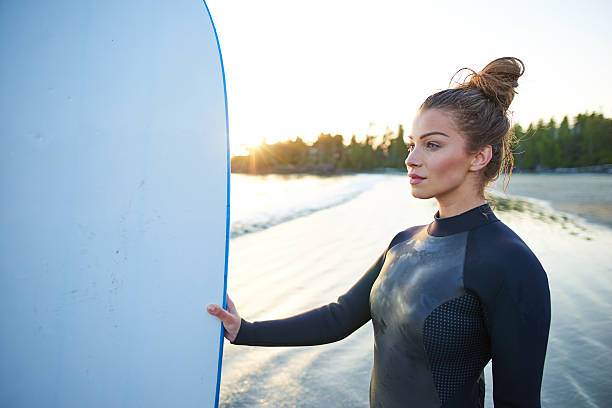
There’s a moment every surfer knows, the one that happens before you even paddle out. You’re standing on the sand, wetsuit half on, board under your arm, and your eyes lock onto the lineup. That ocean out there isn’t just a bunch of moving water. It’s a living, breathing language. And every wave that rolls in is a sentence, a story written in swell lines, wind ripples, and the way the sand shifts underneath. Learning to read that story is what separates the guys who catch endless mushy walls from the ones who find themselves inside a cobalt-blue barrel, time and time again.
Wave reading starts with the horizon. Look for the sets, those slightly darker, more defined lines of energy that march toward shore. They move differently than the random chop. They have intent. Watch how they interact with the seafloor as they approach. A wave doesn’t just break wherever it feels like it. It breaks because it feels the bottom. A deep channel lets it stand up tall and fast. A shallow sandbar makes it pitch and throw. A gradual slope makes it crumble and roll, giving you that long, forgiving, mushy wave that’s perfect for dialing in a new cutback or teaching a buddy how to pop up. That’s not a bad thing. Mushy has its place. But if you want epic, you need to identify where the bottom drops off, where the reef or sandbar creates that abrupt peak, and where the wave has enough juice to draw itself into a hollow canvas.
Wind is the co-author of every wave you surf. Offshore breezes, the ones blowing against the incoming swell, hold the wave up, ironing out the face and delaying the break. That’s your glassy, clean, sometimes spit-fire condition. Onshore winds push the wave over too early, turning it into a blown-out, bumpy, frustrating mess. Side-shore can be a gamble, depending on the angle. But reading wind isn’t just about direction. It’s about timing. The early morning often has that calm, offshore magic that makes waves seem almost reluctant to break, giving you longer, faster faces. By late afternoon, the sea breeze kicks in, and the same break can turn sloppy. The savvy surfer checks the flags, feels the wind on their face, and knows when to paddle out and when to call it a day.
Then there’s tide, the ocean’s quiet pulse. High tide pushes water over the reef, sometimes swallowing a shallow break entirely, turning a spitting barrel into a fat, rolling nothing. Low tide, on the other hand, can expose the sharp bits and make waves break with violent suddenness, often perfect for a steep peak, but also risking a dangerous closeout. Some spots only work on a mid-tide push. Others fire on a low tide, especially if there’s a deep channel next to a shallow ledge. You learn to read the tide table like a swell forecast, and you start to notice how the same wave changes shape by the hour. That’s the local knowledge that gets you waves to yourself while others sit on the beach wondering why it’s flat.
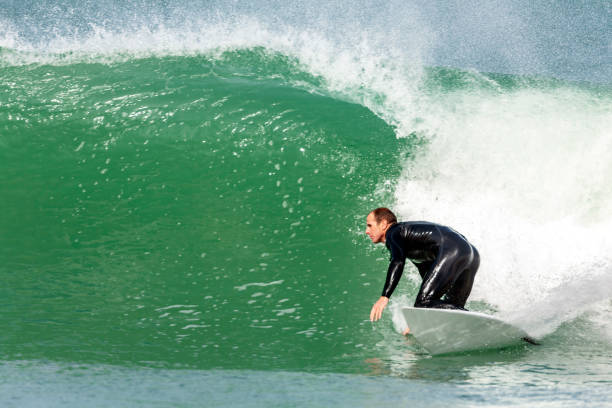
Once you’re out in the lineup, reading waves becomes a split-second game. You watch the takeoff zone, that spot where the peak hits the deepest water and begins to peel. You see a set approaching, and you position yourself not where it’s breaking, but where it’s going to break. That means feeling the rhythm of the sets, understanding the interval between them, and picking the largest of the set without getting caught inside. When you paddle for a wave, you’re not just paddling for a lump of water. You’re paddling for a section. You’re looking at the face and predicting where it will steepen, where it will flatten, and where it might throw. A glance over your shoulder tells you if you’ve got the drop. A look down the line tells you if there’s a draining barrel waiting or a mushy reform that’ll die out. The best surfers don’t just react. They drive their board to a spot on the wave that hasn’t even formed yet, trusting their read.
That’s the art. It’s not about powering through everything. It’s about flow, anticipation, and reading the ocean’s mood. Some days it’s a playful longboard wave, gently walled and soft. Other days it’s a thick, dredging beast that requires commitment and a deep breath. You take what the ocean gives you, but you also read it like a story with twists and turns. From the first peek at the horizon to the final barrel on a fading swell, every wave has something to say. Listen closely, and you’ll never be bored in the lineup again. The ocean writes its own endless story, and all you have to do is learn to turn the page.