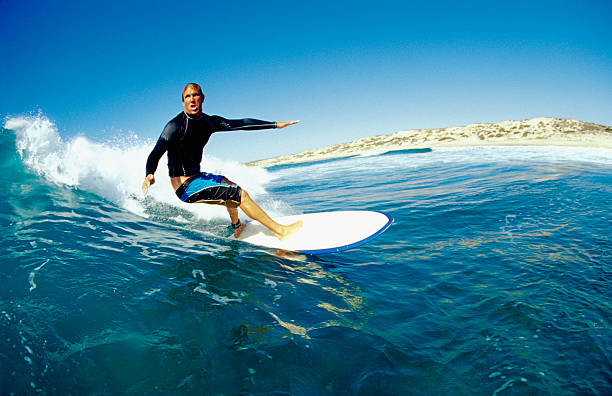
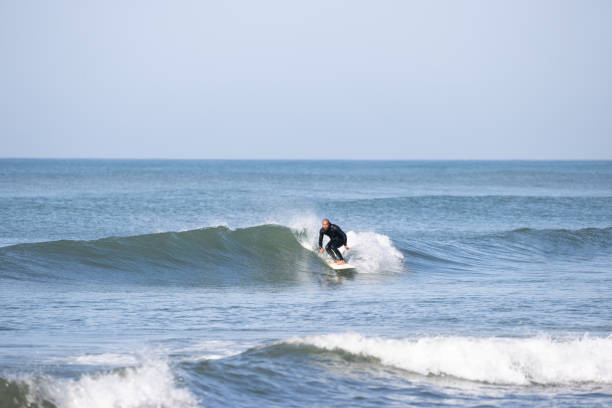
You wake up before the alarm, and even with your eyes half shut, you know something’s different. The trees outside are swaying in a steady push, but not that chaotic shake that rattles the windows. No, this is a smooth, inland breath. That’s your first clue. That’s the offshore wind talking. By the time you reach the beach, the horizon is a canvas of clean, marching lines. The faces are glossy, almost mirror-like, and every set stands up tall before pitching over with a hollow, satisfying crack. This, right here, is why we chase the dawn patrol. This is the magic of offshore flow.
Let’s break it down real simple. Offshore wind is the air moving from land out to sea. It hits the swell just as it’s about to jack up off the sandbar or reef, and instead of shoving the wave over prematurely, it holds the face up. That wind acts like a wall holding back the curtain, letting the wave build its steepest possible face before gravity takes over. The result is a wave that breaks with intention. You get that moment of vertical suspension, that tiny hang-time before the lip unloads. And because the wind is blowing against the direction the wave is traveling, it keeps the surface smooth, brushing away any bump or ripple before it can form. We call that glass. Glass is the holy grail of surfing conditions, and offshore winds are the primary magicians behind the trick.
But it’s not just about a clean face. Offshore winds add a whole new dimension to the wave’s shape. When a swell rolls through deeper water and then hits that shallow ledge, the wind blows up and over the crest. It literally pushes the lip outward, giving the wave a thicker, more projectable barrel. That’s why your mates back home send you those ridiculous videos of perfect, tubeable lefts in some distant reef pass. They’re not just lucky. They’re on an offshore day. The wave has that extra “spit” and hollow section because the wind is sculpting the lip from the backside, making it throw out further and break with more intensity. You could have the exact same swell on a dead flat day, and it would still wall up nicely, but the offshore wind adds that extra snap, that extra rake, that makes the difference between a decent ride and a memory you’ll talk about for years.
On the flip side, you’ve got onshore wind. That’s the wind blowing from the sea toward the land. And what does that do? It pushes against the face of the wave as it’s trying to break. Instead of standing tall, the wave gets chopped up, its crest blown back and torn apart. The surface turns into a kettle of churning whitecaps. We call that “victory at sea” conditions. You paddle out, and it’s a constant battle against the whitewash that’s clumping up and closing out everywhere. The wave never gets a chance to form a clean pocket because the wind is constantly shoving it over, flattening the angle, and turning the potential for glory into a soggy slog. Sure, you can still surf onshore days. You might even get some mushy, soft shoulders to practice your floater on. But it’s like trying to paint a masterpiece while someone’s shaking the canvas. The energy is there, but the structure is gone.
There’s also a sweet spot, though, right between those two extremes. You can get a “cross-offshore” wind, blowing at an angle along the coast. That’s often the best of both worlds. It gives you a bit of the grooming power of an offshore, but it also keeps the wave from becoming too perfect or too closed-out, adding a little push down the line. And let’s not forget the fickle nature of winds. They shift during the day. The classic pattern is morning offshore, then as the sun heats the land, the wind swings around and piles on an onshore sea breeze by mid-afternoon. That’s why surfers are such early birds. The hope is always to catch the morning’s glass and offshore bliss before the wind cooks up an afternoon chop.
Ultimately, understanding offshore vs. onshore is more than just reading a weather forecast. It’s about reading the soul of the ocean. An offshore day tells you that the surf gods are on your side, that the waves will have a clean face, a hollow barrel, and that you can paddle out with confidence. It’s the exclamation point on any swell forecast. So when you check the wind and see that little calm arrow pointing seaward, you know exactly what to do. Grab your shortboard. Stretch your back. And get ready to drop into a face that looks like it was cut from a block of glass. Because that’s the offshore way.