The plane drops out of a thick blanket of cumulus, and suddenly you see it. Not the wave yet, but the raw, wrinkled spine of Sumba rising out of the Flores Sea. From the air, the island looks like a sleeping dragon, all jagged limestone and dry savannah, a landscape that feels older than time. This is not Bali. There are no legions of backpackers, no traffic jams of scooters, no warungs serving banana pancakes to a queue of hungover surfers. This is the real deal. This is where the endless summer turns into something that feels like a forgotten secret.
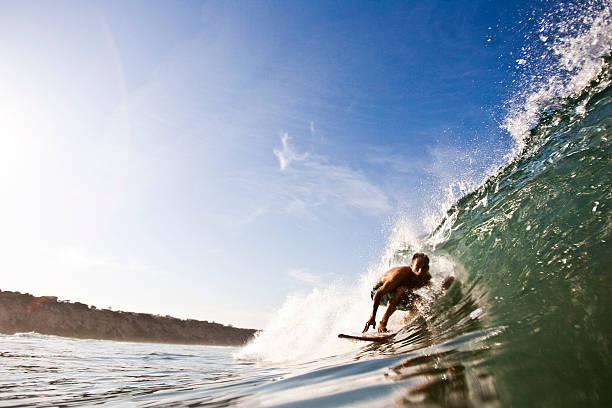
The Sumba Left, or Lance’s Left as some old heads still call it, is the crown jewel of this remote outpost. It sits on the southwest coast, tucked away from the world, accessible only by a rutted dirt track that winds through villages where horses still outnumber cars. You roll in after a long, dusty drive, the kind that rattles your teeth and your brain, and you park on a cliff overlooking a bay that looks like it was drawn by a cartoonist who only knew how to draw perfect lines. The swell stretches across the horizon, stacked in long, groomed bands, marching toward a shallow reef that glows turquoise in the afternoon light. The wave itself is a left-hander of the highest order. It peels off a rocky headland with a kind of mechanical precision, offering a wall that can run for two hundred, sometimes three hundred meters. It’s not a wave you surf. It’s a wave you ride like a river, a long, flowing conversation between you and the ocean.
The takeoff is the first real conversation. You paddle out from a channel that feels like a gift from the gods, a deep blue vein that sidesteps the shallow sections and deposits you right on the peak. The sets come in waves of four or five, sometimes bigger, sometimes smaller, but always with that thick, Indonesian power. You drop in and the reef rushes up to greet you, a blur of dark coral heads and sandy patches. The wall stands up, steep and hollow on the top third, but with a forgiving shoulder that lets you breathe. You draw a high line, stall just enough to let the barrel form over your head, and then you tuck. It’s a classic tube, not the kind of drainpipe you find at Teahupo’o, but a round, roomy cavern that you can sit inside for a few precious seconds. The light goes green and gold, the roar of the lip is the only sound, and then you exit with a little kick of the tail and a spray that hangs in the air like a question mark.
What makes the Sumba Left so special, though, is not just the wave itself. It’s the emptiness. It’s the silence between sets, broken only by the cry of a sea eagle or the distant thump of a horse’s hooves on the cliff. It’s the knowledge that you and your crew are the only people in the lineup for miles. The locals, the Sumbanese, are a proud and gentle people. They have their own relationship with the ocean, one built on fishing and tradition, not on the hustle of surf tourism. They watch you from the beach with quiet curiosity, sometimes smoking a clove cigarette, sometimes laughing at you when you fall. But they never beg. They never hassle. They just let you share their waves, and that kind of respect, that unspoken permission, is humbling.
After a long session, you pull yourself up onto the reef and sit there, legs shaking, salt crusted on your lips, and you just stare. The sun is dropping, painting the sky in shades of apricot and magenta. The trade winds pick up a little, rustling the dry grass on the hillside. You think about the journey here: the flight to Bali, the connection to Kupang, the prop plane that felt held together by prayer, the bumpy ride in a 4x4 full of boards and hope. And then you look back at the wave, still peeling, still perfect, still waiting for tomorrow. This is not a place you conquer. It is a place you surrender to. And in that surrender, you find the purest, most joyful version of the endless summer. The kind that doesn’t care about the calendar, only about the next set.