There’s nothing quite like rolling up to a surf spot you’ve never seen before. The salt’s in the air, your board’s strapped on the rack, and your heart’s already doing that little dance before you even get your wetsuit on. But here’s the thing: paddling out blind is like stepping into a dance floor without checking the rhythm. You might get lucky, but more often than not, you’ll eat sand, get snaked, or find yourself stuck in a washing machine with no way out. The savvy surfer knows that the first few minutes at a new break aren’t for charging — they’re for watching, reading, and figuring out the pulse of the ocean. That’s the real art of the surf trip, and it starts before you ever get wet.
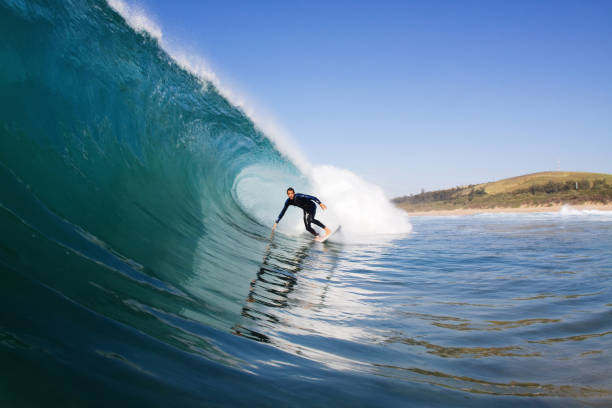
First off, park your ride and just sit on the sand for a while. Grab some water, maybe a snack, and let your eyes do the work. Look for the sets — not just the waves that are rolling through, but the pattern they’re coming in. Are they breaking in the same spot every time, or is there a shift in the lineup? Take note of where the peak is, that sweet spot where the wave first starts to pitch and throw. That’s your takeoff zone, your launchpad. Watch how the wave peels — does it rake left, right, or both ways off the peak? That tells you whether it’s a shifty beach break, a long walled-up point, or a thick reef slab. Each one asks for a different approach, a different board, and a different set of eyes.
Now check the water itself. See any whitewater constantly bubbling in one area? That might be a rip current pulling out to sea, and that’s not necessarily a bad thing. A rip can be your ticket past the impact zone without burning all your energy, but it can also sweep you sideways and put you right in the path of a set with zero mercy. Look for the darker, smoother channels where the water is moving back out. That’s where you paddle. Also spot any foam lines, that swirling storm of bubbles that shows where waves have already broken. That foam marks the energy’s path, and following it can show you the regular drift, the current that runs along the beach. If you see a lot of surface movement in one direction, know that you’ll be drifting down the line every time you wait for a set. Adjust your position accordingly.
Tide and swell are your best friends at a new spot. Look at the rocks, the sandbar, the shape of the reef — is it shallow right now? Are those waves throwing with a thick lip, or are they mushy and weak? A wave that’s steep and hollow at low tide might turn into a fat, closeout-friendly mess at high tide. If you’ve got a tide chart on your phone, great, but even just watching for an hour will show you if the water is rising or falling. That changes everything. Also feel the swell direction in the surf report you pulled up before you left the hostel. A south swell hits a point differently than a west swell, and that difference means the peak might be off a particular rock, or over a deeper channel. Keep your mind open, because the ocean doesn’t always follow the forecast.
The best move is to watch the locals. Don’t stare like a weirdo, but casually observe where they sit, how they paddle, when they commit. If you see a crew of surfers consistently getting set waves in a certain zone, that’s your lineup hint. Watch their positioning relative to a landmark on shore — a tree, a lifeguard stand, a broken fence. That gives you your reference point so you don’t drift too far north or south. And when you do paddle out, don’t just plop yourself right next to them. Give space, show respect, and take your lumps on the secondary peaks first. Earning your place at a new break takes time, but it’s all part of the adventure.
Finally, always have a quick exit plan. Before you get in, spot the easiest way back to shore — maybe a channel on the side, a sandy gap between rocks, or a longshore current that’ll carry you gently to the beach. Surfing is supposed to be fun, not a survival episode. A new break is a gift, but it’s a gift you have to unwrap slowly. Give it a few minutes of pure observation, let the ocean tell you its secrets, and you’ll find yourself dropping into waves with a smile instead of a flail. That’s the difference between a tourist in the water and a traveler who’s in tune with the sea. So next time you roll up to a new lineup, sit back, watch, and listen. The waves will show you the way.