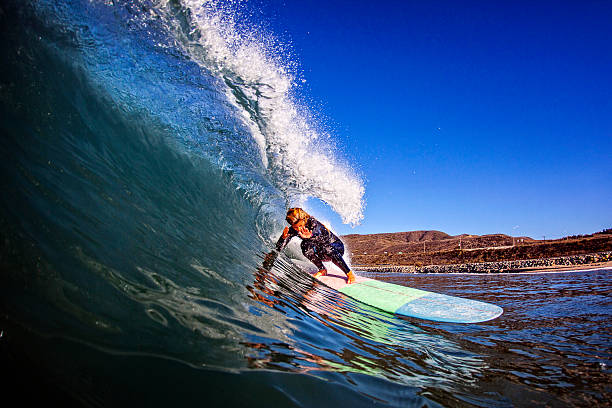
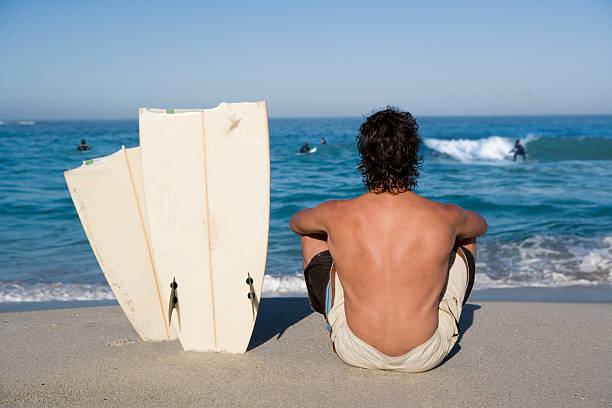
There’s a certain stoke that comes from keeping it simple, a clean kind of soul that you just can’t fake. Back in the golden era of the longboard, before the shortboard revolution split the lineup and before quivers became a collection of nine different thruster setups for every single swell direction, surfers rolled with a different philosophy. They rode one board, and they rode it everywhere. That board was a log, a gun, a noserider, and a cruiser all wrapped into one heavy, beautiful piece of fiberglass and foam. That was the era of the single-board quiver, and there’s a pure, uncluttered magic to it that the modern surfer could learn a thing or two from.
Picture a dawn patrol in the early sixties, somewhere on the North Shore of Oahu or down a dusty track in Baja. You pull up in a wood-paneled wagon with the windows down, salt crusted in your hair and sand in the floorboards. You grab your one board. It’s a ten-footer, maybe a twelve, with a single fin that looks like a stubby airplane wing and a glass job so thick you could park a truck on it. That board weighs a ton. It takes two hands and a good hip to carry it down to the water. But there’s no debate about what to ride today. It’s the only option. The decision is already made for you, and that freedom is a beautiful thing.
The beauty of that one-board setup was pure adaptability. That same log that let you walk the nose all the way to the tip on a glassy two-foot point break was also your ticket into a solid overhead swell. You didn’t need a step-up. You just paddled harder, dropped in earlier, and used that heavy, rail-heavy hull to carve a deep, soulful line down the face. The board didn’t offer forgiveness; it offered a challenge. Every wave, from the ankle-biters to the grinding sets, was a negotiation with that same chunk of foam. You learned to read the wave, to adjust your stance, to shift your weight with a subtlety that you only develop when you ride the same plank through every kind of ocean.
The technique on those old logs was all about trim and flow. You weren’t trying to rip the fins out or punt a massive air reverse. You were hunting for the trim speed, that sweet spot on the face where the board just hums and you feel like you’re surfing on a glassed-in version of the wind itself. You were learning the cross-step to get to the nose for a ten-second hang five, or a full classic hang ten that leaves your toes curled over the nose. And when the wave walled up, you didn’t do a vertical snap. You did a cutback that took up the whole face, a long, sweeping, drawn-out turn that left a clean line of spray behind you. It was surfing as a dance, not a fight.
The lifestyle that came with that one-board quiver was just as simple. You didn’t obsess over the fin setup. You had one fin, and it was probably a solid 9-inch d-drive or a big pivot fin that locked you into the wave. When that fin was glassed in, it was permanent. No swapping fins for different breaks. No fiddle-farting with a screwdriver in the parking lot. You paddled out, you got worked, you came in, you waxed it up, and you did it all again tomorrow. That consistency bred a deeper connection to the ocean. You weren’t chasing conditions for a specific board. You were chasing the feeling of being on your board, period.
The travel was simpler too. The Endless Summer vibe wasn’t about packing a board bag full of specialized equipment. You had a board, a bag, a wetsuit if you were crazy enough to go north, and a tank of gas. The journey was the point. You surfed a crumbling beach break with the same log you used for a perfect right point. You figured it out. You learned to rely on your surfing ability, not your equipment. That’s a lesson worth remembering.
There’s a reason the old-schoolers still smile when they talk about their first logs. It wasn’t just the shape of the board. It was the shape of the life. No choices, no gear anxiety, just you and that one heavy, beautiful plank and whatever the ocean decided to throw at you that day. That single-board quiver philosophy is the spirit of the longboard era. It’s a lesson in presence, in adaptability, and in the pure, uncomplicated stoke of getting a ride on your one true board.