In the long, curling line-up of surfing legends, one name stands apart, shrouded in equal parts myth, admiration, and infamy: Miki Dora. To call him just a great surfer is to miss the point entirely. Dora was the archetype, the original soul surfer and the ultimate maverick, a man who rode waves with a poetic fury and lived life entirely on his own, often lawless, terms. He wasn’t just in the water; he was in a perpetual, elegant rebellion against the creeping commercialism he saw poisoning his pure pursuit.
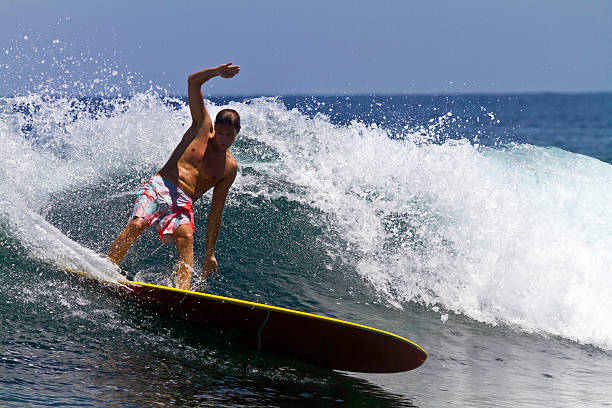
Born in 1934, Dora cut his teeth at Malibu in its golden era, the 1950s and ’60s. First Point was his cathedral, and he was its high priest. On a chipboard single-fin, his style was pure magic—a low-slung, coiled stance, fluid as mercury, with a knack for finding trim lines no one else saw. He made the nose-ride an art form, not just a trick, hanging ten with a casual arrogance that became his signature. But his skill was only half the story. Dora despised the kooks, the weekend warriors, and the Hollywood hype that followed the sport he loved. He saw Gidget and the ensuing boom as a plague, an invasion of his sacred space.
This is where the legend of “Da Cat” truly took hold. His antics were the stuff of local lore. Dropping in on tourists, “borrowing” boards and cars without asking, flicking the bird at photographers—Dora’s middle finger was as iconic as his stance. He wasn’t trying to be liked; he was enforcing a purist’s code in a world he felt was selling out. He became the dark counterpoint to the clean-cut image of surfers like Mickey Dora (no relation), embodying a rogue, nomadic spirit that rejected mainstream acceptance.
His disdain for the surf industry was absolute. While others slapped their names on mass-produced boards and wetsuits, Dora wanted no part of it. He saw the future—the logos, the contests, the corporate sponsorships—and wanted to burn it all down. For him, surfing wasn’t a career path; it was an act of freedom, a dance with the ocean that demanded absolute purity. He was, perhaps, the first true “soul surfer,“ decades before the term was coined, valuing the feeling over the fame, the ride over the reward.
This ethos led him to become the original global surf nomad. When the crowds at Malibu became unbearable, he chased the endless summer long before the film crew packed their bags. He found his true spiritual home in the perfect, empty point breaks of South Africa and later, the rugged coast of France. In Jeffreys Bay and Hossegor, he could surf world-class waves without the circus, living out of a bag, always on the move, funded by schemes that ranged from clever to criminal. He was the blueprint for the traveling surfer, but with a permanent sneer for the tourist guidebooks.
Miki Dora’s legacy is a complicated barrel. He was a phenomenal surfer whose style influenced generations. More importantly, he was surfing’s conscience and its critic, a permanent reminder of what was lost when the wave went mainstream. In today’s world of Olympic surfing and billionaire-owned wave pools, the ghost of Da Cat looms large. He represents the raw, untamed spirit of the sport—the idea that surfing, at its core, is about a lone individual, a board, and the sea, with no room for posers or price tags. He wasn’t always right, and he was rarely kind, but his commitment to his own chaotic code was absolute. In the end, Miki Dora didn’t just ride waves; he rode his own relentless, rebellious line, and in doing so, carved a permanent place in surfing’s soul.