When the sun cracks the horizon at Hanalei Bay, painting the water in shades of gold and coral, the lineup starts to hum. You paddle out, the cool morning glass off slipping under your board, and you feel the pulse of the ocean. It’s the same pulse that Bethany Hamilton has felt since she was a grom, slinging her little board into the same North Shore rollers. But for Bethany, the conversation with the sea changed forever on October 31, 2003. That’s the day a fourteen-foot tiger shark bit into her left arm and took it clean off, along with more than half the blood in her body. In that moment, the world expected the end of her surfing story. Instead, it became the beginning of something much deeper, something that speaks to the very soul of what it means to be a surfer chasing the endless summer.
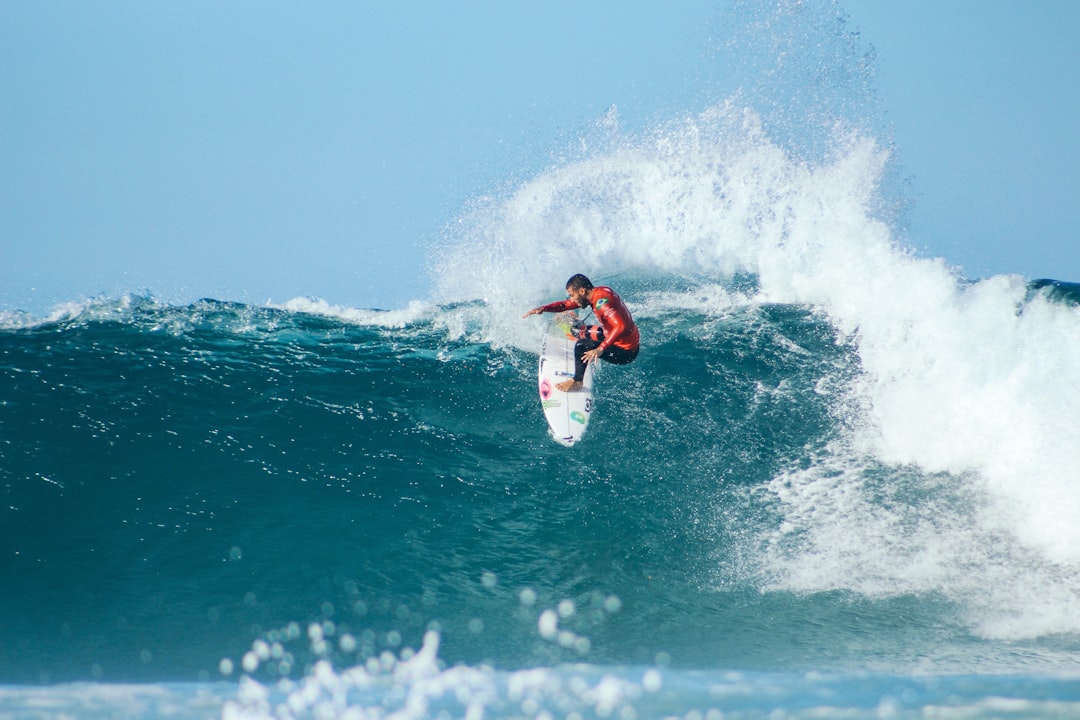
The standard story is one of grit and recovery, and sure, that’s true. Bethany was back on a board within a month, her father and brothers paddling beside her, her body still wrapped in bandages. But the real story, the one that every surfer should catch, is about adaptation. It’s about how she took a catastrophic loss and retrained her entire relationship with the ocean. Surfing is already a dance of balance, timing, and instinct. When you lose an arm, you lose a counterbalance, a paddle stroke, a way to pop up and angle your body into the face of a wave. Bethany didn’t just learn to surf with one arm. She invented a new style. She had to use her legs differently, cocking her hips into the wave to generate the torque her missing shoulder would have provided. She learned to use the momentum of her body like a pendulum, swinging into a bottom turn with a kind of raw, asymmetrical power that most surfers with two arms can’t replicate. Her pop-up became a single explosive thrust, a punch of the right arm into the deck that sent her to her feet in a blur. In the water, she became a different kind of surfer, one who reads the ocean not just with her eyes but with a heightened sense of wave placement, knowing she had fewer strokes to catch the energy. She learned to commit earlier, to trust the bump and the drop without the luxury of a last-second correction.
That trust is the stoke of her story. Bethany’s spirit isn’t just about overcoming adversity; it’s about redefining the very shape of possibility in the water. She took the mechanics of surfing and bent them to her will. On the North Shore of Oahu, at places like Pipeline and Sunset Beach, where the swell is heavy and the reef is shallow, she didn’t shy away. She paddled into grinding, hollow waves that could spit you out or pin you down. With one arm, she learned to duck dive using a modified technique, sinking the nose of her board deep and using her legs to punch through the whitewash. She learned to takeoff in the barrel with a low, cocked stance, her body compressed like a spring, her one arm reaching for the wall of the tunnel. Watching her ride a deep tube at Pipeline is to see pure, fluid adaptation—a human being finding harmony with a wave in a way that feels almost choreographed by fate.
But here’s the part that connects to the everyday surfer, the one who chases the sun and the perfect peel. Bethany’s story reminds us that the ocean doesn’t care about your excuses. It doesn’t care about a bad day at work, a sore back, or a blown-out forecast. It just offers the wave. How you take it is up to you. Bethany took the worst possible hand and decided to keep paddling. That’s the essence of the surfing lifestyle, the endless summer mentality. It’s not about perfect conditions or expensive gear. It’s about showing up, session after session, and finding the stoke wherever it hides. When you see a surfer like Bethany drop into a wave, you realize that most of the limitations we put on ourselves are just noise. The wave doesn’t know you’re tired. The wave doesn’t care if you’re afraid. It’s just a slope of water, and you either take the drop or you don’t.
Her competition career is a testament to that. Winning the World Junior Championships, competing on the World Surf League tour, taking a gold medal at the ISA World Games—she didn’t just hang in there. She dominated. She surfed against women who had two fully functional arms, and she beat them with positioning, wave selection, and a kind of reckless grace that came from trusting her adjusted technique. She became a symbol not of survival, but of excellence within a new set of parameters. Her waves were scored on power and flow, and she delivered both. The judges couldn’t give her a participation point for having one arm; they judged the ride, and the rides were legit. That’s the deeper lesson for the sun-chasing surfer. Your equipment, your body, your circumstances—they’re just the starting point. The wave is the same for everyone. What you do with the drop is what matters.
In the lineup, Bethany is known as a good soul. She’s stoked. She’s humble. She paddles over and says hi. She doesn’t carry a cloud of tragedy; she carries the energy of someone who genuinely loves being in the water. That’s the real legacy of the unstoppable spirit. It’s not about being tough in a stoic, gritted-teeth kind of way. It’s about finding joy in the face of the challenge. It’s about paddling out on a choppy, wind-blown day and still feeling that little thrill when a bump of swell lifts your board. Bethany Hamilton surfed Pipeline with one arm and a smile. That’s the high-water mark for any of us, any morning, anywhere the sun hits the swell.