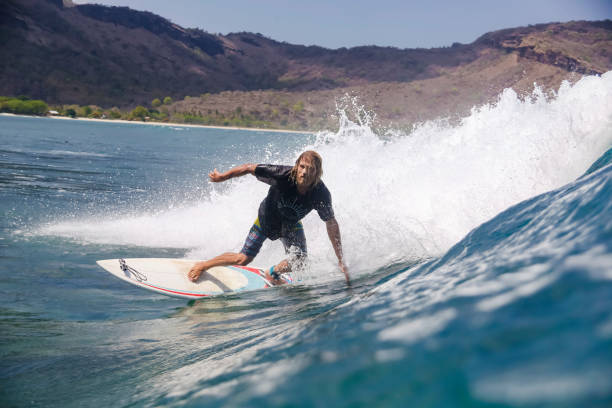
Forget the postcards. Forget the tiki cocktails and the luau shows. If you’re chasing the real heartbeat of surfing, the kind that thumps in your chest when you’re staring down a heaving peak with nothing but reef below, you point your board bag towards Kauai. They call it the Garden Isle, and yeah, it’s green and stunning. But in the water, it’s a different kind of beautiful. It’s raw, powerful, and demands respect. This isn’t a beginner’s playground; it’s a proving ground.
Kauai sits up there in the chain, first in line to greet the North Pacific swells that march across the ocean. What that means for a surfer is simple: consistency and power. When a big winter low spins up near Japan, Kauai feels it. The island acts like a magnet, pulling in clean, lined-up energy that wraps around its points and reefs, creating some of the most legendary, and sometimes terrifying, waves on the planet.
Let’s talk spots. You can’t whisper about Kauai without starting with Hanalei Bay. This place is the stuff of surf lore. A massive, crescent-shaped bay backed by emerald cliffs and waterfalls, Hanalei is a wave machine. On a good day, you’ll see perfect, almond-shaped barrels peeling along the reef at The Bowl, while longboarders trim down the lines at Pine Trees. But when it’s really on, the entire bay lights up. The Point starts firing, connecting sections all the way through, offering rides that feel like they last a minute. It’s a communal, charged scene in the lineup—a mix of local heavies, traveling pros, and stoked souls all sharing the stoke. Paddle out here, and you’re surfing in a postcard, just one with a serious bite.
Then there’s the North Shore’s more serious side. Tunnels (Makua) is a wave that separates the dreamers from the doers. It’s a thick, grinding left that breaks over a shallow, cavernous reef—hence the name. Taking off here is a commitment. You’re dropping in, setting a high line, and racing the section that wants to throw a mountain of water over you. Make it, and you’re in a speeding, hollow tube. Miss it, and you’re going over the falls onto the reef. It’s a wave for watermen and women, pure and simple.
But Kauai isn’t a one-trick pony. When the north swell is too bananas, or the trades are howling, the south and west shores come to life. PK’s and Acid Drop are freight-train lefts that offer a different kind of intensity. These are faster, hollower, and break with a relentless energy. They’re less crowded, but the consequences are just as high. You earn your turns here, and you earn the respect of the tight-knit local crews who guard these lineups.
Surfing Kauai isn’t about ticking boxes on a surf travel itinerary. It’s an experience. The vibe is more old-school Hawaii. Respect is the currency. The locals here have seen every kind of tourist surfer, and they have zero tolerance for kooks dropping in or disrespecting the pecking order. Paddle out humble. Observe. Wait your turn. Give a nod. You’re a guest in their ocean.
The lifestyle off the wave matches the intensity on it. You’re chasing swells down winding jungle roads, grabbing plate lunches from trucks, and falling asleep to the sound of the rain on the roof—because it rains here, a lot. That’s what keeps it so green. It’s a place that forces you to slow down, to sync with the rhythm of the swell and the weather.
So, if your idea of a surf trip is manicured resorts and soft, forgiving waves, look elsewhere. But if you want to test yourself in some of the most powerful and perfect waves on Earth, to feel the true mana of Hawaiian surfing, Kauai calls. Just come prepared, come respectful, and come ready to have your mind—and maybe your board—blown. The Garden Isle doesn’t just give you waves; it gives you a story.