Back in the early seventies, if you paddled out at Burleigh Heads in Queensland, Australia, you probably weren’t thinking too hard about what you had on. Boardshorts were baggy, cotton was heavy, and the wax was melting into your legrope string. But a local shaper and surfboard maker named Gordon Merchant saw something different hanging on the line. He noticed that the women’s swimwear patterns on the beach could be sewn right into a pair of shorts that actually held up in the barrel. That little spark of stoke is what turned a kitchen table operation into one of the most recognizable logos in the ocean.
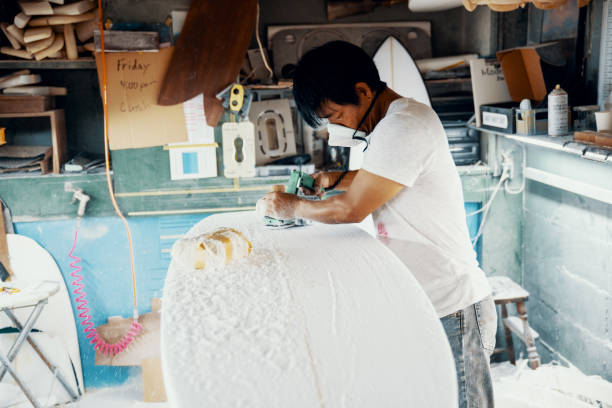
Gordon and his wife Rena were the original garage brand. In 1973, armed with a sewing machine, a roll of fabric, and a serious love for the dawn patrol, they started stitching board shorts on their kitchen floor. The very first pairs were crude by today’s standards. Frayed edges, basic draws, no Velcro. But the fit was revolutionary. They cut the shorts looser in the leg so you could actually bend over and duck-dive. They used quick-drying microfiber before anyone even knew what microfiber was. Other local surfers at Burleigh saw those shorts and they wanted in. It wasn’t long before Gordon was sewing stock for the local surf shop, and that was the beginning of a full-blown high tide.
What set Billabong apart from the start was not just the gear, but the crew that wore it. As the eighties rolled in, the brand started backing some of the most raw, most radical humans on the planet. They picked up a young kid named Tom Curren out of Santa Barbara, a guy who paddled like he was born in the water. They put Mark Occhilupo on the payroll when he was just a feral teenager with a bottom turn that would blow your mind. Suddenly, wearing a Billabong long-sleeve spring suit meant you were plugged into something authentic. It meant you understood that surfing was not a sport, but a way of moving through the world.
By the late eighties and early nineties, the brand had exploded. Every kid who saved up their paper route money wanted a pair of boardies with that red wave logo stitched on the fly. The company went public in 2000 on the Australian Stock Exchange, and the stoke turned into serious corporate cash. For a minute there, it looked like the soul was slipping away. The factories moved offshore. The board shorts showed up in Target. The old-timers at Burleigh started grumbling that the brand had sold out, that Gordon’s kitchen table was now a boardroom in a highrise.
And there is a truth to that loss of innocence. When any surf brand goes global, it has to feed the machine. Billabong hit a heavy wipeout in the mid-2010s. The global financial crisis, bad acquisitions, a messy debt load. The stock price cratered. For a few years, the brand was in survival mode, a shell of the stoke it once represented. But here is the thing about a real surf brand—it has roots. It cannot be just a logo. The company was eventually taken private by a U.S. retail group called Oaktree Capital, and they did something smart. They let the brand breathe again.
Today, Billabong sits in a weird but comfortable spot. It still makes the gear you need for a wedge at Lowers. It still sponsors the World Surf League events. It still pays pros like Tyler Wright and Filipe Toledo to stomp airs. But there is a renewed focus on the grassroots. The brand has leaned into sustainability, using recycled polyester and natural rubber for wetsuits. They started the “Billabong Revival” program, restoring old stock and keeping vintage gear out of the landfill. It is not the same unruly garage operation, but the spirit is still there.
When you paddle out today and you see that little red wave on a guy’s shorts, you are looking at forty years of ocean time. You are looking at the transition from a sewing machine on a kitchen table to a global corporation that nearly drowned under its own weight. But the wave kept rolling. The brand got swallowed, but it did not die. It found a new channel, paddled back out, and caught the next one. That is the story of surfing itself. You get worked, you go under, you work on your breath, and you come up kicking. Billabong is a reminder that the industry may change, but the ocean does not. And as long as there are dawn patrols and offshore winds, the stoke will find a way to thread a needle.