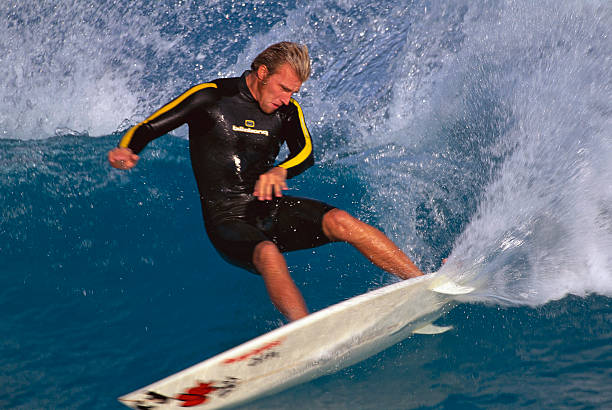
You feel it before you see it. That shift in energy as the wave stands up, offering you a clean, steep face that’s begging to be torn apart. For a split second, you’ve got options. You can lay into a deep, drawn-out carve that throws a thick curtain of spray back into the ocean’s face, or you can take it to the lip and launch yourself into the sky. The difference between a good surfer and a truly advanced one isn’t just the ability to do either one. It’s knowing exactly when to transition from one to the other, and pulling it off with the kind of flow that makes the whole lineup stop and watch.
Let’s talk about the carve first, because without a solid carve, your airs are just flailing. A real carve isn’t just a turn. It’s a commitment. When you see a pro bury that rail so deep it looks like the board might submarine, that’s the moment of truth. You’re shifting your weight back, driving your back foot through the tail, and leaning your torso into the face of the wave like you’re trying to hug it. The fins are holding, the board is humming, and you’re redirecting all that speed and momentum in a tight, arcing line. This is where you build tension. The spray that erupts from the top of the wave isn’t just showy. It’s proof that you’ve loaded the board like a spring. That energy has to go somewhere, and if you release it at the right moment, you’re not just carving. You’re setting the table for flight.
The true mastery comes in the split second after you’ve hit the top of that carve. This is the transition that separates the shredders from the legends. As you reach the apex of your turn, your board is almost perpendicular to the wave’s face. Your fins are threatening to release. Instead of driving back down the face, you pivot your weight forward and drive your back knee toward the nose. Your shoulders open up, facing the direction you want to go. This isn’t a violent motion. It’s a smooth, deliberate shift. The tail of the board, which was just locked in a hard carve, suddenly becomes a pivot point. You’re not trying to jump. You’re letting the stored energy of the carve, combined with the upward slope of the lip, launch you. Your front hand reaches for the sky. Your eyes lock on the landing zone. The board leaves the water, and for a glorious second, you are completely free.
That aerial, whether it’s a simple straight air or a tweaked-out rotation, is the payoff. But the landing is where the carve comes back into play. The best airs don’t end with a splash. They end with a seamless re-entry, where the surfer lands on the face and immediately drops that same back foot into another carve, absorbing the impact and flowing back into the wave’s rhythm. If you land flat, you stall. If you land with your weight too far forward, you pearl. The advanced surfer lands with the board angled slightly, already setting up for the next move. It’s one continuous dance, not two separate tricks.
The biggest mistake groms and intermediates make is trying to force the air. They see the lip, they try to jump off it, and they end up floating in no-man’s land without any real control. The secret is that a proper air is simply an extension of a powerful carve. You have to commit to the bottom turn, drive hard into the section, and use the recoil of the wave itself as your launching pad. It’s about timing the rebound of the water. A hollow, pitching wave gives you more of a slingshot effect. A fat, crumbling section requires you to generate more of your own speed through that initial carve. Read the wave, feel the water, and let the carve dictate the air, not the other way around.
So next time you paddle out and you feel that wave offering you the choice, don’t think of carving and airs as two separate items in a bag of tricks. Think of them as one fluid motion, a conversation between your board and the wave. Lay into that rail, feel the tension build, and when the moment is right, let it all go. The sky is waiting, and that clean carve is your ticket.