There’s a moment that happens out past the break, when the ocean goes all quiet and glassy, and you’re just sitting there on your board, feeling the pulse of the swell roll underneath you like a slow breath from the deep. That’s when you start to see it. Not with your eyes, but with something deeper. The line. Every wave has one, a path that curves and bends and tells you exactly where to go if you’re willing to listen. The whole art of surfing isn’t about fighting the ocean or showing off your latest air reverse. It’s about finding that line, and then letting it take you somewhere you didn’t even know you needed to go.
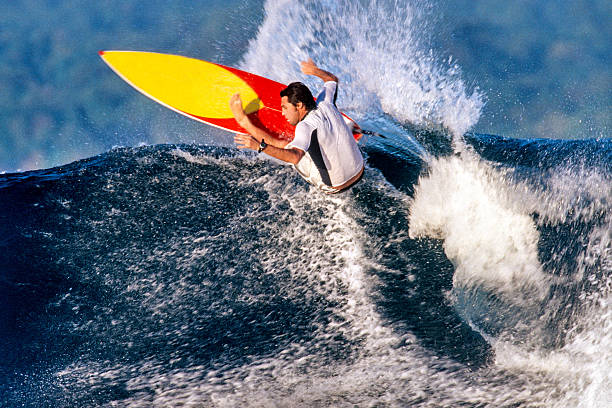
You paddle out when the sets are still building, when the horizon has that lumpy, restless look that means something’s coming. The old salts on the beach will tell you to read the water, and they’re not lying. You look for the darker swells, the deeper green patches, the places where the wind isn’t messing with the surface. That’s where the wave is going to jack up. But the line isn’t just about where the wave breaks. It’s about the dance you do once you’re on it. You pop to your feet, maybe regular or goofy, and suddenly you’re dropping down that face with your back foot locked in, your front arm reaching out to touch the wall of water. That first bottom turn sets you on the line. You feel the rail bite into the wave, and the whole world tilts sideways.
Here’s the thing about the line – it’s never straight. It’s a living, breathing thing that shifts with every pulse of the swell, every puff of wind, every bit of tide pulling in or out. A surfer who’s truly in tune doesn’t force the line. They let the wave draw it for them. You carve off the top, and the wave tells you when to come back down. You feel the section racing ahead, so you stall a little, maybe kick out your fin, and then you drop back in at the perfect angle. It’s like the wave is a partner in a dance, and you’re not leading, just following the rhythm that’s already there. That’s the soul of the art, right there.
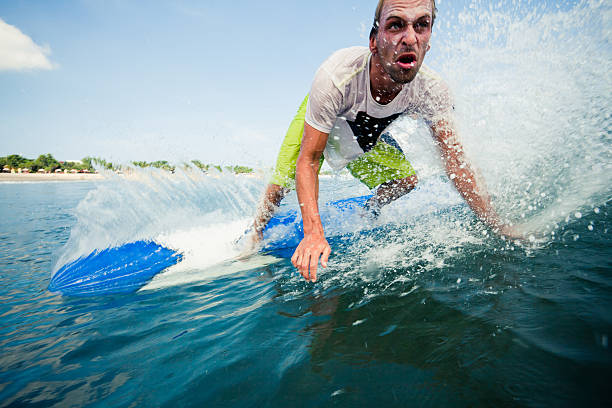
Some days the line is easy to find. The surf is waist-high and clean, the water is warm, and every wave peels like it was drawn by a master calligrapher. You catch ten waves in an hour, each one a little gem, and you ride them with a grin so wide your cheeks hurt. Those are the days you remember when you’re stuck in traffic or sitting in a fluorescent-lit office. But other days, the ocean throws you a curveball. The swell is jumbled, the wind is onshore and choppy, and every wave feels like a washing machine full of rocks. That’s when the real art kicks in. You paddle out anyway, because that’s what surfers do. And you sit there, waiting, watching for that one set, that one rogue wave that still has a line hidden somewhere in the mess. When it comes, you don’t think. You just drop in and trust your instincts. The line might be short, might close out on you, but if you’re paying attention, you’ll find a little pocket of green glass even in the chaos. That little pocket is everything.
The terminology we use says it all. We talk about “getting barreled” or “slotted” – meaning you found the exact line that puts you inside the hollow part of the wave, that green room where time slows down and all you hear is the hiss of the water racing past. We talk about “trimming” – which is that perfect line along the open face where the board just hums with speed, no pumping needed, just pure glide. We talk about “reading the ocean” like it’s a language, because it is. The ocean is always speaking. The question is whether you’re listening.
The best surfers – the ones who make it look like poetry, like Kelly Slater or the old soul of Gerry Lopez – they don’t have a secret move. They have a secret understanding. They know the line is never in the same place twice. So they stay loose, stay present, and let each wave teach them something new. That’s the stoke, really. Not the barrel itself, but the hunt for the line that leads you there. It’s endless, the way the ocean is endless. You could surf every day of your life and still not figure it out completely. But that’s exactly why we keep going back. Each session is another chance to find a line you’ve never seen before, to feel that sudden click when your body and the wave are moving as one.
So next time you paddle out, forget about the crowd, forget about the camera, forget about what anyone else is doing. Just sit there for a minute and feel the water. Look for the deep green path that’s waiting for you. And when a set rolls in, paddle hard, pop up, and trust that the wave will show you the way. Because the line is always there. It’s just up to you to find it.