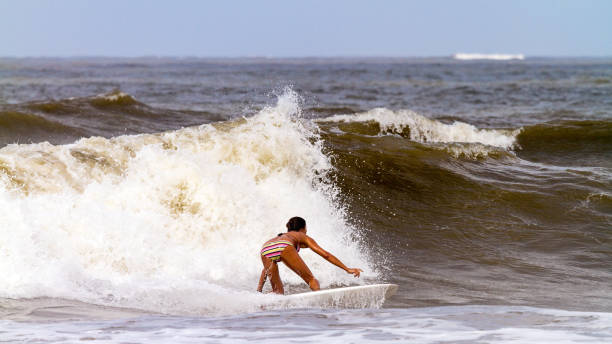
There’s a magic in the air when you’re standing on a foreign shore, watching lines of swell roll in with that perfect offshore texture, knowing you made the right call on when to show up. The best surf trips aren’t just about picking a spot with world-class waves; they’re about stacking the odds in your favor by understanding the fickle dance between swell direction, wind patterns, and tide cycles. If you’ve ever flown halfway across the globe only to find a bathtub-flat ocean or a howling onshore mess, you know the heartbreak. The secret to avoiding that stoke-draining scenario lies in one simple concept: the swell window.
Every surf break has a swell window, which is the specific direction from which the ocean can send groundswell energy into that particular wedge of reef, sandbar, or point. A spot like Uluwatu in Bali, for instance, inhales southwest groundswell like a breath of fresh air, while the same swell might completely miss a north-facing reef on Lombok. Before you book a ticket, you have to sit with the maps and figure out what your target break actually eats for breakfast. Most spots fire best within a thirty-degree arc of their optimal angle. Go outside that window, and you’ll be staring at an ocean that looks good but does nothing.
But direction is only half the story. The strength and period of the swell matter just as much as where it comes from. A long-period groundswell of fifteen seconds or more carries enough energy to bend around islands and refract into coves that would otherwise be shielded. That’s the kind of pulse that turns a mediocre sandbar into a hollow freight train. Short-period windswell, on the other hand, is fickle and messy, more suited for beach breaks on a small day than for world-class reef waves. When you’re planning a trip, you want to chase the big-picture patterns: the winter storms in the North Pacific that fire up the Hawaiian Islands from October to March, or the Indian Ocean cyclones that send flawless lines into Indonesia from April to October. These are the solid bets, the ones that reliable swell models have been tracking for decades.
Tidal timing is the next piece of the puzzle. Some breaks only work on a low tide, exposing a shallow slab that turns a two-foot wave into a dangerous drainer. Other spots, like a high-performance point break, might only start reeling when the tide pushes in and covers the inside section. I’ve watched too many surfers paddle out at a fickle reef at high tide, expecting barrels, only to float over fat, crumbly walls. You can get away with showing up to a beach break on any tide, but if you’re hunting quality, you need to sync your arrival with the tidal swing. A spring low tide might drain a bay completely, leaving you scratching your head while a neighboring point is going off at mid-tide. Local knowledge is golden here, but you can do a lot of homework by looking at tide charts months in advance.
Wind is probably the most misread variable of all. Everyone knows they want offshore wind, the kind that blows into the face of the wave, grooming it into a glassy wall. But what does offshore actually mean at your chosen break? For a west-facing beach, an easterly wind is offshore. For a south-facing reef, a north wind cleans it up. You need to know the prevailing wind patterns for the region during your travel window. Many tropical destinations, like the Maldives or Costa Rica, have distinct trade wind seasons where the wind switches from offshore to onshore depending on the time of year or even the time of day. A spot that is perfect at dawn might turn into a washing machine by noon when the sea breeze kicks in. The smart traveler plans dawn patrol sessions and pings their calendar around the windiest months, not the warmest ones.
The seasonal flip-flop is what separates a good trip from a life-changing one. Chasing the endless summer, that eternal dream of perpetual warm water and perfect waves, means understanding the planet’s hemispherical pulse. When the northern hemisphere is in the grip of winter, southern hemisphere breaks like those in Brazil, South Africa, and Australia are enjoying their summer slumber. Conversely, when the Atlantic is howling during a New England winter, you might find glassy overhead waves in Puerto Rico or Barbados. The traveler who cracks this code is the one who can literally chase the sun, hopping from one hemisphere to the other, always landing at the tail end of a swell season or the beginning of the next. That’s the secret of The Endless Summer: it’s not just a film, it’s a strategy.
At the end of the day, nailing the best time to visit a surf spot is a blend of science, patience, and a little bit of soul. You can chase the data, study the charts, and pick the historical peak months, but the ocean always has the final say. The best advice I ever heard was from an old salt who said, “Book the flight, leave the calendar flexible, and be ready to drive.” Sometimes the swell window opens for a week, sometimes for a single day. Your job as a surf traveler is to be there when it does. That’s the true art of the stoke.