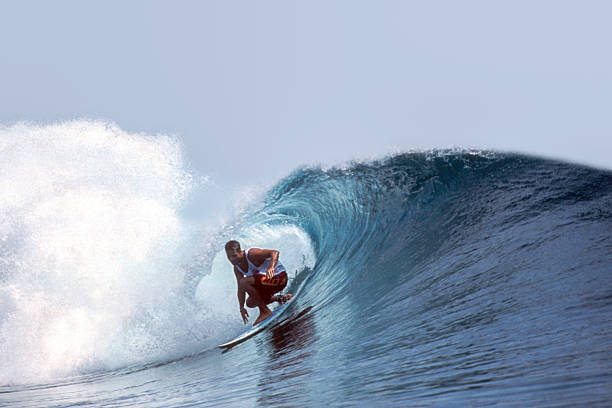
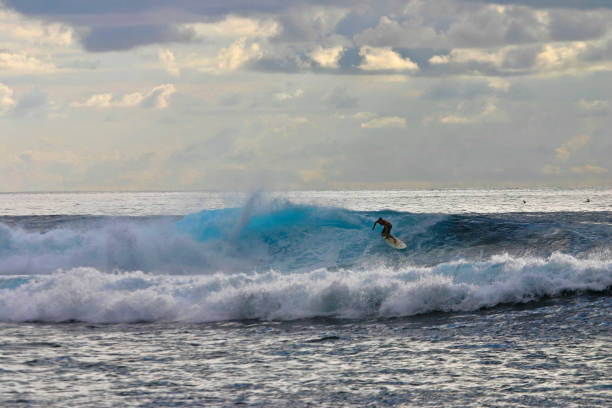
There is a certain kind of stoke that hits you when you look at a ten-day forecast and see a solid groundswell lining up on the other side of the globe while your local break is flat as a lake. That is the call. It is the same primal urge that sent the first Polynesian navigators across open ocean, the same itch that drove the original golden boys of The Endless Summer to hop on a plane with nothing but a board bag and a dream. That is what we are talking about here: the migration. It is not just a vacation. It is a lifestyle built around the simple, profound pursuit of putting your fins in warm water and feeling that clean, lined-up swell wrap around a point break.
The first rule of chasing the sun is understanding that winter is your friend. Not the grey, miserable winter of the mainland, but the winter of the Southern Hemisphere. When the north Pacific is blowing a gale and the beach is closed out with storm chop, the Indo region is basking in its dry season. This is when the swells from the Roaring Forties march unbroken across the Indian Ocean, slamming into reefs and points in Bali, Sumatra, and the Mentawais. You trade a wetsuit for boardies. You trade a crowded, localized lineup for a turquoise barrel that seems to unload just for you. It is a simple equation: north is cold, south is hot, and the swell is always somewhere in between.
But the true endless summer vibes are not just about dodging the cold. It is about the rhythm of the chase. You learn to read the satellite charts the way an old salt reads the clouds. You know when the trade winds are going to switch offshore in Central America, when the north-west monsoon will light up the rights in Sri Lanka, when the summer hurricane swell will pump into Puerto Rico while the rest of the Atlantic is struggling. You live your life in three-month blocks, bouncing between hemispheres, always arriving just as the local season is peaking. You become a creature of the equator, a permanent resident of the tropics who only sees a sweater on a layover in LAX.
This pursuit changes your gear. You don’t haul a quiver of fourteen different shapes. You pare it down to the essentials: one all-around performance shortboard, one step-up for when the deep water is calling, and one log because you can’t chase the sun without honoring the soul of a noseride. Your board bag becomes your home. Your vehicle of choice? Something with a rack and a mattress in the back. The classic surfer van, whether it is a battered Westfalia on the Pacific Coast Highway or a souped-up Toyota Hiace on the Bukit Peninsula, is the chariot of the chase. You sleep to the sound of the waves, wake up to the sun cresting the palm trees, and you are in the water before the tourists have even found their sunscreen.
The social fabric of this lifestyle is woven from chance encounters and shared lineups. You pull into a remote fishing village in West Java, and within an hour you have met a German shaper, an Australian free-surfer, and a local kid who draws perfect cascading barrels in the sand. There are no schedules. There are no meetings. There is only the tide table and the wind report. You eat simple food from a warung, drink coconuts, and talk about the one that got away. The currency here is not money but wave count and sunset quality.
Of course, the chase has its costs. You miss weddings. You miss birthdays. You develop a strange relationship with time, measuring it not in years but in swell seasons. You might spend six months in a tropical paradise living out of a backpack, and then find yourself in a snow-covered airport, wondering if the juice was worth the squeeze. It always is. Because the feeling of paddling out at dawn in a spot that has no name on a map, where the water is 82 degrees and the reef is glowing green below you, is a feeling that no mortgage, no promotion, no material possession can replicate. It is freedom in its purest form.
So you keep the bag packed. You keep the passport ready. You keep an eye on those charts. Because the sun is always shining somewhere, and the swell is always running. The key is to be there when it arrives. That is the endless summer. It is not a destination. It is a direction.