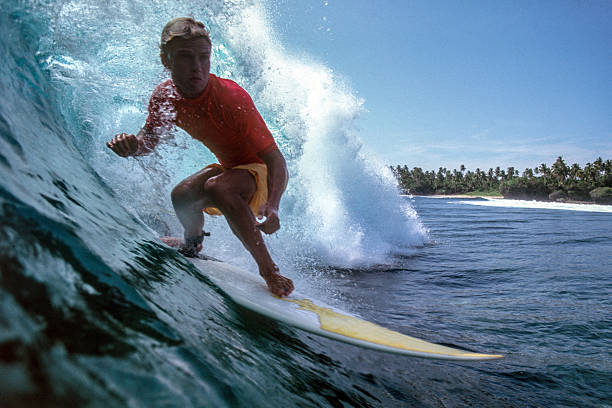
When you paddle out at dawn and the lineup is glassy and empty, the last thing on your mind is what you’re wearing below the waist. But as soon as that first wave folds over and you kick out, feel the fabric tug or the waistband slip, you realize the true weight of the humble boardshort. They’re not just a piece of clothing. They’re your second skin in the ocean, the barrier between you and the brutal friction of waxed fiberglass, the silent partner in every bottom turn and cutback. For decades, the boardshort has evolved from a simple cut-off pair of trunks into a technical marvel of style and comfort, and understanding that evolution is key to catching more waves and feeling good while doing it.
The original surf trunks were basically wool or cotton shorts that soaked up saltwater like a sponge, weighed a ton, and chafed your thighs raw after a few hours of paddling. Then came the innovation that changed everything: the synthetic fiber. Nylon and polyester blends brought a quick-dry quality that let surfers shed water and move freely, but the real game-changer was the flyless design. No metal zippers, no buttons, no velcro flaps digging into your belly during a prone paddle. Just a clean, smooth front with a simple lace-up or elastic drawstring that sits low on the hips and allows full rotation of the legs. That minimalism is what separates a proper boardshort from a baggy swim trunk. The less that’s there, the less there is to fight against you when you’re getting worked in a set.
Comfort, though, is not just about what’s missing. It’s about how the short interacts with your body in motion. The best boardshorts have a four-way stretch fabric that moves with your quad muscles when you pump down the line. They have a crotch gusset, which is a fancy word for a diamond-shaped panel that gives your legs room to kick and spread without tearing. A good seam construction uses flatlocking or glued welds instead of bulky stitching, so nothing rubs against your skin during a long session. Even the length matters. In the early days, boardshorts were short, almost like a standard brief. Now, you’ll see everything from mid-thigh to below-the-knee, and the choice is pure personal stoke. Shorter lengths give more freedom for high-kicking turns and are easier to move in, while longer lengths offer more sun protection and a more laid-back, retro vibe. The key is that the short should never ride up or bind.
Style is where the boardshort truly gets its soul. Surfing has always had an aesthetic that blends function with rebellion, and boardshorts are the canvas. From the classic Hawaiian prints that echo the aloha spirit to muted earth tones that fade into the horizon, your shorts say something about how you approach the ocean. Some surfers prefer the loud, reef-colored patterns that mirror the vibrant fish and corals below the surface. Others go for the clean, one-color look that pairs with a simple rashguard and a wide-brimmed hat. There’s no wrong answer, only what feels right when you’re sitting on your board between sets. But the real style trick is matching your boardshorts to the waves you’re riding. A knee-length stitched short with a subtle palm pattern works magic for longboard noseriding on a mellow point break. A shorter, streamlined pair with a slick, minimal drawstring is perfect for throwing buckets on a steep beach break. The wave dictates the vibe, and your boardshorts should follow suit.
The relationship between boardshorts and comfort extends beyond the water. After a session, when you’re walking up the sand and heading to the truck, you want something that doesn’t cling cold and clammy to your hips. High-end boardshorts use hydrophobic coatings that let water bead off and evaporate within minutes, so you can enjoy that post-surf burrito without sitting in a puddle. Pockets are a topic of their own. A single back pocket with a drainage hole or a water-resistant zipper is perfect for stashing a car key or a few bucks for a coffee. The old school velcro flap pockets that required a wrestling match to open are gone, replaced by sleek, hidden designs that lie flat against the fabric and never snag on your leash.
The next time you’re shopping for boardshorts, don’t just grab the first flashy pattern that catches your eye. Think about the water temperature, the wave type, and how long you plan to stay out. Feel the fabric between your fingers and imagine it soaked and wrapped around your waist for three hours. Look for the little details: the drawstring that stays tied, the hem that doesn’t cut off circulation, the rise that sits just right on your hip bones. There’s a reason why old-school surfers have a drawer full of broken-in shorts that they refuse to toss. Because when you find that perfect pair, it becomes more than gear. It becomes a part of your ritual, your identity in the water. And that’s the kind of comfort that no marketing campaign can sell.
So paddle out with confidence, knowing that your boardshorts have your back. They’ll keep you loose for the aerial, protect your skin from the board’s tail pad, and dry off fast enough for the drive home with the windows down. Style is subjective, comfort is personal, but the right boardshorts are the silent foundation of every good session. Whether you’re a grom chasing your first barrel or a gray-haired soul surfer chasing the endless summer, respect the short. It’s doing more work than you think.