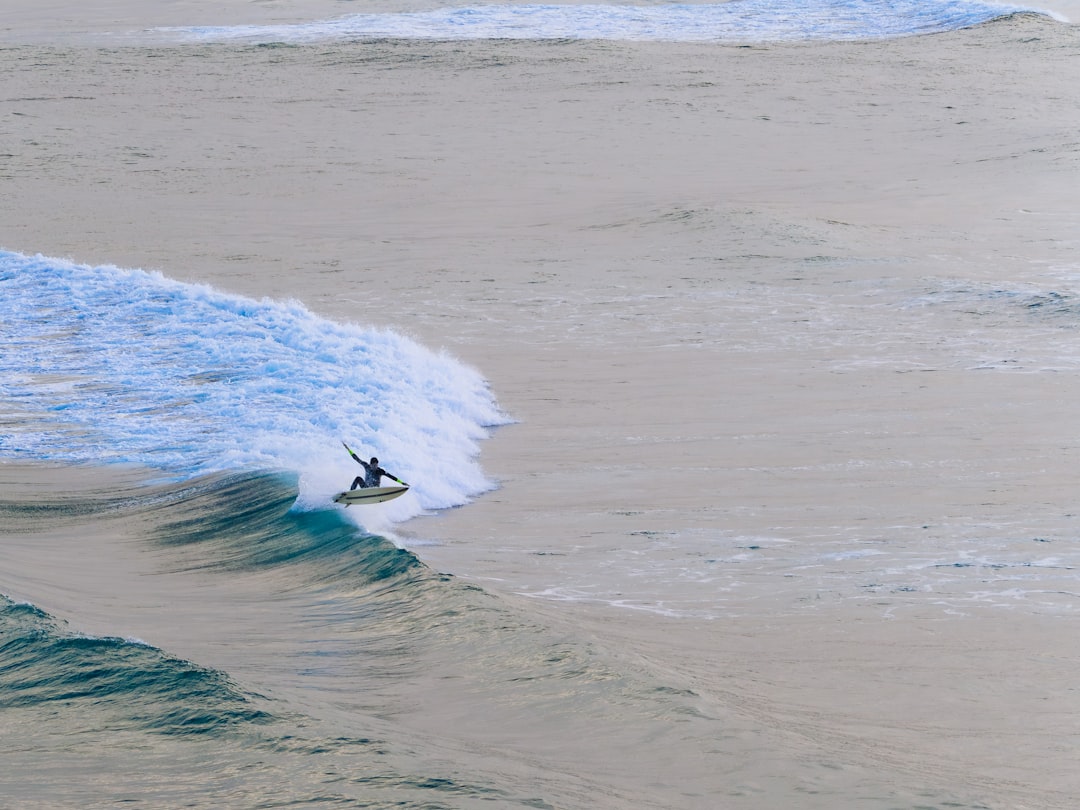
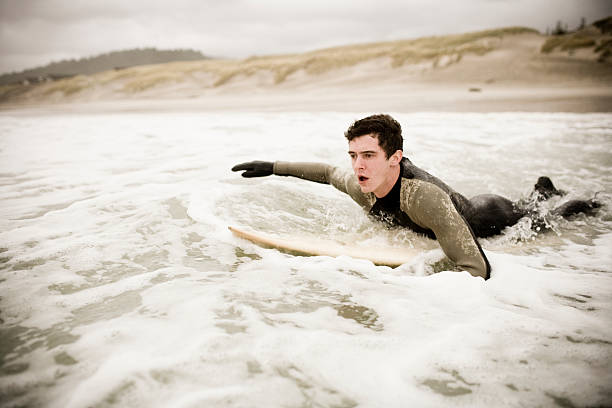
Catch a wave and you’re flying. Drop in clean, bottom turn smooth, rail locked in the pocket—for a few heartbeats you’re the fastest thing on water, and nothing else matters. Then the ocean reminds you who’s boss. The lip pitches over your head like a collapsing building. The board snaps sideways. Your feet leave the deck, and suddenly you’re not surfing anymore—you’re being recycled through the spin cycle of a washing machine set to “gnarly.” That, my friend, is the wipeout. And if you paddle out long enough, you’ll get to know it real well. Because no matter how many world titles you stack on the mantel or how many tubes you thread at Pipeline, the sea doesn’t care about your résumé. Every surfer, from Kelly Slater to the kook on a foamy, eventually takes the inevitable fall.
The wipeout is the first lesson in surf lingo that matters. You hear the terms—pearling, getting pitched, going over the falls, getting rag-dolled, being worked—and they all point to the same moment of surrender. Your body ceases to be a graceful glider and becomes a loose piece of cargo tumbling through a vortex of whitewater and reef. For the surfer, that moment stretches into an eternity. The initial impact stings, but the real story happens underwater. The wave holds you down, twists you around, and gives you a few solid slaps for good measure. You reach for your leash, hoping it’ll lead back to your board, but the drag just yanks you deeper. Saltwater floods your sinuses. Your lungs start to burn. You tell yourself, “This is fine, it’s only a hold-down, it’ll release soon.” And then it does—just as you were starting to compose your own legend for the beach crowd above.
Here’s the beautiful irony: the wipeout is the reason surfing stays honest. You can’t fake a ride, and you can’t avoid the fall. You can only learn to fall better. Good surfers make wipeouts look almost intentional. They kick their board away before hitting the reef, tuck their arms over their head, focus on exhaling in controlled bursts, and stay loose as the turbulence does its thing. Bad surfers flail, panic, and fight the ocean—and the ocean always wins that argument. So the wipeout becomes a teacher. It shows you that your ego is not welcome in the lineup. You might paddle back out with salt in your eyes and a hummed-up gash on your shin, but you’ll also have a grin on your face that’s equal parts relief and stoke. You got worked. You’re still here. That alone is worth the walk down the beach.
Every surfer has a wipeout story that becomes a badge of honor. Maybe it’s the time you took a slab wave on the head and saw purple stars. Maybe it’s a late drop at a steep beach break that turned you into a human submarine for what felt like a full minute. Or maybe it’s the unglamorous slip on the inside, tripping over your own leash while a two-foot dribbler detonates on your back. The size of the wave doesn’t dictate the humiliation. A knee-high shore break can have you eating sand just as thoroughly as a ten-foot Indo barrel. That’s the great equalizer—the wipeout doesn’t rank you, it just visits you. And when it does, it strips away all pretense. You’re not a stylish surfer or a bold charger in that moment. You’re just a person, flung by gravity, becoming intimately familiar with the ocean floor.
But here’s the thing about wipeouts: they also teach timing, breath control, and patience. You learn to read the pulse of a set wave before you even paddle, because you know that a mistimed duck dive leads to a rail drive and a free ticket to the washing machine. You learn the subtle art of falling flat and wide, not straight down. You learn to stay calm when the turbulence gets black and you can’t tell up from down. That calmness carries over to the surface. A surfer who has been worked from here to next Tuesday paddles out with a stillness that is almost meditative. There’s no fear, only respect. Respect for the wave’s power, for the reef’s sharpness, for your own mortality. And that respect is the seed of truly great surfing.
So don’t curse the wipeout. Hug it. Let it remind you that every wave you catch is borrowed from the ocean, and the ocean might want it back at any moment—with interest. When you drag yourself onto the sand, spitting salt and checking for missing toenails, take a second to laugh. Because the wipeout is the punchline of every perfect session. It’s the mother of humility and the father of resilience. You’ll never master it. Nobody does. But you can learn to ride its chaos with humor, grace, and a deep, salty gratitude for being alive enough to fall.