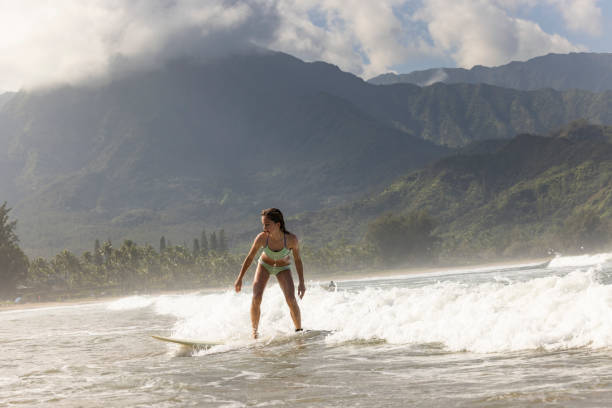
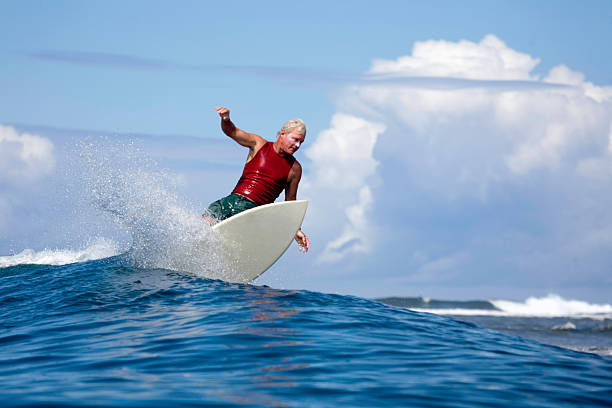
You paddle out on a glassy morning, the kind of dawn that hangs heavy with dew and the promise of a clean swell. There’s a certain hum in the lineup, not from the waves, but from the boards themselves. You see the usual suspects—the big-name, cookie-cutter foamies, the mass-produced performance sticks that all look like they came off the same assembly line. Then you see it. A single board, maybe a little faded, with a unique tail block and a shape that screams purpose. Nine times out of ten, that board has an Aipa logo on the stringer. And you just know the guy riding it has been surfing longer, harder, and more soulfully than most. That’s the magic of Ben Aipa’s legacy. It’s not just a brand; it’s a living, breathing chapter in the book of wave riding.
In a world of flashy marketing and cookie-cutter production runs, the name Aipa stands as a testament to the idea that a surfboard is not a piece of sporting equipment, but an extension of a surfer’s soul. Ben Aipa, the Hawaiian shaper who practically redefined the modern surfboard in the 1970s, wasn’t just building boards. He was building trust. He was the first to introduce the squash tail to the mainstream, a design that gave surfers more lift and drive off the bottom turn, allowing for those explosive, vertical re-entries that were changing the sport. When you ride an Aipa, you’re not just getting a slice of polyurethane foam and fiberglass resin. You are getting a piece of history, dialed in by a guy who watched some of the best surfers in the world—like Larry Bertlemann and Mark Richards—push the limits of what was possible. The shaper’s relationship with the surfer is everything, and Ben Aipa understood that before it became a trendy buzzword.
Fast forward to today, and the spirit of Aipa hasn’t faded. It’s not about building the lightest board on the block or chasing the latest fad. It’s about refined, functional performance. An Aipa board feels balanced. It has a distinct driving hold in a steep, hollow face, yet it catches an inside mushburger with surprising ease. That’s the secret to a good shaper—the ability to create a board that works in the messy, everyday surf we all fight through, but also shines when the swell pumps. When you’re standing in the parking lot at San O or paddling out at Kaisers, you want to feel that confidence. You want to know the plan is solid. An Aipa gives you that. It’s like having a silent conversation with a master craftsman who says, “I’ve seen this wave before. I know what you need.”
The real beauty of riding a board from a smaller shaper like Aipa is that you become a part of the lineage. You aren’t just a consumer; you’re a test pilot. You feel the subtle differences in the foil, the rocker curve that’s been honed over decades, the way the rail bites into a steep face. It’s a humble experience, really. You begin to realize that all the glossy marketing in the world can’t replace the feel of a board shaped by hands that know the ocean like an old friend. It strips away the noise, the hype, the branding nonsense. It leaves you with just you, the wave, and the wood. There’s no gimmick. No one is trying to sell you on a colorway or a construction method that promises more speed than physics will allow.
For the surfer who truly chases the sun, who lives for that endless summer, the brand of the board matters less than the soul of the shaper. And that’s why Aipa matters. It harkens back to an era when surfing was less about the corporate machine and more about the relationship between a man, his planer, and the ocean. It is a reminder that the best gear isn’t always the most expensive or the newest. Sometimes, the best gear is the gear that has been ridden through countless dawn patrols, chasing the same sun. It has the dings, the scratches, the stories. And in a lineup full of identical shapes, an Aipa stands out not for its flash, but for its born-in-the-salt heritage. It’s a board that says, “I’ve been here before. Let’s go get a good one.” And when you paddle out on it, you feel that. You become part of the soul of the craft itself.