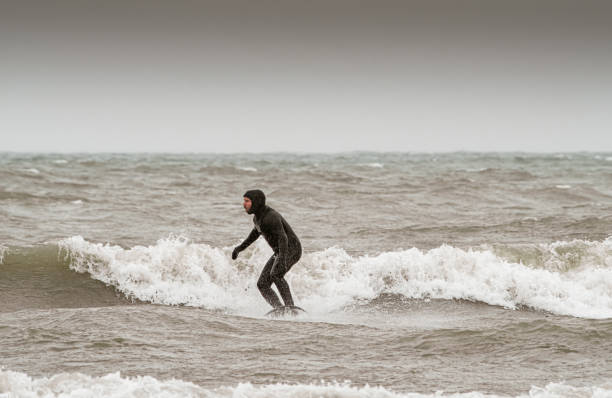
You ever pull on a brand new wetsuit that feels like it was sewn together by a grumpy octopus with a grudge? Stiff arms, restricted paddle power, and that dreaded neck rash that makes you look like you lost a fight with a cheese grater. We have all been there. But somewhere along the line, the game changed. The rubber got smarter. And a lot of that credit goes to a little black stone from Japan and the mad scientists who figured out what to do with it. We are talking about Yamamoto limestone neoprene, and if you are serious about staying warm without paddling like a robot, this stuff is the real deal.
For decades, the standard wetsuit rubber came from petroleum. It worked, sure. It kept you warm in a pinch. But it was heavy when wet, broke down fast under the sun, and had the flexibility of a three-day-old surfboard fin. You had to sacrifice warmth for movement, or movement for warmth. It was a raw deal, especially when the water dropped below sixty and you still wanted to surf a peaky winter swell without fighting your own gear. Then came the innovation from the land of the rising sun. Yamamoto Corporation started pulling limestone from the earth and turning it into a closed-cell neoprene that changed everything.
Why does it matter to you and your next session? It matters because limestone neoprene is fundamentally different from the old stuff. The molecules are packed tighter. That tight packing means less heat escapes your body. You stay warmer with a thinner, lighter suit. But the real magic is in the gas bubbles inside the rubber. Traditional neoprene uses little pockets of air. Yamamoto uses nitrogen bubbles. Nitrogen is a lousy conductor of heat, which is actually perfect. It keeps your core temperature locked in. But nitrogen also makes the rubber way more flexible. It compresses less under pressure. When you are paddling into a steep drop, your arms don’t get that heavy, fatigued feeling. The suit moves like a second skin, not a straightjacket.
Surfers used to think a thicker wetsuit meant you were tough. Now we know that a smarter wetsuit means you are savvy. High-end brands like Feral, Vissla, and Isurus have jumped fully onto the Yamamoto train. They know that if you are wearing standard petroleum neoprene, you are essentially wearing yesterday’s technology. The limestone stuff is also cleaner to produce. It leaves a smaller carbon footprint because you are pulling less oil out of the ground. Mother Ocean sends you a little nod of approval every time you zip up.
But here is the sticky part. This advanced rubber is finicky. It likes to be treated with respect. You cannot just throw it in the washing machine or leave it baking in the back of your truck. The material is soft and porous. It absorbs water if you don’t take care of the lining. And that is where the modern wetsuit evolution gets really interesting. The best suits now combine Yamamoto neoprene with hydrophobic inner linings. The Japanese call it “smooth skin” or “stretch lining.“ It feels like silk against your chest and back. Water hits it and rolls right off. You get out of the water, the suit dries faster than your towel. You are not shivering through the walk back to the car.
Every surfer knows the struggle of the mid-winter dawn patrol. The wind is howling, the tide is low, and the water has that deep, dark grey color that tells you it is cold. You stand on the sand, toes numb, questioning your life choices. But when you are wearing a suit built with Yamamoto rubber, that dread fades. You zip up and suddenly the cold is just an idea, not a reality. Your shoulders rotate freely. Your back paddles without that familiar burn of restriction. You drop into a wave and the suit stretches with you. It does not bind at the armpit. It does not pinch the back of your knee. You are just a human, connected to the ocean, without plastic armor fighting against you.
The future of staying warm is not about making suits thicker. It is about making the materials smarter. It is about respecting the science of thermodynamics while honoring the soul of surfing. Yamamoto is not just a brand name on a tag. It is a philosophy. It says you can be warm and you can be free. You can charge a cold, heavy day without feeling like you are wrestling your own gear. Next time you are in the shop, give the rubber a pinch. If it feels like butter and smells like a fresh tire instead of a chemical plant, you are holding the good stuff. Your arms will thank you. Your stoke will stay high. And the endless summer will feel a little closer, even when the water is freezing.