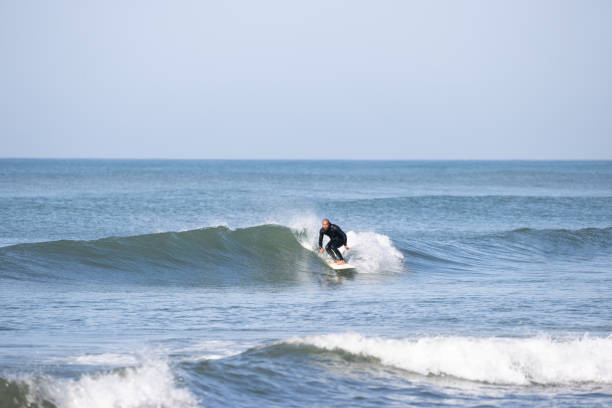
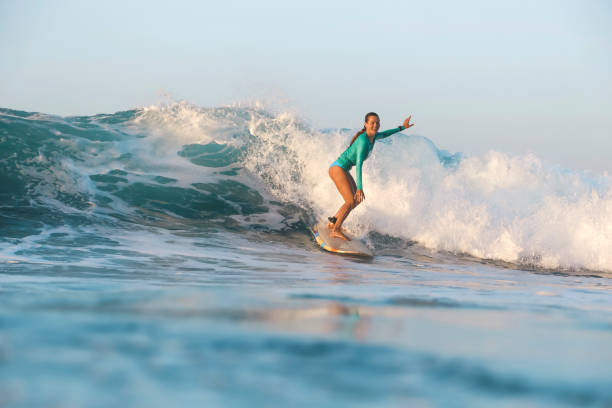
Every single one of us has been there. Paddling out on a rented foamie, leash tangled around our ankles, board pointing every direction but toward the horizon. The old salts on the inside look at you with that mix of pity and disdain, the kind reserved for tourists who wander into a local bar and ask for a piña colada. Yeah, you were a kook. Hell, I was a kook. The difference between a kook and a ripper ain’t about how many air reverses you can throw or how deep you can tuck into a slab. It’s about something far more cosmic. It’s about respect, awareness, and the stoke that comes from knowing your place in the lineup.
A kook isn’t just someone who can’t surf. We all start out unable to surf. A kook is someone who refuses to learn the dance. They drop in on folks without a thought, snake the inside position, paddle against the current like a salmon on a mission, then act baffled when the whole beach gives them the stink eye. The kook thinks the ocean is their personal wave pool and everyone else is just clogging the lanes. They hoot for themselves after a washed-out floater, then bail their board straight at a grom without a second thought. The kook talks loud about their three-second ride to shore like they just conquered Puerto Escondido.
The ripper, on the other hand, moves with a quiet fluidity. They sit just outside the chaos, reading the swell like a poem written by the moon. They know when to paddle, when to pull back, when to give way. A ripper isn’t necessarily the guy getting barreled on the cover of a mag. A ripper is anyone who respects the lineup, shares the waves, and still brings the fire when it’s their turn. It’s about being smooth out there, both in your surfing and your vibe. The ripper knows that the ocean doesn’t care about your ego, and that the best session is the one where everyone gets a little slice of glory.
The journey from kook to ripper ain’t a straight line. You’ll paddle out on a glassy morning, feel the magic, then blow a perfect set wave because you hesitated. You’ll drop in on a local legend and hear that unforgettable “hey brah” that cuts through the wind like a knife. You’ll eat shit, get tangled, take a fin to the shin, and question why you ever thought this was fun. But here’s the thing: that stoke, the pure joy of gliding across a wall of water, it hooks you. And if you let it, that stoke will teach you humility. That stoke will force you to watch, to learn, to apologize when you mess up, and to give respect to the regulars who’ve been charging that break since before you were born.
One of the biggest kook moves is paddling straight to the peak and sitting right in the takeoff zone on a crowded day. The ripper hangs on the shoulder, watches the sets, and slots in when there’s a gap. It’s not about being timid. It’s about being smart. You want to earn your stripes, not steal them. When you finally catch that wave, don’t go straight to the beach, kick out and paddle back like you own the place. Take your licks, wipe the salt from your eyes, and give a nod to the surfer who let you sneak in. That nod, that simple acknowledgment, is the secret handshake of the surf tribe.
Kooks also tend to blame everything but themselves. The board is too small, the waves are too small, the wind is onshore, the tides are weird. The ripper simply adapts. If it’s sloppy, they work on their snap. If it’s tiny, they practice their cutbacks on the foam. If it’s big and scary, they sit and watch and learn, because even the best weren’t born charging heavy water. Patience, my friend, is the ultimate power move. The ocean isn’t going anywhere, and the waves will always come back. So will your chance to prove you’re more than a kook.
At the end of the day, the distinction between kook and ripper isn’t a permanent tattoo. You can be a total ripper on a good day and a complete kook on the next. The key is to keep checking yourself. Ask the surfers around you how the break works. Watch how the locals paddle and where they sit. Ask for advice with genuine curiosity, and you’ll be surprised how much aloha comes your way. The ocean has a way of humbling everyone. The surfers who embrace that humility, who laugh at their own wipeouts and high-five the grom who just threaded a barrel, those are the true rippers in spirit.
So the next time you paddle out, leave your ego on the sand. Take a deep breath of that salty air, feel the pulse of the swell, and remember why you’re there. Not to prove anything, but to be part of something bigger. To dance with the ocean, to share the stoke, and to earn the silent respect of the lineup one wave at a time. That’s the never-ending evolution. That’s how you shed your inner kook and find the ripper that’s been waiting inside you all along.