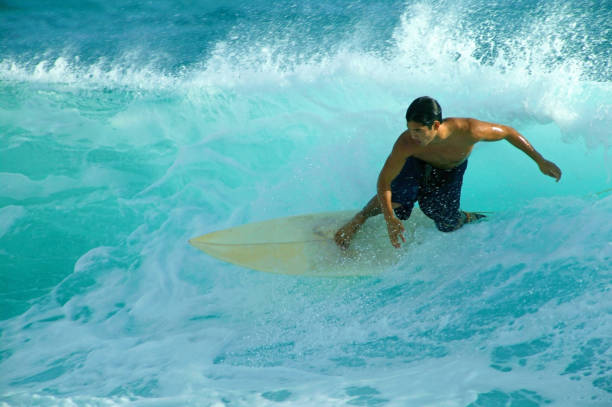
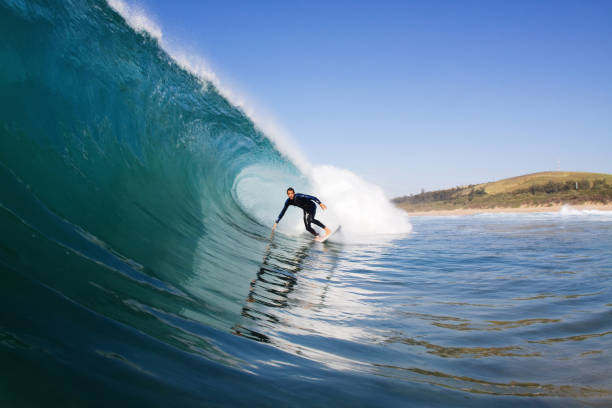
There’s a moment that every traveling surfer knows. You’ve just pulled into a new town, the trade winds are glassing off a flawless reef break, and from the cliff you can see a line of corduroy marching in from the deep blue. Your heart is already up and riding, but your brain needs to slow down. This is the most critical part of any surf trip planning session that happens once you’re already there, the silent reconnaissance before you even wax your board. It’s about reading the ocean not like a tourist, but like a local, even if you’ve never set foot on that stretch of sand before.
The first thing to wrap your head around is the dance between the swell and the reef. Not all waves break the same, and any grom who has taken a beating on a shallow ledge knows that a wave that looks like a dream from the beach can turn into a washing machine nightmare if you don’t respect its personality. When you’re scoping a new spot, watch for a full set or two. Notice where the peak actually jacks up. Is it a sudden, steep ledge that rears up like a dragon, or does it roll in with a long, forgiving wall? That distinction tells you everything about your takeoff zone and what kind of board you’ll need to pull from the bag. A steep, fast-breaking reef pass like a classic Indo left demands a short, high-performance thruster or even a step-up, while a mellow, peeling point break lets you cruise on a longboard or a hybrid.
Wind direction is the unsung hero of a successful session. While everyone obsesses over swell direction and size, the wind is what either polishes the wave or chops it into mush. In the tropics, the trades often blow offshore in the morning before swinging onshore by lunch. That means your perfect window might be a narrow one between sunrise and ten o’clock. I’ve seen dudes spend a whole week at a spot thinking it’s a junky closeout, only to realize they were paddling out two hours too late. A wise traveler learns to build his whole day around that morning glass. He wakes in the dark, he drinks his coffee on the beach, and he is in the water before the first ray hits the face of the wave. That’s the endless summer secret, chasing the sun but also chasing the wind’s clock.
Tide is another puzzle piece that separates the casual tourist from the real wanderer. Some reef passes only come alive on a mid to high tide, when there’s enough water to cover the coral and give you a safe exit. Drop too low, and you’re not surfing, you’re rock climbing. Alternatively, some sand-bottom beach breaks love a low tide for a fast, hollow tube, while a high tide might flatten everything out into a dribbly mess. You can’t just show up and hope. You have to study tide charts the way a captain studies a nautical map. It’s planning, but it’s also patience. If you arrive and the tide is wrong, you don’t force it. You paddle out to a different spot, or you wait. The ocean rewards those who wait with a clean set wave.
There is a deeper layer that only comes with experience and a bit of humility, and that’s understanding the downwind drift. Many reef passes, especially those that wrap around a point, have a strong current that can pull you halfway to the next bay before you catch a single wave. You see a guy on the inside paddling furiously but staying in the same place, and you realize he is fighting the current, not riding it. The best strategy is to paddle to the takeoff zone wide of the pack, let the current do some of the work, and find your rhythm. Watch a couple of older locals. They don’t sprint. They drift. They conserve energy and let the ocean place them exactly where the set waves are destined to break. That is the ultimate move, surfing with the ocean instead of against it.
Planning your surf trip adventure is not just about booking flights and packing a bag. It is about building a relationship with the water before you ever get wet. It’s standing on the sand, coffee in hand, counting the seconds between sets, watching the rip lines, and feeling the texture of the wind on your skin. When you do that, you aren’t just a visitor. You become part of the wave’s story. And that is the kind of trip that stays with you long after the salt has dried off your board.