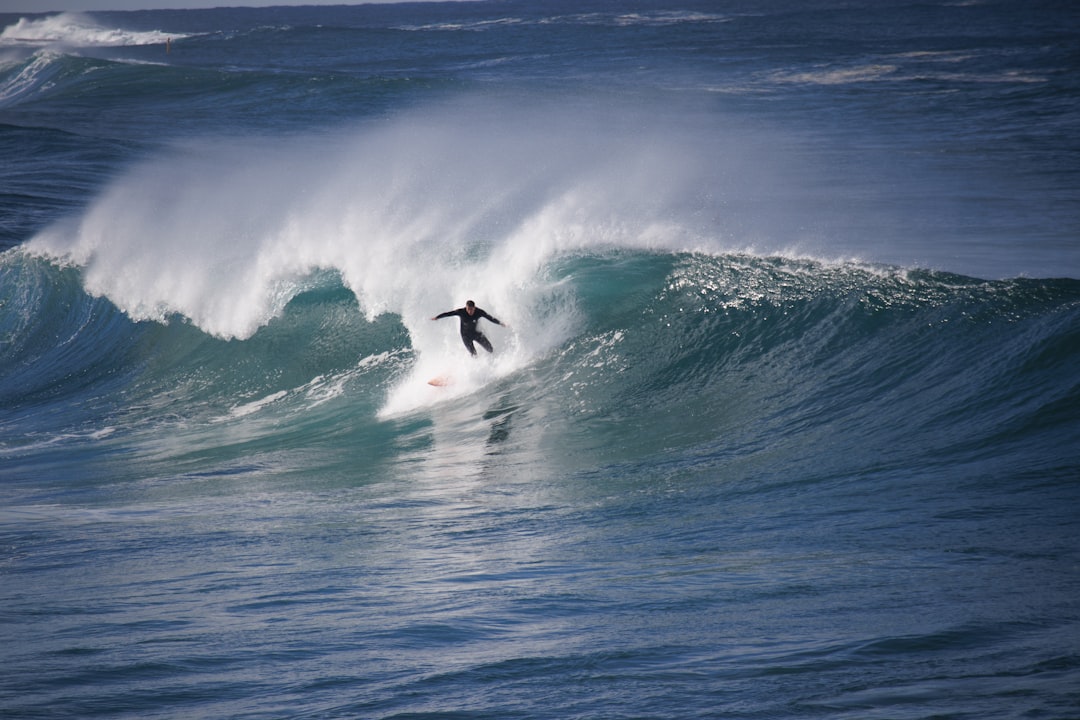
There’s a moment in every surfer’s life when the ocean stops being a playground and becomes a proving ground. For Andy Irons, that moment arrived in the winter of 2003, during one of the most intense Triple Crown battles ever witnessed. The waves were pumping at Pipeline, the stakes were sky-high, and the whole surfing world had its eyes locked on a showdown that would define a generation. Andy wasn’t just surfing that season. He was making a statement that would echo through the lineup for decades to come.
The setup was classic. Kelly Slater had already staked his claim as the Michael Jordan of surfing, a guy who could paddle out on any given day and make everyone else look like they were learning to pop up. But Andy Irons brought something different to the water. He brought fire. He brought a raw, unapologetic aggression that turned every heat into a war zone. Watching Andy surf Pipeline during that Triple Crown run was like watching a pit bull that had been locked in a cage too long and finally got let loose. Every drop was committed. Every turn was carved with a ferocity that made the lip shake.
The equipment he rode during those months became the stuff of legend. His boards were built for power, with a bit more rocker than the standard Pipe gun, allowing him to tuck deeper into the barrel than most guys dared. The fins he chose gave him that extra bite on the bottom turn, so when the wave jacked up and threw out its thick curtain of foam, Andy was already in position, way deep, waiting for the spit to blast him out. There’s a reason why so many groms still talk about the “Irons fin template” like it’s a sacred geometry. That board was an extension of his soul, and when he surfed it, you could see the anger and the love and the hunger all mixed into one perfect ride.
The technique Andy employed at Pipeline was nothing short of surgical. He didn’t just get barreled. He owned every square inch of that wave. His backhand approach was a thing of beauty, a twisted dance of torque and timing that left commentators speechless. When Andy went left at Pipeline, he would drop in with his back facing the wave, absorb the initial drop with a deep crouch, then drive his shoulder into the face as the lip started to throw. That’s when the magic happened. He would stall just enough to let the barrel envelope him, then carve a single, decisive turn that shot him out of the innermost chamber like a cannonball. It was raw. It was ugly in the best possible way. And it was pure victory.
But the competition aspect of that Triple Crown season went beyond technique. It went into the realm of psychology. Slater knew how to play the long game, racking up points with smooth, almost lazy style that made everything look effortless. Andy couldn’t surf that way. It wasn’t in his DNA. He had to attack. He had to put the heat on from the very first paddle out, making Slater feel the pressure of every set, every second, every wave that passed underneath his feet. In the final moments of the Pipe Masters, when Kelly needed a score and the ocean went flat, it was Andy who had already done the damage. His wave count was higher, his commitment was deeper, and his heart was bleeding all over the reef.
What made Andy Irons a legend wasn’t just the Triple Crown trophies. It was the way he carried the weight of being the guy who dethroned the king. He surfed with a chip on his shoulder that never got smaller, even as the wins piled up. Every heat was personal. Every loss felt like a knife in the gut. And that’s why the surfing world connected with him so deeply. He wasn’t a robot. He was a human being who struggled with the same fears and doubts that every weekend surfer feels when they look out at a big, snarling wave and wonder if they’ve got what it takes. Andy always answered that question with a paddle into the heaviest part of the lineup.
The 2003 Triple Crown remains a benchmark in competitive surfing history. It was the moment when the sport realized that pure talent alone wasn’t enough. You also needed the rage, the refusal to back down, and the willingness to put your body on the line for every single wave. Andy Irons gave us that. He gave us a masterclass in how to compete with everything you’ve got, and then give a little more. When the surf world looks back on that winter at Pipe, they don’t just remember the scores. They remember the feeling. The feeling that for a few perfect days in Hawaii, the ocean belonged to one man, and that man surfed like he had nothing to lose.