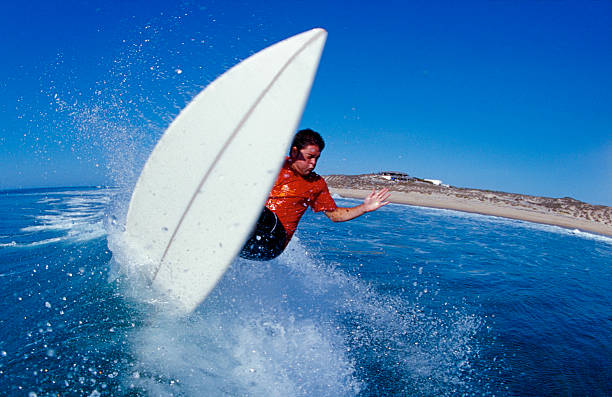
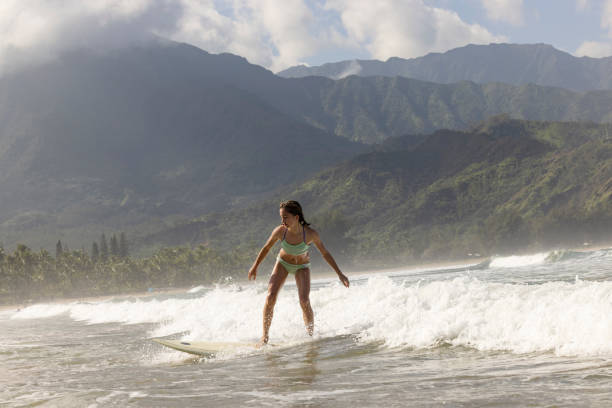
The first thing you notice in Huanchaco isn’t the break or the glassy morning sets rolling off the Pacific. It’s the sound. Not of waves, but of wooden paddles tapping against hollow reeds, a rhythm that’s been bouncing off the shore for over a thousand years. You paddle out past the fishing boats, which are actually caballitos de toro—little reed horses that the locals have been riding since before the Inca empire stretched its fingers along this coast. You’re not just surfing here. You’re stepping into the living museum of wave-riding culture.
I came to this small village on the northern coast of Peru, a few kilometers from Trujillo, chasing a different kind of stoke. Sure, the waves are fun—long, tapering lefts off the pier, and a punchy beach break that reminds you who’s boss on a crowded Sunday. But the real juice is on land, or rather, just beyond the line-up. The caballitos are the backbone of this place. Made from bundles of totora reeds, tied together with rope, they float like a dream and paddle like a sea lion. These aren’t relics behind glass. They’re ridden daily by fishermen who launch through the foam at dawn, their woven straw hats fresh off the loom, their hands rough from a lifetime of pulling nets.
As a surfer, you immediately feel the humility. You’ve spent thousands on epoxy boards, titanium fins, and wetsuits with special chest zips. These guys are charging the same waves, and bigger ones, on a bundle of dried plants that predates your grandpa’s surfboard. The first time I saw an old man drop into shoulder-high cleanup set on his caballito, crouched like a superhero, I laughed out loud. Not at him. At myself. All my gear, all my technique, and this dude is riding a floating haystack with a single wooden paddle.
So, how do you really immerse? You stop taking pictures and start asking questions. The surfer-linguist in me whispered: “Hola, señor. ¿Me enseña?“ And the next thing I knew, I was sitting on the sand with Don Roberto, a seventy-year-old fisherman whose brown face looked like a topo map of the ocean floor. He spoke in a mix of Spanish and Mochica, the old language that’s almost extinct. With hand gestures and laughs, he explained how they tie the reeds, how they seal the ends with clay and water, and how the design hasn’t changed since the Chimú culture ruled these shores. He said, “The wave is the same. The ocean is the same. But we don’t fight it. We thank it.“
That phrase hit me harder than a closeout. For most of us, surfing is about conquering—catching, carving, kicking out. For the caballito riders, it’s about partnership. The reed horse is an extension of the body, and the ocean is the great provider. When you paddle out on one, you feel every ripple through your legs. There’s no leash, no fin, no traction pad. Just you, a stick of reeds, and the pulse of the planet.
Cultural immersion through surfing isn’t about checking a box or posting a sunset shot. It’s about letting go of the modern idea that you’re visiting a place. You’re not. You’re entering a relationship that’s been going on for centuries. In Huanchaco, you don’t surf “at” the wave. You surf “with” the ocean. The local kids, the groms of this ancient town, don’t just learn to stand up on a board. They first learn to sit on a caballito, to steer with their hands, to read the swell the way their great-great-grandfathers did. They’re not impressed by your air reverse. They’re impressed by your patience.
By the end of my week there, I had traded my shortboard for a borrowed caballito. I caught a dawn glassy morning, the ocean flat as a mirror, the sun bleeding orange over the Andes. I paddled out past the pier, past the gulls, past the echoes of a thousand boat launches. And for one hour, I didn’t feel like a tourist or a surfer. I felt like a temporary apprentice. I felt the reeds hum with the ocean’s memory. I caught a small wave, stood up on that awkward, beautiful bundle, and rode it all the way to the sand, laughing like a kid. The old fishermen watched. One of them raised his paddle. No words needed.
That’s the real stoke of surf travel. Not the perfect barrel, but the perfect moment of understanding that the wave you ride today is the same wave they’ve ridden forever. You just have to slow down, listen, and let the reed horse carry you home. The next time you look at a surf map, skip the crowded breaks and find the ones where the culture isn’t tacked on like a souvenir. Find the villages where the ocean is not a resource but a relative. Because that’s where the endless summer becomes something more—a connection that outlasts any swell, any forecast, any season.