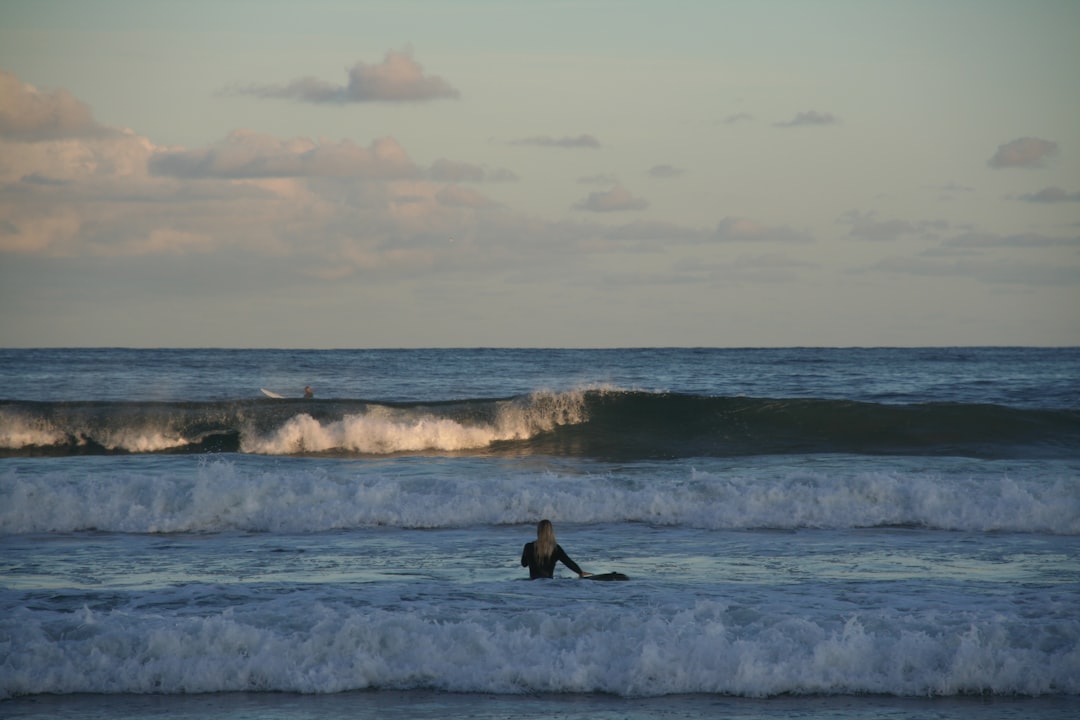
There is a sacred hour that every surfer knows, the one that comes just before the sun cracks the horizon, when the world is still dripping with night and the only sound is the wind rustling through the palms. You sit there on the tailgate, coffee steaming, staring at your phone like it’s a crystal ball. The forecast models are glowing back at you, promising a long-period groundswell from the northwest, but you know better than to trust the computer alone. The ocean has its own mind, and it doesn’t care about the algorithm’s perfect charts.
Catching the best swells is not a science you can learn from a screen. It is a feeling, a sixth sense that develops from sitting in the lineup through a thousand flat days and a thousand fickle peaks. The forecast is just the map. The real knowledge comes from reading the contours of the seabed, watching the way the water breathes, and knowing when the models are lying to you.
The first thing any old salt will tell you is that the forecast is a suggestion, not a gospel. You look at the buoy data for the raw numbers, the swell height, the period, the direction. A sixteen-second interval from the northwest means the swell has traveled clean, without too much chop or wind interference. That is the kind of energy that wraps around points and bends into reefs, the kind that turns a mushy beachbreak into a hollow wall. But a fourteen-second period from the same direction? That might be the same storm, just younger and messier, and it will close out faster than you can paddle for the shoulder. You learn to feel the difference in your bones before you even stick a toe in the water.
Then there is the wind. The models tell you the offshore breeze will hold until noon, but you look at the clouds, you feel the temperature shift, and you know that by ten-thirty the seabreeze will flip and turn everything into a washing machine. The best surfers learn to chase the window, the sweet spot between the incoming tide and the glass-off, when the wind dies and the ocean goes velvety smooth. That window is never as long as the forecast says. You have to be there when it opens, or you miss it entirely.
A good swell is like a wave of sound passing through the water. It has a frequency, a rhythm, a pitch that you can learn to hear if you pay attention. When you paddle out on a building swell, you can feel the pulses, the sets rolling in every twelve minutes, then ten, then eight, as the energy starts to stack up. The best surfers know when to sit deep, waiting for the wave of the day, and when to snag the smaller ones to stay warm and keep the arms loose. It is a dance between patience and aggression, between reading the horizon and trusting your gut.
There is also the matter of local knowledge. No forecast in the world can tell you how a swell will wrap around a particular headland or bounce off a specific reef. You have to learn the spots where the bathymetry bends the energy just right, where the sandbars shift after a winter storm, where the rip currents pull you into position. That knowledge is passed down from the old crew, earned through dawn sessions and blown-out afternoons. It is not written anywhere. You drink it in with the salt and the sunrise.
And then there is the wild card, the thing that keeps every surfer humble. The ocean is not predictable. A perfect forecast can deliver a sloppy mess. A mediocre forecast can surprise you with a clean, lined-up day that nobody expected. That is the beauty of it. You never really own the wave. You just borrow it for a moment.
So you learn to treat the forecast like a friend giving you directions to a secret spot. You take the general idea, the sweet south swell, the light offshore winds, the negative low tide. But you also know that the real treasure is found by deviating from the map, by trusting the feeling in your gut, by paddling out even when the model says it will be average. Because sometimes the ocean has a plan of its own, and it only reveals itself to the ones who show up. That is how you catch the best swells. You show up. Again and again. Until the rhythm becomes part of your own heartbeat.