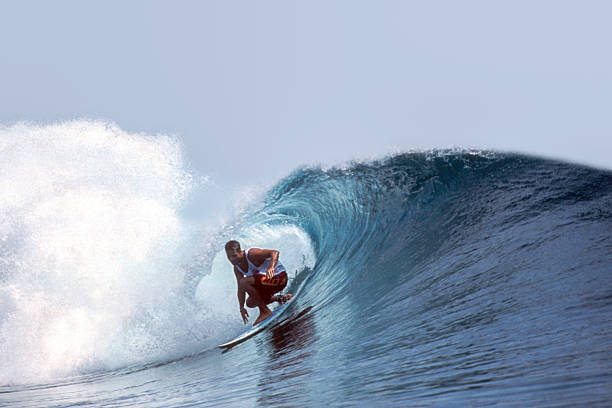
The first thing you lose when you really settle into beach life is the habit of checking the time on your phone. Instead, you find yourself glancing at the horizon, feeling the wind shift, and mentally calculating where the tide stands right now. The tide clock becomes your real watch. It’s a slower, older, and far more honest way to measure your day. High tide pushes the sandbars into shape, low tide exposes the rocks and reef, and the middle hours offer up those clean, hollow lines that make you cancel everything else. Once you learn to read that rhythm, you realize that living near the ocean isn’t about escaping time—it’s about trading one kind of time for a much better one.
The dawn patrol is the purest example. The alarm goes off in the gray pre-light, but you don’t hit snooze; you roll out of bed, pull on a damp wetsuit that smells like yesterday’s salt and wax, and stumble to the water with a thermos of coffee that’s more a ritual than a beverage. The beach at sunrise has a sacred silence. No crowds, no chatty tourists, just the shush of the shorebreak and the occasional cry of a gull. You paddle out when the tide is still swinging through the low range, and the waves arrive in that glassy, feathering kind of way that makes the world feel brand new. Paddling back in, you don’t care how many waves you caught. You just care that you were there to watch the sun crack the sky open. That’s the trade-off: you lose sleep, but you gain a front-row seat to the quietest, most beautiful part of the day.
Of course, the tide clock also teaches you patience. There are days when the ocean decides to go flat as a parking lot, and no amount of stoke can change that. You sit on the sand, talk story with the other regulars, and wait. You learn to read the water, to spot the subtle dark lines that will turn into a swell tomorrow or the day after. You check the buoy reports on your phone, sure, but you also trust the ancient knowledge in your gut. That extra foot of tide might turn a closeout into a hollow barrel. That offshore breeze might groom the shoulder into a proper wave. The tide clock is not a boss. It’s a collaborator. You work with it, not against it.
And that collaboration spills into everything else about beach life. You eat when you’re hungry, not when a lunch break says so. You nap in the hammock when the mid-day sun cooks the sand and the onshore wind chops up the lineup. You run errands in the late afternoon because the surf is likely to be messy then anyway. You cook dinner on the grill while watching the sunset, because the evening glass-off is often the most magical session of the whole day—if you’re willing to wait for it. The beach life isn’t lazy. It’s just aligned to a different drum. The pulse of the water. The tug of the moon. The rhythm of the swells rolling in from some distant storm thousands of miles away. That is the true heartbeat of living by the sea.
Surfers develop an uncanny relationship with that heartbeat. After a few seasons, you can walk out of your door, look at the direction of the bump, and know exactly which break will be firing. You know that a falling tide on a sandbar will hold that steep drop, but a rising tide will soften it into a mushburger. You know that a mid-sized northwest swell with light east winds will wrap into the point like a dream, while a south wind will blow it to pieces. This knowledge isn’t science, though it has a scientific edge. It’s more like a feeling. A stoked sixth sense that keeps you connected to the ocean in a way that most people never experience. And that connection is what turns a simple day at the beach into a life practice.
The tide clock also humbles you. You can have the perfect plan, the perfect board, the perfect predawn swell, and then the tide just sits there, stubborn and slow, refusing to get to the level you need. You wait, twiddling your thumbs, watching the water look like a sheet of glass. That’s fine. The ocean does not care about your schedule. The ocean has been doing this for billions of years. You’re just a visitor, lucky enough to paddle out for a few moments of grace. That humility is the core of beach life. It keeps you grounded, keeps you respectful, and keeps you from ever thinking you’re better than the wave you’re riding. Because the wave will always be better. The tide will always turn. The ocean will always be the boss.
So when you really live the beach life, you stop asking what time it is and start asking what the water is doing. You check the surf forecast the way other people check the news. You measure your week not in meetings, but in swell events. You celebrate not paydays, but those rare, perfect days when the tide and the wind and the sand all line up like the universe is giving you a personal gift. And on the days when it doesn’t line up, you just hang loose, appreciate the salt air, and know that tomorrow the tide will come back around. Because it always does. That’s the beautiful, patient, honest promise of the tide clock. And it’s the whole reason so many of us choose to live on the beach in the first place. Not to escape time. But to find a better, slower, wetter, and far more meaningful version of it.