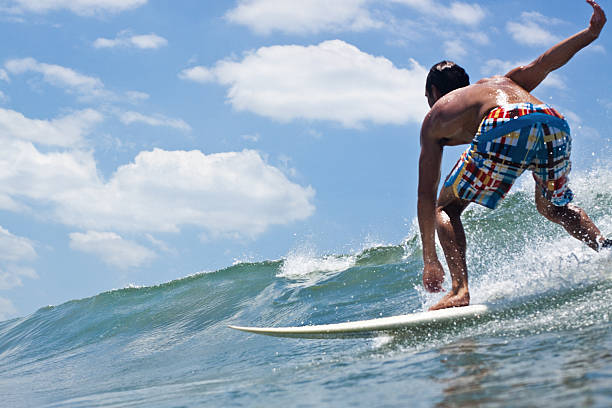
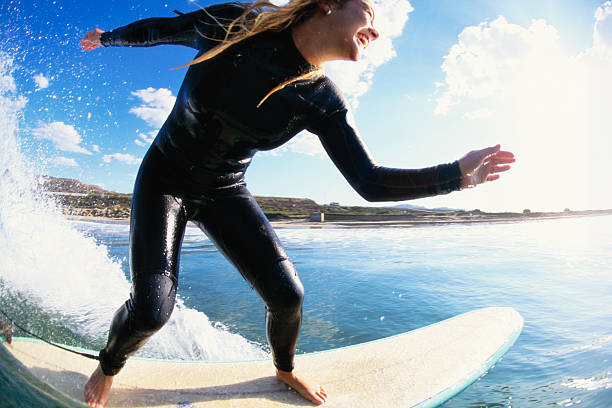
There’s a certain kind of stoke that hits different when you paddle out into water that’s a shade of green that doesn’t exist anywhere else on earth. On the Dingle Peninsula, the Atlantic doesn’t just roll in—it breathes slow and deep, carrying the memory of storms that brewed thousands of miles away off the Grand Banks. This isn’t a place you come for warm tropical barrels or crowded lineups full of camera crews. This is the kind of surf you earn, where the cold bites through your neoprene no matter how many millimeters you’ve got, where the wind shifts faster than a local’s mood at a pub session. But if you’re willing to chase that emerald pulse, Dingle will hand you waves that feel like they were carved specifically for the surfer who’s part poet, part pack mule.
The Dingle Peninsula juts out into the North Atlantic like a clenched fist, catching every bit of west swell that the ocean can throw. The real magic happens when a solid northwest groundswell lines up with a crisp offshore wind that skims off the mountains of Connemara. That’s when the points and reefs come alive. Inch Beach is the main attraction, a long golden strand that stretches three miles into the bay, offering a consistent beach break that handles size from waist-high to double overhead. But the locals know the secret: the real juice is on the inside sandbars after a big tide, where the wave reels off left and right like a smoking keg with reform sections that keep you humming all the way to the rocks. On a clean six-foot day with low tide, Inch can palm you off some of the best barrels in Ireland, and the water that emerald tint makes you feel like you’re surfing inside a jewel.
Then there’s Brandon Bay, named after the saint who supposedly sailed to America on a hide boat—which makes perfect sense because the swell there looks like it could carry you straight to Newfoundland. Brandon offers a handful of point breaks that wrap around the headland, peeling off long and clean when the conditions align. The main peak, known locally as the “Brandon Reef,” is a slab that needs a solid six-foot plus and a westerly direction to really fire. It’s shallow, it’s hollow, and it demands respect. I’ve seen guys get pitched over the falls into water that’s barely waist-deep over rocks, their fins scraping the bottom as they ragdoll out of a closeout. But on that perfect day—when the tide is mid-rising and the wind is howling straight offshore—the wave turns into a long, bending tube that you can ride for a hundred yards, feeling like you’re inside a moving cathedral.
What sets Dingle apart from other cold-water spots is the isolation. There are no surf shops on every corner, no rental huts, no throngs of traveling surfers sitting shoulder to shoulder. The lineup is sparse—maybe two or three locals who’ve been surfing these breaks since before the Celtic Tiger roared and died. They don’t hassle you, but they watch. They measure your drop-ins and your paddle fitness, and if you act like a kook, you’ll get the long stare and a silent suggestion to move down the beach. Respect the lineup, share waves, and you’ll find yourself invited for tea and brown bread in a stone cottage that smells like turf smoke and wetsuit rubber.
The cold is the constant companion. Water temps hover in the low fifties even in summer, and winter drops into the forties, meaning you’re zipped into a five-mil fullsuit with booties, gloves, and a hood that makes you look like a seal with a mission. Paddling out in December feels like swimming through molasses, and your hands go numb after an hour no matter what. But the trade-off is the solitude and the raw power. When you paddle out at dawn and the sun breaks over the Slieve Mish Mountains, painting the water burnt orange and gold, you understand why the old Irish fishermen called the sea the “great mother.” She gives and she takes, but on Dingle, she gives waves that rearrange your soul.
Beyond the main breaks, there are hidden coves and reefs that don’t have names. You find them by hiking the cliffs, watching for the telltale white lines against dark water, then scrambling down a sheep trail to a boulder-strewn beach that holds only at the right swell direction. These are the waves you dream about—perfectly peeling left-handers over kelp beds, with nobody but the seabirds and the occasional curious dolphin to watch. The water is so clear that you can see the bottom ten feet below, the rocks and sand shifting with the pulse of each set.
Surfing the Dingle Peninsula isn’t about scoring perfect barrels every session—it’s about the experience of being in a place where the ocean still feels wild and untamed. It’s about pulling into a dark green tube and coming out with your heart hammering, knowing that you just shared a wave with the spirit of the Emerald Isle. The locals call it “the green room” for a reason, and once you’ve tasted that emerald swell, you’ll never look at the ocean the same way again.